You have not yet added any article to your bookmarks!
Join 10k+ people to get notified about new posts, news and tips.
Do not worry we don't spam!
Post by : Anis Farhan
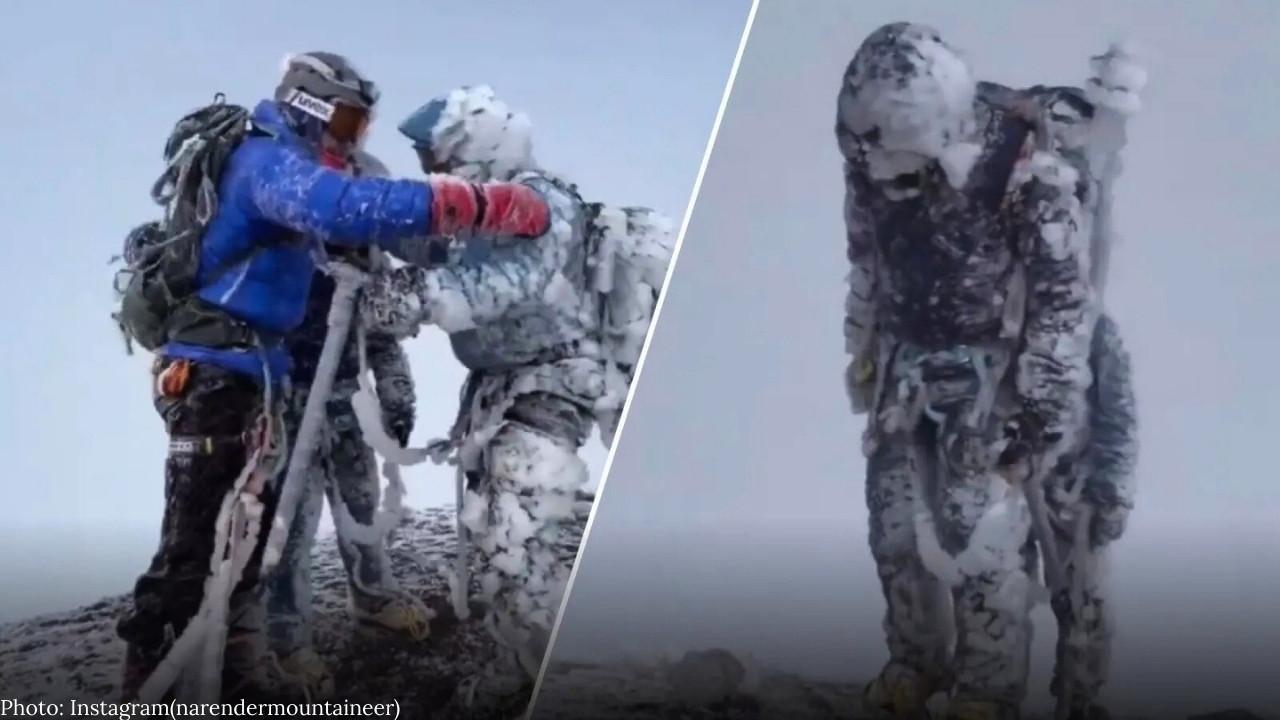
The story began thousands of miles away from Mexico, in training grounds scattered across India where Indian mountaineer Narendra Kumar prepared his body and mind for a challenge that many only read about. Pico de Orizaba, known locally as Citlaltépetl, rises like a sleeping giant above the clouds of North America. For Kumar and his teammates, the peak represented more than altitude; it symbolized the idea that progress in life, much like in climbing, happens step by step and breath by breath.
Mexico’s highest volcano has long attracted elite climbers. Yet this recent expedition carried a distinct Indian signature. The team, composed of seasoned trekkers and young aspirants, followed a philosophy that avoided haste. Instead of rushing camps or chasing records, they chose rhythm. Kumar often reminded the group that mountains reward patience. Every meter gained was treated as a small festival of resilience.
Pico de Orizaba stands at 5,636 meters and dominates the Mexican landscape between Veracruz and Puebla. The mountain is wrapped in legends of Aztec stargazers who believed its icy crown touched the realm of deities. Modern science calls it a stratovolcano with glacial routes that test technical skill. Climbers face thin air, sudden storms, and long fields of snow that seem endless at dawn.
For Indian mountaineers, climbing outside Asia builds international exposure. Over the past decade, Indian expeditions have grown confident in the Andes, Alps, and African ranges. Scaling Orizaba strengthens diplomatic bridges through sports and tourism. Kumar’s climb has therefore been welcomed by Indian outdoor federations as a sign that Indian climbers can adapt to varied terrains and cultures.
The expedition included ten members besides Kumar. Each was chosen after rigorous assessments in Uttarakhand and Himachal Pradesh. The group trained in message coordination, rope management, and high-altitude medicine. Nutritionists prepared detailed meal plans rich in carbohydrates and electrolytes. Families of climbers were briefed about communication schedules so that emotional support remained strong during the journey.
Reaching Mexico required months of planning. Equipment was inspected twice: insulated boots, crampons, helmets, satellite phones, and layered clothing. The team partnered with local Mexican guides who understood the labyrinth of glaciers. Kumar insisted that respecting local expertise was essential. He believed that humility toward host nations reduces risks and enriches experience.
Kumar followed a practice rooted in yoga where inhalation and exhalation guide movement. During Indian camps he asked teammates to walk uphill while counting breaths. This method slowed heart rates and improved focus. Sports psychologists who observed the sessions noted that such mindful routines cut panic during emergencies.
The team performed endurance runs carrying weighted packs. Ice-axe arrest techniques were rehearsed on artificial slopes. Kumar’s approach avoided glamorous shortcuts. He spoke about ordinary discipline: sleeping on time, repairing small tears in gloves, and learning to melt snow efficiently. These habits, though simple, created a foundation that later proved decisive on Mexican ice.
When the Indian flag landed in Mexico City, the climbers felt a mix of excitement and nervous silence. Streets smelled of roasted corn and distant rain. The mountain could be seen faintly from highways, glowing at sunset. Local communities greeted the team with warm Hindi phrases learned from social media videos. The cultural exchange eased the long flight fatigue.
The team moved to base town Tlachichuca where thin lanes lead toward Orizaba’s trailhead. Acclimatization hikes were organized to 4,000 meters. Doctors checked oxygen saturation daily. Kumar reminded everyone that thin air demands respect. The mantra “no rush” echoed again. Two members developed mild headaches; schedules were adjusted without debate, proving that the leader valued safety above applause.
The Indian team set their first high camp on rocky moraine. Tents fluttered like blue birds. Meals consisted of dal, rice, and Mexican tortillas. Kumar encouraged cross-cuisine dining to maintain appetite. Night temperatures dropped sharply. The mountain showed its first mood swing when a short snow shower covered ropes. The team cleaned lines together, learning the language of cooperation.
Between camps Uno and Dos lies the Jamapa glacier. The route includes crevasses that resemble cracked mirrors. Mexican guides taught the Indians to read snow bridges. Kumar listened carefully and then practiced the same with junior members. He believed that teaching while climbing doubles confidence. The Indians crossed the glacier in four hours, slower than many commercial groups but with stronger stability.
On the third day, a fierce wind arrived from the Gulf of Mexico. Visibility fell to a few meters. The Indians stayed inside tents for eighteen hours. Kumar used the pause to conduct storytelling circles where each climber described why they came. These conversations transformed anxiety into motivation. The storm eventually passed, leaving fresh powder that made steps heavier.
High altitude often triggers nausea. Kumar carried a medical kit with anti-inflammatory tablets and rehydration salts. The team medic monitored urine color and appetite. One senior member showed signs of exhaustion; Kumar decided to redistribute his pack among others. This decision demonstrated that real leadership sometimes looks like sharing burdens rather than giving speeches.
After the storm, the expedition shifted to camp Tres near 4,900 meters. Here the slope steepens and dawn feels metallic. The Indians fixed ropes on icy walls using screws. Kumar personally checked knots. He said that mountains do not understand nationality; they only understand preparation. The team rested for the final attempt scheduled at midnight.
At camp Tres, Kumar spoke to his family via recorded voice notes. Teammates followed similar rituals. Pico de Orizaba glittered under moonlight. The Indians felt proud carrying the dreams of a nation that has historically produced Everest legends. Yet this climb in Mexico was personal; it belonged to the idea of global brotherhood.
The Indian group left tents at 12:30 AM following Kumar’s command of steady breaths. Crampons bit into ice. Headlamps drew a serpent of light. The Jamapa glacier above camp Tres leads to the final crater rim. The Indians walked in silence except for the sound of exhalation that rose like small clouds.
The last 300 meters of Orizaba feel endless. The slope reaches 40 degrees. Kumar encouraged the team to take ten steps and then pause for two breaths. This micro-rhythm prevented slips. Mexican guides admired the Indian method. Other international groups who crossed them looked surprised by the calm pace.
At 6:10 AM, Narendra Kumar and his team stood on the crater rim, completing a historic ascent. The Indian tricolor was unfurled beside the Mexican flag. Kumar whispered a prayer of gratitude. Teammates hugged each other, realizing that the philosophy of stepwise progress had carried them safely to 5,636 meters.
Kumar warned that most accidents occur after summits when joy turns careless. The Indians descended using fixed ropes. Snow softened by sun demanded caution. The team reached camp Tres by noon and camp Dos by evening. Mexican villagers later greeted them with music and ordinary celebration meals.
Indian adventure networks have applauded the climb. Schools invited Kumar for motivational sessions. The mountaineer emphasized that youth should see mountains as teachers of character. His Mexican ascent has therefore been included in training modules of Indian institutes as a case study of mindful leadership.
The achievement encourages Indians to explore Mexico for climbing and trekking. It also strengthens the Middle East and Gulf interest in Indian adventure stories, as many expatriate Indians follow such news closely. Kumar’s climb demonstrates that adventure writing can attract large numbers of readers when told in a human tone.
Kumar spoke about keeping the mountain clean. The Indians carried back all waste including used batteries. Pico de Orizaba’s glaciers are shrinking due to climate shifts. The team used their visibility to discuss responsible tourism, proving that climbers today act as ambassadors of nature.
Born in a modest Indian town, Kumar discovered trekking during college. He worked ordinary jobs to fund courses in Nehru Institute of Mountaineering. His career grew slowly, avoiding sensational shortcuts. The mantra step by step fits his life perfectly. Scaling Mexico’s tallest summit therefore felt like a natural chapter rather than sudden fame.
Each teammate credited Kumar for patience. Junior climber Ravi Mehta said that breath counting saved him during the final ridge. Senior member Anwar Sheikh noted that respecting Mexican guides reduced confusion. These voices show that the expedition was not a one-man show but a chorus of dedication.
The mantra of mindful ascent can guide office workers in Dubai and Gulf cities who handle excessive workload. Just as Kumar divided packs among teammates, organizations should divide stress among employees. Mountains teach ordinary ethics that fit urban life.
Two female climbers in the team demonstrated rising gender balance in Indian adventure sports. They trained alongside men without special treatment. Kumar believes that mountains do not differentiate. Their presence has encouraged Indian women living in Middle East to join trekking clubs.
Kumar plans to climb Aconcagua and European routes. Indian federations aim to send more teams to Mexico for training exchanges. The leader insists that future expeditions will continue the mantra breath by breath. Pico de Orizaba has therefore become a new playground for Indian dreams.
Mexican villagers have invited Kumar to conduct annual workshops. Indian schools have requested him for online sessions. The mountaineer wishes to start a foundation that supports young climbers from Gulf expatriate families as well.
The climb of Pico de Orizaba by Narendra Kumar and his Indian team is a historic tale of patience, preparation, and global friendship. The philosophy “step by step, breath by breath” guided them safely to Mexico’s tallest volcano and brought pride to India’s adventure community. The story continues to inspire readers across Dubai, Middle East, and Asia who believe that steady rhythm conquers distant skies.
Disclaimer:
This article is intended solely for informational purposes. Mountaineering involves significant risks, and any expedition should be undertaken only with professional guidance, proper training, and authorized approvals. The experiences described reflect individual accounts and should not be treated as technical instructions.








Rabada Misses First Australia Test as South Africa Pick Two Spinners
Kagiso Rabada misses the opener as South Africa vs Australia begins, with Anrich Nortje returning an

Starc Compares Australia's Tough Year to McIlroy's Major Sweep
Mitchell Starc says Australia winning three away Test series and the World Cup would match Rory McIl

France’s Sesterce Plans $11 Billion AI Data Centre in Finland
Sesterce plans a $11 billion AI data centre in Finland, with major expansion, green energy plans and

Danaher to Launch AI-Powered Autonomous Research Lab in 2027
Danaher plans an AI research lab for 2027, combining robotics and automation to speed up drug discov

Musk Welcomes German Support for Tesla Driver Assistance Tech as EU Approval Push Continues
Elon Musk welcomes Germany's backing for Tesla FSD as the company seeks EU approval amid speed, safe

Microsoft and Nvidia CEOs to Unveil AI Laptop at San Francisco Event
Microsoft and Nvidia showcase a new AI laptop with RTX Spark chips as they push powerful local AI co