You have not yet added any article to your bookmarks!
Join 10k+ people to get notified about new posts, news and tips.
Do not worry we don't spam!
Post by : Meena Ariff
A sudden U.S. move has shaken China’s decades-long relationship with Venezuela, leaving Beijing to reassess its strategy in South America. Within hours, years of carefully cultivated diplomacy and economic cooperation were thrown into uncertainty.
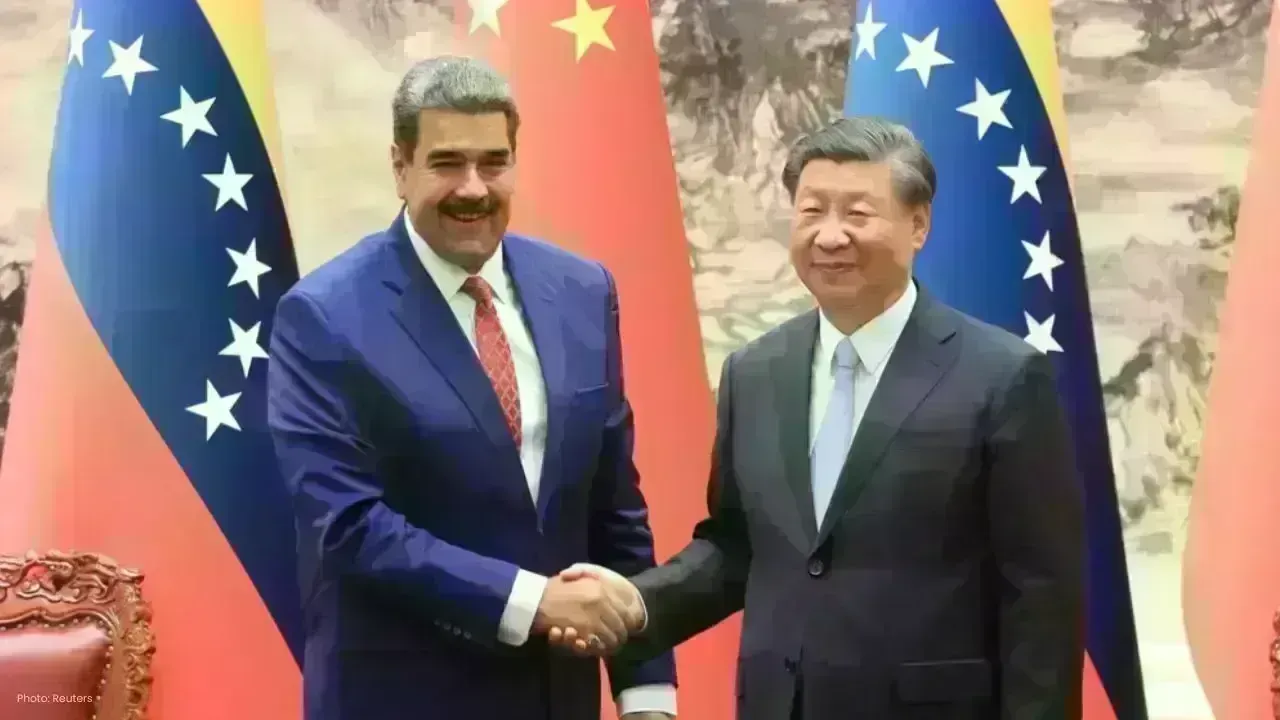
Just before his arrest, Venezuelan President Nicolás Maduro praised Chinese President Xi Jinping, calling him an elder brother and highlighting their strong partnership. The meeting, attended by top officials, showcased the close ties between the two nations, with China heavily invested in Venezuela’s oil and infrastructure.
Over the years, China has provided more than $100 billion in loans and development projects to Venezuela, including railways and power plants. In return, Caracas supplied large volumes of crude oil, with nearly 80% of its exports going to China last year.
The partnership was abruptly disrupted when Maduro was captured in a U.S. operation. The stark contrast between diplomatic meetings and his detention has shocked global observers.
China condemned the U.S. action, calling it a violation of international law and a threat to national sovereignty. Officials stressed that countries should respect each other’s security and political independence.
Beijing now faces new challenges. The situation could strain Chinese investments and influence in Latin America, yet it also underscores China’s reputation as a stable partner compared to the unpredictability of U.S. policies. Analysts note that Beijing will likely proceed cautiously, balancing its strategic foothold in South America with relations with Washington.
U.S. officials have openly warned against Chinese and Russian influence in the Western Hemisphere, signaling that the region should not become a base for rivals. China has rejected attempts to pressure Venezuela into severing ties and warned that such coercion could harm the Venezuelan people.
The arrest also sparked debate about broader implications, including Taiwan, though experts say China’s strategy there remains focused on long-term planning rather than reacting to U.S. precedent.
China’s economic exposure in Venezuela is significant but manageable. Chinese firms hold major energy projects, and Venezuela owes roughly $10 billion to Chinese creditors. However, future investments could face risks if U.S. pressure escalates across Latin America.
Despite the uncertainties, China continues to portray itself as a reliable partner. It has successfully persuaded several countries in the region to switch diplomatic recognition from Taiwan to China, strengthening its influence in the Global South.
As Venezuela’s political future remains unclear, Beijing must navigate a rapidly changing geopolitical landscape, safeguarding its investments and regional relationships while responding to unexpected global developments.







Six Dead After Bus Fire Near Bern in Switzerland
Regional PostBus vehicle catches fire near Kerzers, triggering investigation by Swiss authorities

China Exports Surge Despite Trump Tariffs
Strong global demand for electronics and manufactured goods pushes China’s exports higher despite ri

Australian Designer Wins Trademark Case vs Katy Perry
Australia’s High Court rules fashion designer’s Katie Perry clothing brand does not infringe on the

China-North Korea Passenger Train Service Resumes
Beijing–Pyongyang and Dandong–Pyongyang rail links restart as the two countries restore travel conne
G7, IEA Urge Coordinated Oil Reserve Release as Prices Surge
G7 finance chiefs and IEA urge coordinated release of emergency oil reserves as Middle East tensions
U.S. and China Disagree on Fentanyl, Trade at UN Meeting
At a UN drug forum in Vienna, the U.S. blames China for weak fentanyl controls; China denies claims