You have not yet added any article to your bookmarks!
Join 10k+ people to get notified about new posts, news and tips.
Do not worry we don't spam!

Post by : Meena Ariff
Australia experienced a significant decline in its wine export value, which dropped by 8% to A$2.34 billion (approximately $1.6 billion). This fall reflects a broader global trend of decreasing alcohol consumption, affecting key export destinations such as China and the United Kingdom. As the world’s fifth-largest wine exporter, Australia is facing a complex set of challenges that are reshaping its wine industry.
According to Peter Bailey, head of market insights at Wine Australia, the reduction in global wine sales is driven by several factors. One major influence is the growing health and wellness movement, which encourages consumers to reduce their alcohol intake. At the same time, rising living costs are forcing many buyers to cut discretionary spending, including on alcoholic beverages. This combination of changing consumer habits and economic pressures has led to a noticeable dip in demand across several international markets.
Exporters are also grappling with operational difficulties beyond consumer demand. Trade barriers, tariffs, and geopolitical tensions have increased the cost and complexity of shipping wine to overseas markets. Regional conflicts and protectionist policies have made it harder for Australian producers to maintain steady access to their traditional customers, adding further strain on the industry.
The sharpest decline in Australian wine exports came from China, which remains Australia’s most lucrative market. Export values to China plunged 17% last year, falling to A$755 million (around $530 million). This downturn follows a strong performance in 2024, when Beijing removed tariffs that had previously limited wine imports from Australia. However, the Chinese wine market has since contracted dramatically and is now only one-third the size it was five years ago. This significant shrinkage has had a direct and negative impact on Australian winemakers who had been counting on China’s demand.
Beyond China, other markets like Britain also showed weaker demand, contributing to the overall drop in export revenue. The combination of oversupply in the global wine market and declining sales is forcing Australian producers to reassess their strategies and explore new opportunities amid an uncertain international trade environment.
This decline in exports highlights the ongoing pressures faced by the Australian wine industry. As consumer preferences evolve and global economic conditions fluctuate, the sector must adapt to survive and thrive. Industry experts emphasize the importance of innovation, market diversification, and navigating geopolitical challenges to sustain Australia’s position in the competitive global wine market.









George Russell Wins Dutch GP Sprint, Boosts Mercedes Morale
George Russell wins the Dutch GP Sprint from pole as Mercedes teammate Kimi Antonelli extends his F1

Australia 50/3 After Bangladesh Bowled Out for 64 in Second Test
Australia reached 50/3 after Bangladesh were bowled out for 64 in the second Test, with Mitchell Sta

Jordan Burroughs Returns to Wrestling with 2028 Olympic Dream
Jordan Burroughs returns to wrestling with Real American Freestyle as the Olympic champion eyes a po

Lamborghini Catches Fire on Singapore's ECP, Causing Heavy Traffic
A Lamborghini caught fire on Singapore's ECP, causing heavy traffic and bus delays. No injuries were

Bangkok Airport Duty-Free Area Flooded by Pipe Burst
A burst water pipe flooded the duty-free shopping area at Bangkok's Suvarnabhumi Airport on July 16,
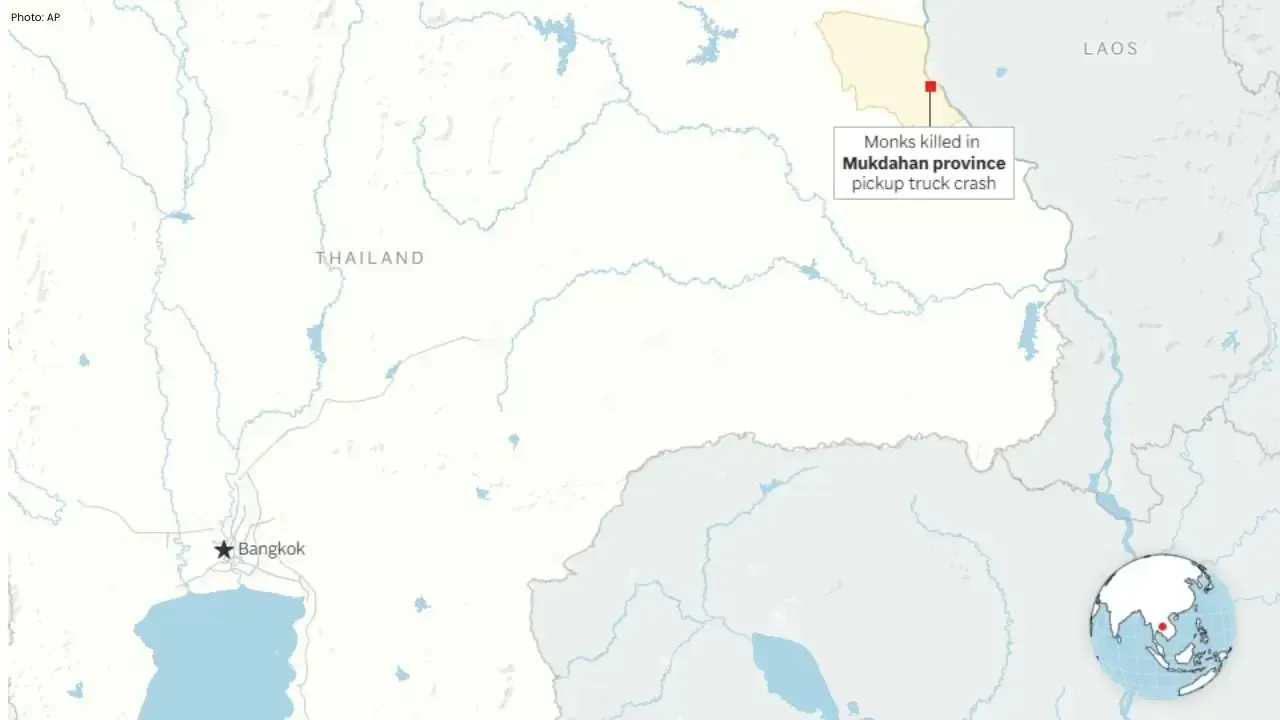
Nine Monks Killed in Thailand Pickup Truck Tragedy
An 11-year-old boy driving a pickup truck crashed into monks during a pilgrimage in northeastern Tha