
You have not yet added any article to your bookmarks!
Join 10k+ people to get notified about new posts, news and tips.
Do not worry we don't spam!
Post by : Anis Farhan
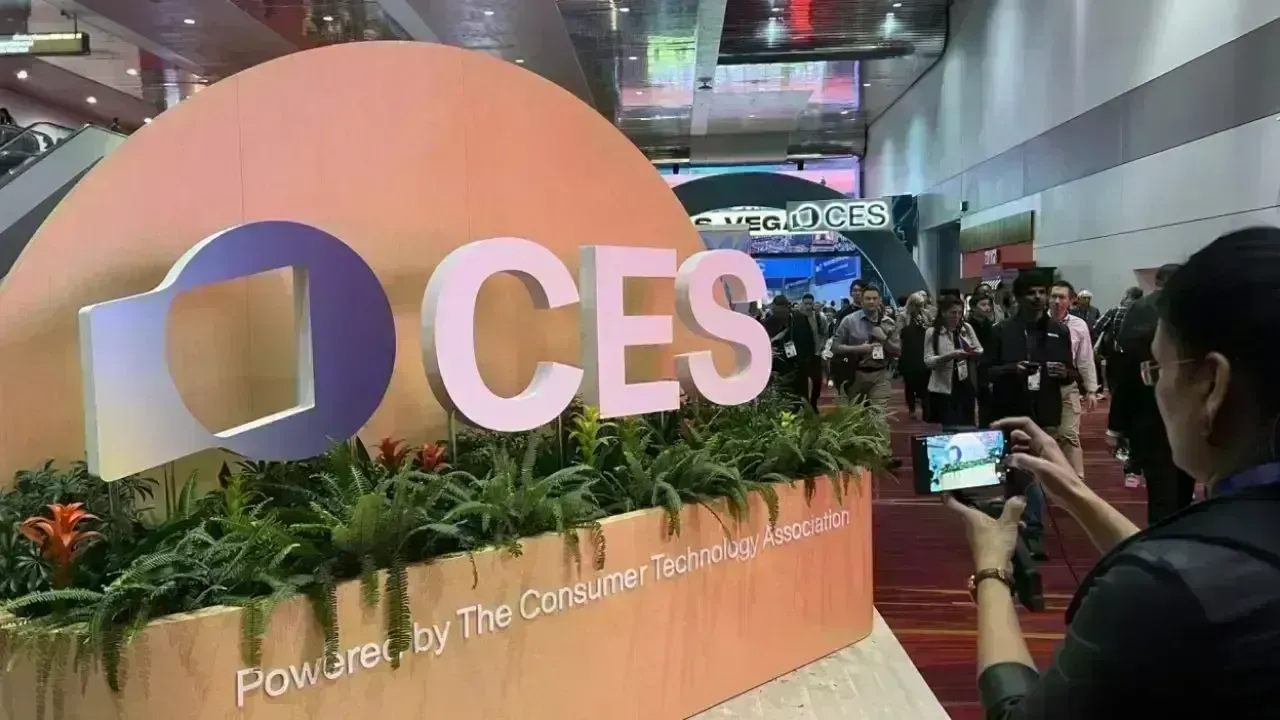
Every January, the world’s attention turns to Las Vegas as the technology industry gathers to showcase what lies ahead. CES 2026 has lived up to that expectation, presenting a future where artificial intelligence is no longer an add-on feature but the core engine driving innovation.
Held in Las Vegas, the event brought together global tech giants, startups, policymakers, and investors under one roof. Organized by the Consumer Technology Association, CES 2026 reflected a noticeable shift in priorities—away from flashy concepts and toward practical, deployable technology that directly integrates into daily life.
Unlike earlier editions where AI appeared as a buzzword, CES 2026 demonstrated how artificial intelligence has become foundational. Nearly every category—robots, wearables, vehicles, appliances, and healthcare devices—featured AI at its core.
This shift signals a maturing tech ecosystem where intelligence, adaptability, and automation are expected standards rather than futuristic extras.
One of the most talked-about highlights of CES 2026 was the rapid evolution of humanoid robots. No longer confined to research labs or industrial settings, these robots are being positioned for homes, hospitals, warehouses, and elder care facilities.
Robots showcased this year displayed improved mobility, better balance, and more natural human interaction powered by advanced machine learning models.
Rather than focusing on spectacle, manufacturers emphasised real-world use cases—assisting seniors, handling repetitive industrial tasks, supporting logistics, and providing customer service in controlled environments.
Wearable technology at CES 2026 moved decisively beyond step counts and heart rate monitoring. AI-powered wearables showcased predictive health insights, mental wellness tracking, posture correction, and real-time stress analysis.
These devices aim to shift healthcare from reactive treatment to proactive prevention.
Many wearables now operate with continuous AI processing, learning user habits and adapting recommendations over time. This evolution positions wearables as personal digital companions rather than passive sensors.
Healthcare emerged as one of the strongest verticals at CES 2026. AI-enabled diagnostic tools, remote patient monitoring systems, and wearable health devices highlighted how technology can reduce pressure on traditional healthcare infrastructure.
Real-time data analysis allows early detection of anomalies, potentially preventing serious health episodes before they occur.
With global populations aging rapidly, tech companies showcased robotics and AI systems designed to support independent living for seniors, addressing both care shortages and quality-of-life concerns.
CES 2026 demonstrated a shift toward ambient intelligence in smart homes. Devices are becoming less intrusive, blending seamlessly into living spaces while responding intuitively to user behaviour.
AI-driven energy management, security, and climate control systems showcased how homes can optimise themselves without constant manual input.
Unlike earlier smart home iterations, privacy featured prominently. On-device AI processing and enhanced encryption were highlighted as essential components rather than optional features.
Automotive technology at CES 2026 focused heavily on software-defined vehicles. AI systems now manage navigation, driver assistance, predictive maintenance, and in-cabin personalisation.
The line between car and computer continues to blur, with vehicles increasingly viewed as intelligent mobility platforms.
While fully autonomous vehicles remain a long-term goal, this year’s focus was on incremental intelligence—advanced driver assistance systems that enhance safety without removing human control entirely.
Display technology showcased improvements in energy efficiency, flexibility, and visual realism. Transparent displays, foldable screens, and immersive augmented reality interfaces hinted at new ways humans interact with information.
Rather than novelty, manufacturers emphasised durability and everyday usability.
Sustainability was no longer a side conversation. AI-powered energy optimisation, smart grids, and resource management tools featured prominently.
From reducing household energy consumption to optimising industrial efficiency, technology is increasingly positioned as a tool for climate action.
Several companies showcased products designed with recyclability, repairability, and longer lifespans in mind, reflecting changing consumer expectations.
One emerging trend at CES 2026 was agentic AI—systems capable of making limited decisions independently based on user preferences and contextual data.
These AI agents can manage schedules, coordinate devices, and adapt workflows with minimal human input, raising both efficiency and ethical questions.
As devices become smarter and more connected, cybersecurity concerns have intensified. CES 2026 highlighted embedded security frameworks, biometric authentication, and AI-driven threat detection.
Security is increasingly treated as a foundational layer rather than an afterthought.
CES 2026 reflected a shift in consumer sentiment. Audiences appeared less impressed by experimental gimmicks and more interested in technology that delivers tangible value.
Products addressing health, safety, efficiency, and sustainability resonated far more strongly than purely entertainment-driven innovations.
While major technology companies dominated floor space, startups delivered some of the most creative solutions. Open platforms, cloud-based AI tools, and accessible hardware have lowered barriers to entry.
This balance reinforced CES’s role as both a launchpad for innovation and a marketplace for ideas.
CES 2026 featured exhibitors from across Asia, Europe, Africa, and the Americas, highlighting how innovation has become globally distributed.
Cross-border partnerships and interoperable platforms emerged as recurring themes.
Many technologies unveiled at CES 2026 are already close to commercial rollout. This shortens innovation cycles and accelerates market impact.
For investors and policymakers, the event offered a glimpse into sectors likely to drive growth in the coming years.
As AI becomes more autonomous, ethical considerations featured prominently in panel discussions. Issues around bias, accountability, and transparency are now central to product design conversations.
CES 2026 underscored that technological progress must be matched with responsible governance.
Despite the heavy emphasis on automation and AI, the underlying narrative of CES 2026 was human-centric. Technology is increasingly being designed to support human needs rather than replace them.
This marks a subtle but important shift in innovation philosophy.
While innovation is accelerating, widespread adoption depends on affordability, infrastructure, and digital literacy. Bridging this gap remains a critical challenge.
Rapid deployment of AI-powered systems raises concerns about unintended consequences, making regulation and testing more important than ever.
Rather than promising distant futures, CES 2026 offered a reality check on where technology stands today—and where it is heading next. The focus on deployable solutions, responsible AI, and meaningful use cases reflects a maturing industry aware of its social impact.
CES 2026 will be remembered not for extravagant concepts, but for its practical vision of the future. Robots designed to assist rather than amaze, wearables that prevent illness rather than just track steps, and AI systems that quietly optimise daily life defined this year’s narrative.
As these technologies move from exhibition halls into homes, hospitals, and workplaces, CES 2026 stands as a marker of transition—from experimental innovation to intelligent integration. The future, it seems, is not just smarter—it is more thoughtful.
This article is intended for informational and editorial purposes only. Product features, availability, and timelines may vary by manufacturer and region. Readers should rely on official company announcements for confirmed specifications and release details.










AI Companies Expected to Drive Most US Earnings Growth in Q3
AI companies are expected to drive US third-quarter earnings growth as investors assess tech profits

Money Market Funds See Record Inflows as Global Bond Selloff Intensifies
Global money market funds attract $153.81 billion as bond yields rise, inflation fears persist and i

Meta Bans TikTok Ads on Facebook and Instagram in Seven Countries
Meta has banned TikTok ads in seven countries, escalating competition over social media users, adver

ASML and Zeiss Target Next-Generation Chip Technology in 10 Years
ASML and Carl Zeiss are developing Hyper NA technology to print smaller chip circuits, with the next

Rabada Misses First Australia Test as South Africa Pick Two Spinners
Kagiso Rabada misses the opener as South Africa vs Australia begins, with Anrich Nortje returning an

Starc Compares Australia's Tough Year to McIlroy's Major Sweep
Mitchell Starc says Australia winning three away Test series and the World Cup would match Rory McIl

