
You have not yet added any article to your bookmarks!
Join 10k+ people to get notified about new posts, news and tips.
Do not worry we don't spam!
Post by : Saif Rahman
The Eurovision Song Contest has long been a platform for showcasing diverse musical talent and cultural exchange. Yet, this year’s event, taking place in Vienna, has transcended its original purpose and become intertwined with the escalating political strife linked to the Gaza conflict and Israel's involvement in the competition.
In a significant display of dissent, several nations, including Spain, Ireland, Iceland, Slovenia, and the Netherlands, have opted out of Eurovision 2026 due to Israel's eligibility to compete, despite the ongoing situation in Gaza. This boycott marks one of the most substantial controversies ever faced by the event, underlining the depth of public sentiment regarding the conflict.
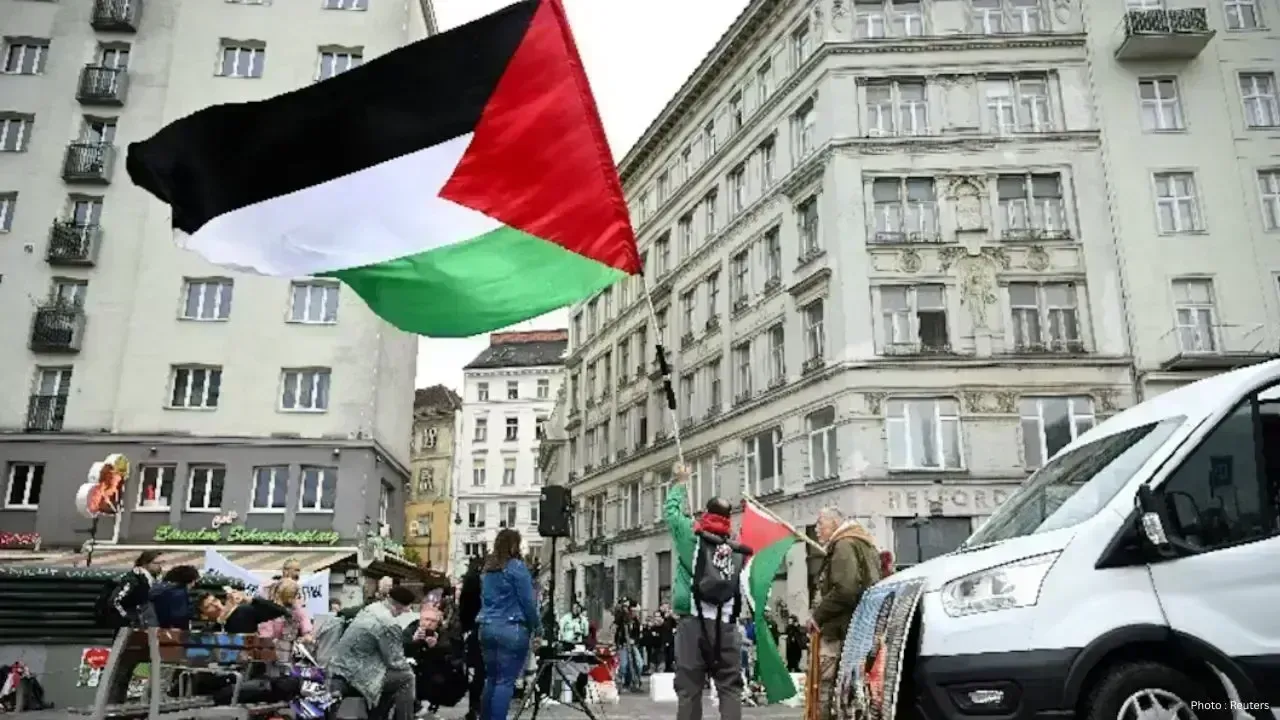
Demonstrations erupted in Vienna both before and during the contest, with protesters brandishing Palestinian flags and advocating for peace in Gaza. Inside the venue, disturbances arose during Israel’s performance, prompting reports of boos and discontent from the audience. Enhanced security measures were deployed amid concerns over potential protests throughout the finale.
The European Broadcasting Union, the organizing body of Eurovision, maintains its stance on allowing Israel to participate, arguing that the contest remains a non-political celebration centered on music and unity. However, critics contend that it’s untenable to sidestep political implications, especially during a significant humanitarian crisis.
This isn’t the first instance where the Eurovision has been influenced by political dynamics. Throughout its history, wars, diplomatic disputes, and ideological rifts have shaped voting trends and public engagement. Nevertheless, the current situation surrounding Gaza presents one of the most formidable challenges the competition has ever faced.
Proponents of Israel stress that artists should not be penalized for geopolitical tensions, while others assert that allowing participation amid Gaza's turmoil conveys an inappropriate message on the global stage. Such polarized views have ignited discussions among fans, broadcasters, and even former Eurovision champions.
In the face of this controversy, the competition perseveres. Organizers remain hopeful that music has the power to unite people, even in tumultuous times. Yet, this year’s edition has highlighted that global crises and humanitarian issues cannot simply be relegated to the background of an entertainment platform.










PM Modi Pays Tribute to Mahatma Gandhi, Urges People to Support Khadi
PM Modi pays tribute to Mahatma Gandhi on Gandhi Jayanti and urges citizens to support Khadi and the

Amazon Seeks to Offload $8 Billion in Nvidia Chips to Investors
Amazon plans to move $8 billion in Nvidia chips to investors, using a new financing model to strengt

Samsung Raises Galaxy S26 Prices as Memory Chip Costs Rise
Samsung raises Galaxy S26 prices in South Korea as rising memory chip costs put pressure on smartpho

Lewis Hamilton Calls Singapore Grand Prix One of F1's Toughest Races
Lewis Hamilton discusses the demanding Singapore Grand Prix and brings Plus44 and Almave to Singapor

Denmark's Pandora Opens World's Largest Jewellery Factory in Vietnam
Pandora opens its largest jewellery factory in Vietnam, expanding global production, strengthening s

Gautam Gambhir Questions Batting-Friendly Pitches After India's Record ODI Chase
Gautam Gambhir questions batting-friendly ODI pitches after India’s record chase, calling for a bett

