
You have not yet added any article to your bookmarks!
Join 10k+ people to get notified about new posts, news and tips.
Do not worry we don't spam!
Post by : Anis Farhan
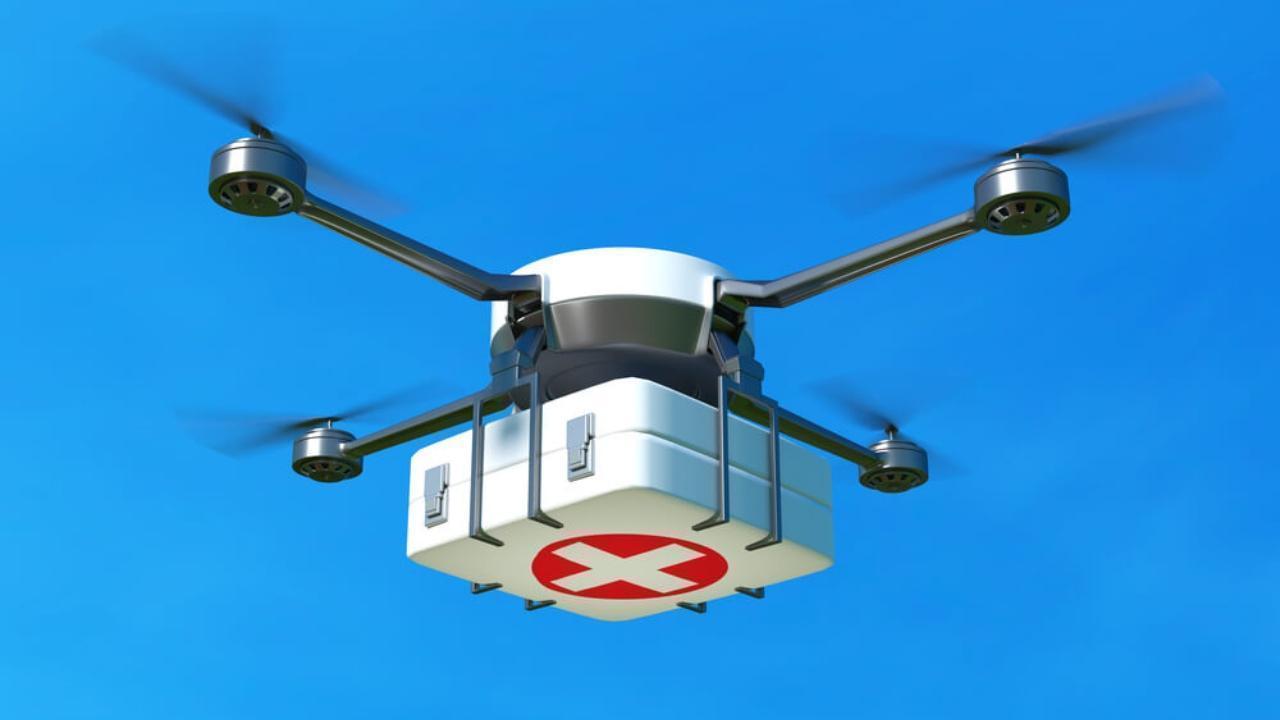
Imagine needing an urgent medicine refill and receiving it not from a delivery van stuck in traffic, but from the sky. A small drone descends, lands safely, and delivers life-saving medication within minutes. This is no longer a science-fiction scenario. Across the world, healthcare systems, logistics companies, and governments are actively experimenting with drone-based medicine delivery, pushing it closer to everyday reality.
The idea is simple but powerful: remove roads, traffic, and distance from the equation. In practice, however, turning drones into reliable medical couriers requires breakthroughs in technology, regulation, safety, and public trust. As these pieces fall into place, drone delivery is emerging as one of the most transformative changes in modern healthcare logistics.
This article examines how drones could soon deliver medicines, why healthcare is uniquely suited for this shift, and what it will take for this technology to become routine rather than remarkable.
Healthcare logistics face challenges that traditional delivery systems struggle to solve.
Many medicines are time-critical:
Blood products
Vaccines
Antivenoms
Emergency drugs
Delays caused by traffic, weather, or infrastructure gaps can directly impact patient outcomes. Drones bypass many of these obstacles.
Rural regions, islands, mountainous areas, and disaster zones often lack fast and reliable medical transport. Drones offer a way to bridge these gaps without building expensive new infrastructure.
With aging populations and chronic illnesses on the rise, healthcare is shifting from hospitals to homes. Medicine delivery must adapt to this decentralized model.
Drone medicine delivery is far more complex than dropping a package from the sky.
Medical drones are designed for stability, precision, and reliability. Key features include:
Vertical takeoff and landing
Redundant motors and batteries
GPS and sensor-based navigation
Emergency return or safe-landing systems
These features ensure safe operation even in unpredictable conditions.
Medicines require protection from:
Heat
Moisture
Vibration
Unauthorized access
Drones use insulated, sealed payload compartments, often with temperature control and tamper detection.
Every delivery is digitally monitored:
Launch confirmation
Real-time location tracking
Temperature logging
Proof of delivery
This level of traceability exceeds many traditional delivery systems.
Not all deliveries benefit equally from drones. Medicines stand out.
Most medicines are lightweight and compact but critically important. This makes them ideal for aerial delivery where payload capacity is limited.
Hospitals, pharmacies, clinics, and distribution centers have fixed locations, simplifying route planning and risk management.
Even if drone delivery costs more per trip than ground transport, the value of speed, reliability, and lives saved justifies the investment.
Drone medicine delivery is already moving beyond trials.
Drones are being used to deliver:
Blood units to trauma centers
Defibrillators to cardiac emergencies
Antivenom to rural clinics
In emergencies, minutes matter more than cost.
For chronic patients, drones could deliver:
Insulin
Blood pressure medication
Asthma inhalers
This reduces hospital visits and improves treatment adherence.
After floods, earthquakes, or conflicts, roads may be inaccessible. Drones can restore medicine supply when traditional logistics fail.
Several technological advancements are converging to enable medical drone delivery.
Longer flight times and faster charging allow drones to cover meaningful distances while maintaining reliability.
Sensors, cameras, and AI-based navigation help drones:
Avoid buildings and trees
Adjust to weather conditions
Land accurately in small spaces
This reduces accident risk in complex environments.
Drones are being linked to:
Pharmacy inventory systems
Hospital supply chains
Prescription verification platforms
This creates seamless, automated workflows.
Regulation is one of the biggest barriers—and enablers.
Governments are developing systems to manage low-altitude drone traffic, similar to air traffic control but automated and scalable.
Medicines must meet strict storage and handling requirements. Regulators are defining:
Temperature thresholds
Chain-of-custody rules
Certification standards
This ensures patient safety is not compromised.
Instead of nationwide launches, authorities are approving limited zones to test safety, public response, and scalability.
Public acceptance depends on trust.
Modern drones include multiple fail-safes, but concerns remain about crashes in populated areas. Redundant systems and strict route planning aim to minimize these risks.
Drones raise fears of constant monitoring. Medical delivery drones are designed to:
Avoid cameras where possible
Collect only navigation data
Operate within strict privacy guidelines
Clear communication is essential to maintain public trust.
Drone delivery must make financial sense to scale.
While drone fleets require initial investment, they can:
Reduce reliance on vehicles and fuel
Lower staffing costs for urgent deliveries
Decrease hospital inventory waste
Over time, these savings can outweigh costs.
As drone manufacturing, software, and operations scale up, per-delivery costs are expected to fall significantly.
Governments, hospitals, and private companies often share costs, accelerating adoption without burdening any single player.
Healthcare delivery models will adapt.
Local pharmacies may become drone launch points, enabling rapid neighborhood-level delivery.
By outsourcing logistics to drones, hospitals can focus resources on treatment rather than transportation coordination.
Drone operations create demand for:
Fleet managers
Maintenance technicians
Airspace coordinators
Healthcare logistics specialists
This shifts employment rather than eliminating it.
Despite progress, hurdles remain.
Heavy rain, strong winds, and extreme heat can ground drones. Hybrid systems combining drones and ground transport may be necessary.
Cities present complex environments with tall buildings, power lines, and heavy traffic. Safe scaling in urban areas requires careful planning.
Even safe technology can fail if people resist it. Education and transparency are crucial.
AI is the invisible pilot behind many drone operations.
AI selects routes that minimize risk, energy use, and delivery time.
Algorithms analyze performance data to predict failures before they occur, increasing safety.
AI can predict medicine demand patterns, positioning drones and supplies where they are most needed.
The transition will be gradual but meaningful.
Initial adoption focuses on emergencies. Routine deliveries follow once reliability is proven.
Drone delivery will connect with:
Smart traffic systems
Digital health records
Automated pharmacies
Creating an interconnected healthcare ecosystem.
Drones may help underserved regions leapfrog traditional infrastructure, improving healthcare access faster than roads or railways ever could.
Technology reshapes expectations.
Once rapid delivery becomes possible, slow access may be seen as unacceptable, reshaping healthcare norms.
Ensuring drone delivery benefits rural and low-income populations—not just urban elites—will be a critical test.
For patients, the impact is deeply personal.
Reliable delivery improves adherence to treatment plans.
Patients no longer need to travel long distances or wait in queues for essential medicines.
Lives can be saved simply by delivering the right medicine faster.
Drone-based medicine delivery represents a quiet revolution in healthcare—one that prioritizes speed, access, and resilience. While challenges remain, the direction is clear. As technology matures and regulations adapt, drones are poised to become trusted partners in delivering care, not just packages.
The real breakthrough is not the drone itself, but what it enables: a healthcare system that reaches patients wherever they are, when they need it most. When medicines begin arriving from the sky as routinely as mail arrives by road, healthcare delivery will have crossed a threshold that reshapes expectations forever.
Disclaimer:
This article is for informational purposes only. Medical delivery technologies, regulations, and availability may vary by region and evolve over time.










PM Modi Pays Tribute to Mahatma Gandhi, Urges People to Support Khadi
PM Modi pays tribute to Mahatma Gandhi on Gandhi Jayanti and urges citizens to support Khadi and the

Amazon Seeks to Offload $8 Billion in Nvidia Chips to Investors
Amazon plans to move $8 billion in Nvidia chips to investors, using a new financing model to strengt

Samsung Raises Galaxy S26 Prices as Memory Chip Costs Rise
Samsung raises Galaxy S26 prices in South Korea as rising memory chip costs put pressure on smartpho

Lewis Hamilton Calls Singapore Grand Prix One of F1's Toughest Races
Lewis Hamilton discusses the demanding Singapore Grand Prix and brings Plus44 and Almave to Singapor

Denmark's Pandora Opens World's Largest Jewellery Factory in Vietnam
Pandora opens its largest jewellery factory in Vietnam, expanding global production, strengthening s

Gautam Gambhir Questions Batting-Friendly Pitches After India's Record ODI Chase
Gautam Gambhir questions batting-friendly ODI pitches after India’s record chase, calling for a bett

