
You have not yet added any article to your bookmarks!
Join 10k+ people to get notified about new posts, news and tips.
Do not worry we don't spam!
Post by : Samjeet Ariff
India has officially claimed the title of the largest rice producer in the world, surpassing China in overall output, marking a significant milestone in global agriculture. Rice functions as a staple food and income source for millions of farmers, contextualizing its significance in discussions of food security and rural livelihoods. This achievement is a culmination of persistent agricultural adaptations, strategic policy initiatives, and technological advancements, not merely an overnight event.
In this article, we delve into how India reached this pivotal point, explore the factors contributing to China’s shift, and examine the implications for the global food ecosystem.
Rice is a daily dietary staple for more than half of the world's population. In numerous countries across Asia and Africa, it is fundamental to food security. Consequently, any alterations in global rice production rankings bear significant consequences for:
International food pricing
Export-import dynamics
Sustainable agricultural strategies
Geopolitical food policies
India and China together comprise over 50% of global rice production, making fluctuations in their outputs especially noteworthy.
The transition of India surpassing China in rice production is attributed to significant structural variations in agricultural practices and shifting national objectives.
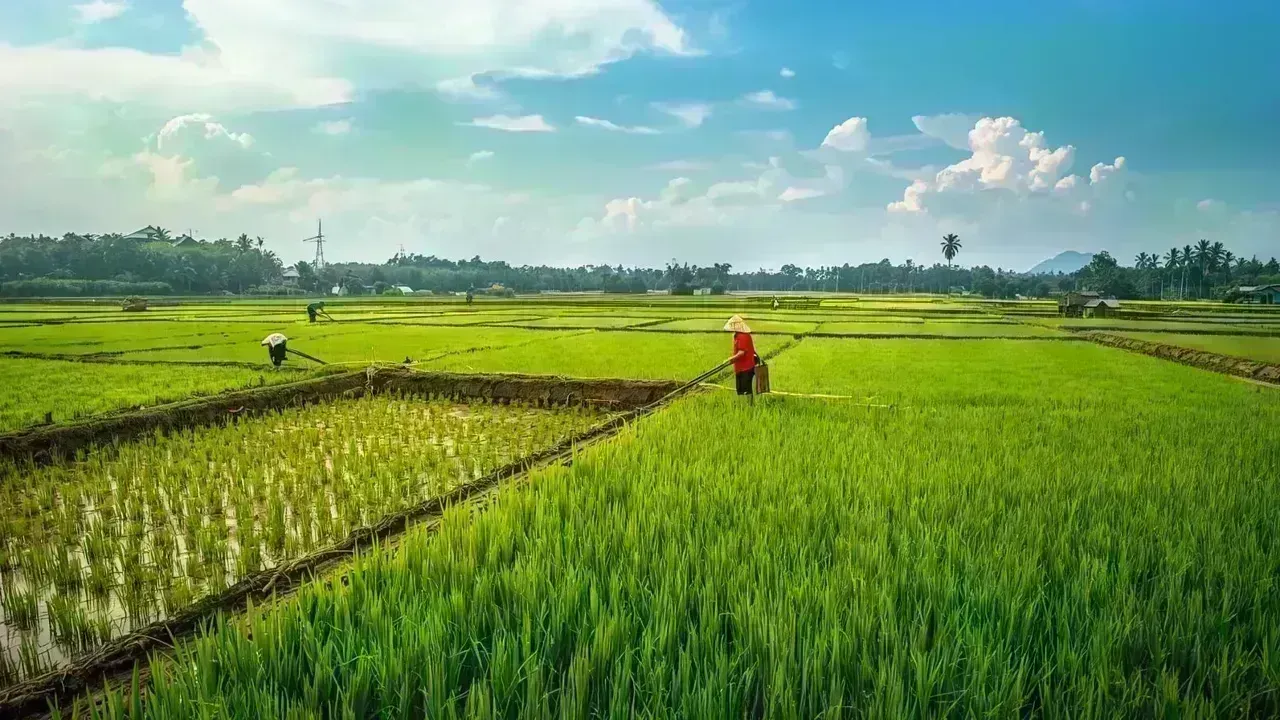
Rice is cultivated over a broader area in India compared to China. Key states such as West Bengal, Uttar Pradesh, Punjab, Andhra Pradesh, and others extensively grow rice. Even minor yield improvements across this expansive area yield substantial production increments.
Conversely, China has seen a steady decline in rice cultivation areas because of:
Urban growth
Industrialization
Diversification of crops
Labor shortages in agricultural regions
This divergence in land distribution is crucial for production totals.
India has witnessed considerable improvements in rice yields per hectare through enhanced seed varieties, better irrigation, and mechanization. Although China traditionally boasted higher yields, this gap has been significantly narrowed over time.
Indian farmers have increasingly embraced:
High-yielding varieties (HYV)
Hybrid seeds
Shorter crop cycles
Advanced pest management strategies
Such refinements have allowed India to boost production without large-scale land expansion.
India's rise to the top of rice production is closely linked to consistent policy support.
The established Minimum Support Price (MSP) for rice offers farmers financial security. This assurance minimizes risk and motivates ongoing rice farming, even amid unpredictable weather conditions.
The extensive public food programs in India necessitate considerable rice stocks. This results in stable domestic demand, ensuring economic viability in production.
Developing large-scale irrigation systems, canals, and tube wells has diminished reliance on unpredictable monsoon rains in critical rice growing zones.
Subsidies on fertilizers, seeds, and farming machinery lower operational costs and enhance profitability for farmers, fostering sustained output growth.
Technological advancements have been pivotal in India's rice production success.
The introduction of new rice varieties provides:
Elevated yield potential
Resistance to pests and diseases
Tolerance to both floods and droughts
Shortened growth durations
This facilitates multiple cropping cycles in various regions.
The incorporation of transplanting equipment, harvesters, and threshers has minimized labor dependency and reduced post-harvest waste. Mechanization also aids farmers in handling extensive fields efficiently during tight harvesting windows.
Tools such as weather notifications, soil analysis, farming advisories, and satellite tracking have enhanced decision-making at the farm level, mitigating losses and ensuring consistent yield.
China remains a key rice producer, yet it faces several constraints limiting output expansion.
Shifts in consumer choices in China include a growing preference for:
Wheat-based items
Meat and dairy products
Processed alternatives
This diminishes the internal demand for rice.
The rise in rural wages and an aging workforce have driven operational costs upward. Increasingly, younger individuals are opting for urban employment, decreasing agricultural labor pools.
China grapples with rigorous environmental policies concerning water conservation, soil health, and pollution control. Given that rice is a water-intensive crop, restrictions on groundwater access influence expansion efforts.
China is prioritizing diversification into more lucrative crops such as fruits, vegetables, and oilseeds, optimizing resources for enhanced profitability rather than sheer production volume.
Climate fluctuations significantly impact agricultural yields.
Despite increasing unpredictability, India has benefited from sufficient monsoon coverage in major rice cultivation regions in recent seasons, leading to augmented acreage and production levels.
Regions in eastern India susceptible to flooding are employing submergence-tolerant rice types, thereby minimizing crop losses during heavy rain.
India’s capacity to produce rice across kharif, rabi, and summer seasons gives it an edge over countries constrained to fewer cropping cycles.
As the leading producer, India is also among the leading rice exporters globally.
India exports a variety of rice types, including:
Basmati rice
Non-basmati white rice
Parboiled rice
Broken rice
This breadth allows India to cater to diverse markets across Asia, Africa, the Middle East, and Europe.
Lower production expenses and expansive farming practices render Indian rice more competitive in international markets, enhancing export interest.
The robust domestic yield enables India to maintain surplus stocks while exporting, contributing to overall global supply stability.
Consistent procurement and export demands stabilize income for rice cultivators.
Rice agriculture plays a crucial role in generating millions of jobs across sectors such as farming, transport, milling, and trade.
Businesses involved in fertilizers, irrigation, seed development, and agri-tech are also reaping the benefits of sustained growth in rice production.
Although elevated production levels are advantageous, they come with sustainability ramifications.
Rice farming necessitates substantial water usage, especially in northern Indian states that rely heavily on groundwater.
Excessive fertilizer application could lead to long-term soil health issues.
Flooded rice paddies contribute to methane emissions, elevated climate anxieties are emerging.
India is exploring:
Direct-seeded rice variations
Alternate wetting and drying practices
Micro-irrigation systems
Climate-smart agricultural methodologies
These measures aim to balance productivity with environmental stewardship.
India's ascendance in rice production bears significant ramifications.
Increased output mitigates the risk of international shortages during climatic disasters or geopolitical crises.
Numerous developing regions lean on affordable rice imports, with India's production strength bolstering food availability in at-risk areas.
As a foremost producer and exporter, India significantly impacts global rice pricing.
Even while leading the global rice market, India confronts numerous challenges.
Climate uncertainties
Water resource limitations
Rising production expenditures
Need for sustainable agricultural practices
Proactively tackling these challenges is crucial for sustaining long-term leadership.
India’s prominence in rice production appears set to endure if:
Yield progression remains consistent
Sustainability initiatives expand
Income security for farmers is upheld
Technologies that adapt to climate challenges proliferate
The emphasis is progressively shifting from production volume to sustainable efficiency.
India's rise to the forefront of rice production signifies far more than mere statistics; it underscores systemic strengths, adaptability of farmers, and consistent policy frameworks. Concurrently, it accentuates India's critical role in ensuring global food stability while safeguarding its ecological and agricultural future.
Rice remains interconnected with India's economic, cultural, and food security frameworks. Leading global production positions India at the epicenter of agricultural discourse for the foreseeable future.
This article is intended solely for informational and educational needs. Agricultural data and trends are founded on publicly accessible figures and may vary due to climatic changes, policy shifts, or revised statistics. Readers are encouraged to consult official agricultural entities for the most current and precise information.








Meta Bans TikTok Ads on Facebook and Instagram in Seven Countries
Meta has banned TikTok ads in seven countries, escalating competition over social media users, adver

ASML and Zeiss Target Next-Generation Chip Technology in 10 Years
ASML and Carl Zeiss are developing Hyper NA technology to print smaller chip circuits, with the next

Rabada Misses First Australia Test as South Africa Pick Two Spinners
Kagiso Rabada misses the opener as South Africa vs Australia begins, with Anrich Nortje returning an

Starc Compares Australia's Tough Year to McIlroy's Major Sweep
Mitchell Starc says Australia winning three away Test series and the World Cup would match Rory McIl

France’s Sesterce Plans $11 Billion AI Data Centre in Finland
Sesterce plans a $11 billion AI data centre in Finland, with major expansion, green energy plans and

Danaher to Launch AI-Powered Autonomous Research Lab in 2027
Danaher plans an AI research lab for 2027, combining robotics and automation to speed up drug discov

