You have not yet added any article to your bookmarks!
Join 10k+ people to get notified about new posts, news and tips.
Do not worry we don't spam!
Post by : Rameen Ariff
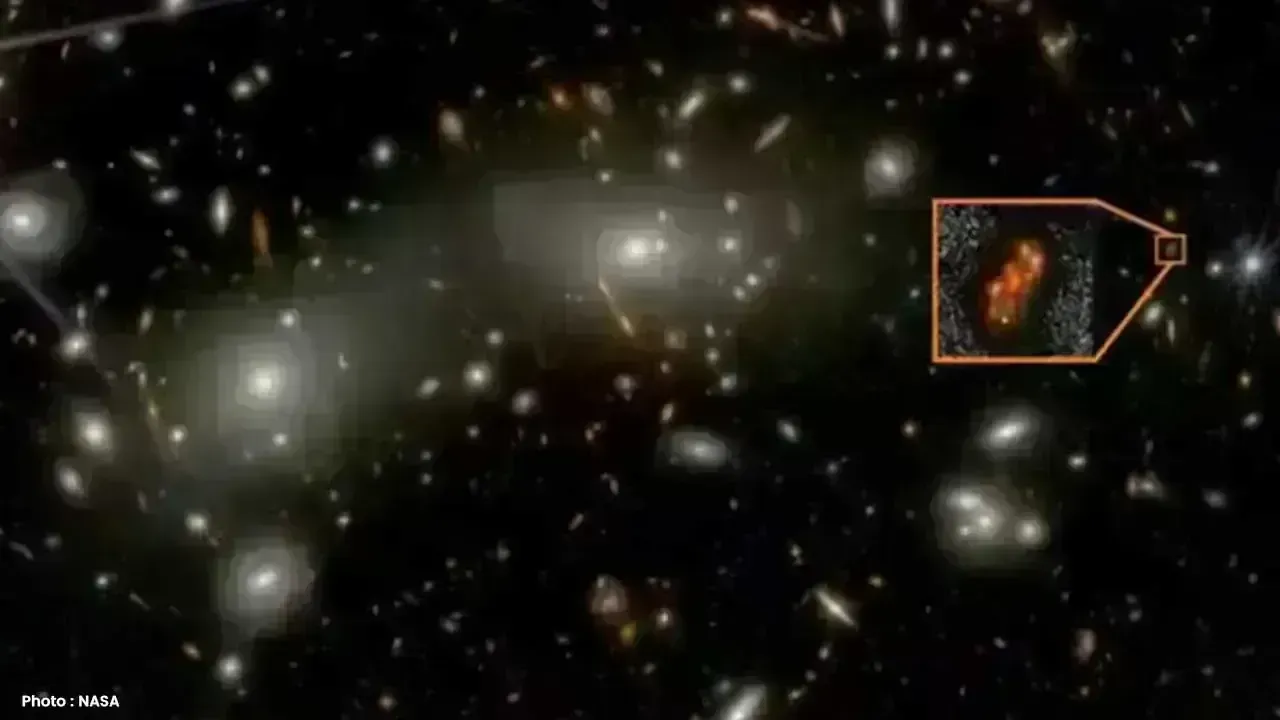
Astronomers in India have made a remarkable discovery that is reshaping what scientists believed about the early Universe. Using the powerful James Webb Space Telescope (JWST), researchers have identified a massive, fully formed spiral galaxy that existed when the Universe was just 1.5 billion years old — only about one-tenth of its current age of 13.8 billion years.
The discovery was made by researcher Rashi Jain and her supervisor Prof. Yogesh Wadadekar from the National Centre for Radio Astrophysics (NCRA-TIFR) in Pune. Their findings were published in November in the European journal Astronomy and Astrophysics.
The galaxy, now named Alaknanda after a Himalayan river, stunned scientists because galaxies from such an early period were believed to be small, irregular, and chaotic in shape. Instead, Alaknanda appears as a perfectly structured spiral galaxy, similar to our own Milky Way — a rare sight from such an ancient time.
Prof. Wadadekar said the galaxy looks “remarkably similar to the Milky Way,” despite belonging to a time when the Universe was still very young. He noted that forming such a large disc with spiral arms in just a few hundred million years is “astonishing by cosmic standards”.
The galaxy spans nearly 30,000 light-years, making it one-third the size of the Milky Way, and contains around 10 billion stars. According to the researchers, it is creating new stars at a pace 20–30 times faster than our galaxy does today.
Jain first spotted the spiral galaxy earlier this year while examining data and images from JWST. She was studying nearly 70,000 celestial objects when one stood out due to its clear spiral structure. She said the galaxy displayed the classic “beads-on-a-string” pattern — clusters of stars beautifully arranged along its arms, something rarely seen in galaxies from the early Universe.
When she shared her findings with Prof. Wadadekar, his first reaction was disbelief. Such a mature and massive galaxy, formed so early after the Big Bang, challenges long-held beliefs about how quickly galaxies developed in the Universe’s early years, a period often described as turbulent and undeveloped.
Scientists say that while the Universe has billions of galaxies, most early galaxies were expected to be small, faint, and irregular. But Alaknanda stands out as proof that the early cosmos may have been more advanced and organised than previously understood. James Webb has already revealed several ancient galaxies since it began operations, but this discovery adds strong evidence that the early Universe was capable of forming complex structures much earlier than thought.
Since the galaxy’s light has taken 12 billion years to reach Earth, astronomers are essentially looking into the past. What Alaknanda looks like today remains unknown. As Prof. Wadadekar says, “If you want to know where it is now, you’ll have to wait another 12 billion years.”
The research team now hopes to conduct follow-up observations using JWST again or the ALMA observatory in Chile. Their goal is to uncover how such a giant spiral galaxy managed to form its arms so early in cosmic history. Scientists believe that understanding galaxies like Alaknanda will offer deeper insight into the Universe’s past and help answer key questions about how galaxies evolved into the structures we see today.








Josh Kerr and Jakob Ingebrigtsen Set for 1,500m Rivalry Rematch
Josh Kerr and Jakob Ingebrigtsen will renew their 1,500m rivalry at the Ultimate Championship in Bud

PSG Coach Luis Enrique Urges Players to Step Outside Comfort Zone
PSG coach Luis Enrique says players must leave their comfort zone and keep improving as the club tar

China’s Tiangong Sets New 400m Record at Robot Olympics
China’s Tiangong robot sets a new 400m record at the Robot Olympics, beating a South African robot i

George Russell Wins Dutch GP Sprint, Boosts Mercedes Morale
George Russell wins the Dutch GP Sprint from pole as Mercedes teammate Kimi Antonelli extends his F1
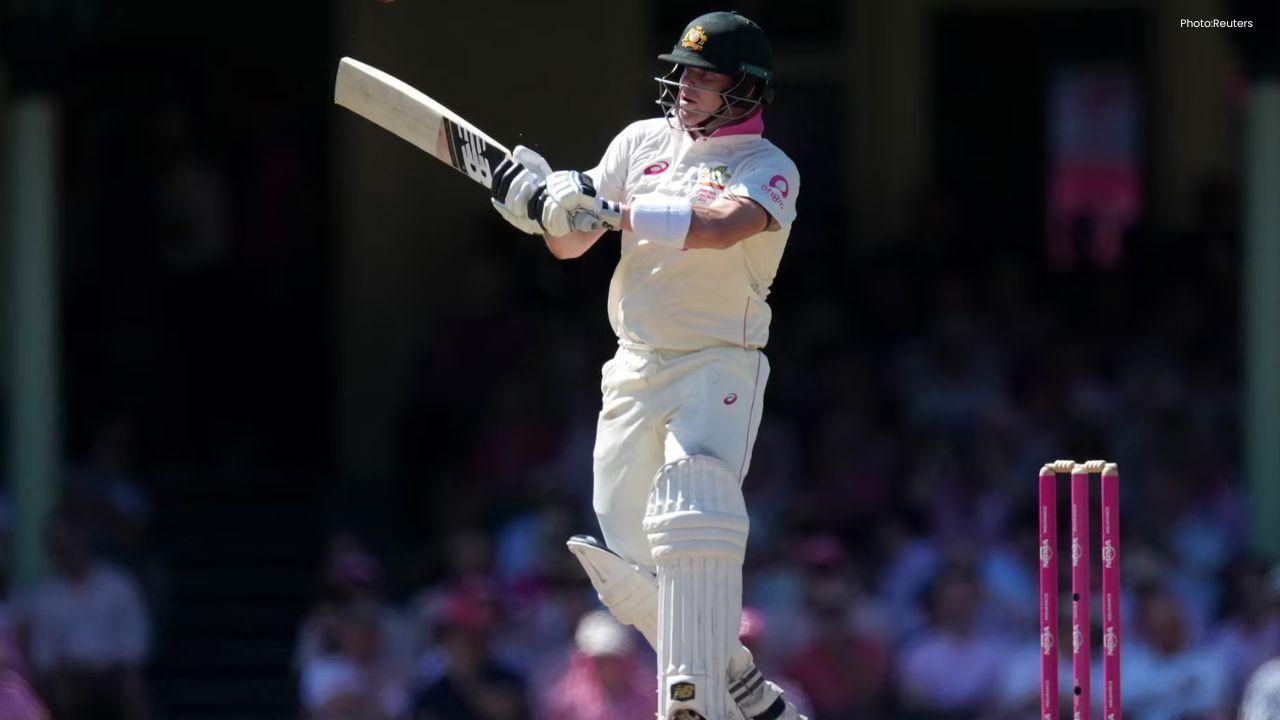
Australia 50/3 After Bangladesh Bowled Out for 64 in Second Test
Australia reached 50/3 after Bangladesh were bowled out for 64 in the second Test, with Mitchell Sta

Jordan Burroughs Returns to Wrestling with 2028 Olympic Dream
Jordan Burroughs returns to wrestling with Real American Freestyle as the Olympic champion eyes a po