
You have not yet added any article to your bookmarks!
Join 10k+ people to get notified about new posts, news and tips.
Do not worry we don't spam!
Post by : Anis Farhan
Photo: Reuters
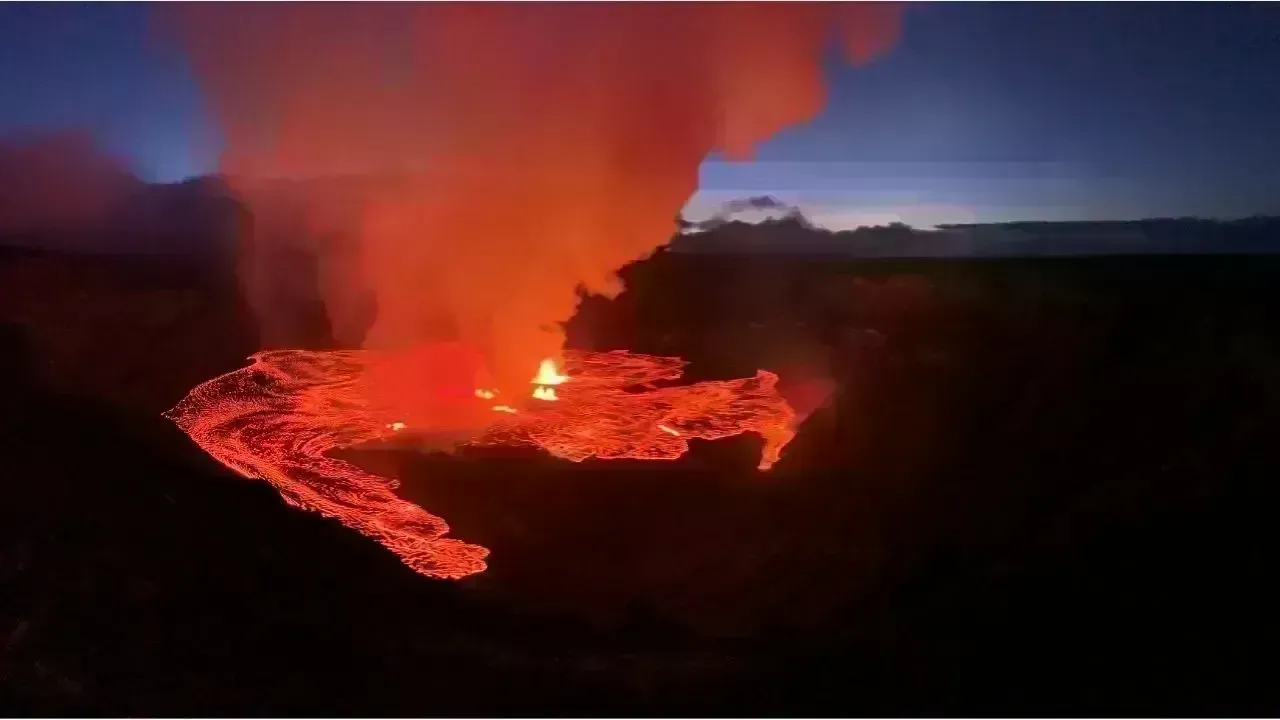
The latest eruption of Hawaii’s Kīlauea volcano once again captured global attention as lava shot high into the air, ash clouds darkened skies around the summit and molten rock reshaped the crater floor. As one of Earth’s most monitored and most dynamic volcanoes, Kīlauea has a long history of dramatic eruptions — but this latest episode brought its own unique features, raising new scientific questions and public fascination.
After nearly a year of intermittent eruptive episodes, the volcano released another powerful burst of molten activity, confirming that the summit’s magma reservoir remains active and highly pressurised. The eruption offered a stunning visual spectacle while simultaneously reminding residents and authorities of the unpredictable nature of volcanic systems.
Kīlauea has undergone dozens of lava-fountain episodes over the past year, and this latest eruption marks one of the most energetic. The summit crater, known as Halemaʻumaʻu, has been the center of repeated explosive events since late 2024, each contributing new layers of lava that continue to reshape its interior.
In the months leading up to the latest episode, volcanologists noted elevated seismic activity, increased gas emissions and slight inflation of the crater floor — all signs that pressurised magma was building beneath the surface. These indicators aligned with earlier patterns that typically precede eruptive bursts.
Kīlauea is situated over a hot, persistent magma source. As molten material continually rises toward the surface, pressure builds within narrow underground conduits. When that pressure reaches a threshold, gas bubbles within the magma expand rapidly, leading to fountains and explosive bursts of lava.
This cycle — pressurise, erupt, refill — is what volcanologists have observed repeatedly over the past year. The latest eruption fits this pattern but brought features that made it stand out.
The eruption began with a sudden burst of seismic tremors beneath the crater, quickly followed by the opening of multiple vents along the crater floor. Within minutes, lava fountains began rising several tens of meters into the air, signalling the start of an intense eruptive episode.
Observers around the summit described glowing plumes, deep orange reflections across the crater and ash clouds being carried by the wind. Even from safe distances, the brightness of the fountains was visible.
At the height of the event, lava jets soared hundreds of meters above the crater floor. Some reached heights equivalent to towering skyscrapers, creating a dramatic visual display that drew awe from both residents and scientists.
The fountains varied in strength, sometimes pulsing rhythmically as bursts of gas escaped through the vents. At peak intensity, the eruption illuminated the entire summit region, creating an unforgettable natural scene.
Perhaps the most remarkable feature of this episode was the presence of three active vents erupting simultaneously. Two vents opened along the northern side of the crater floor, while a third vent on the south side produced the highest and most forceful fountains.
Triple-vent eruptions are uncommon and provide valuable clues about the shifting underground pathways through which magma rises. The presence of multiple eruption points suggests that pressure was evenly distributed across several weak zones beneath the crater.
By the end of the eruption, fresh lava covered large portions of Halemaʻumaʻu’s surface. New plateaus of cooled lava formed, merging with deposits from previous episodes.
These ongoing lava layers are slowly building up the crater floor, altering its shape and depth. Scientists track these changes closely as they provide insight into long-term volcanic behavior.
The eruption produced a towering plume of ash and volcanic gases. Winds carried fine particles across the summit region and beyond, lightly coating downwind areas with a dusting of volcanic debris.
Residents living southwest of the summit reported mild ashfall, though not enough to cause major disruption. However, volcanic gases such as sulfur dioxide temporarily increased, prompting health advisories for sensitive individuals.
The eruption destroyed one of the monitoring cameras positioned near the summit’s edge. As lava fountains intensified, molten debris and extreme heat engulfed the area where the camera stood.
Equipment damage during eruptions is uncommon due to cautious placement, but this incident highlighted just how unpredictable eruptive forces can be.
The magma chamber beneath Kīlauea’s summit is connected to deep volcanic plumbing. As magma accumulates, pressure builds, creating ideal conditions for episodic eruptions.
Each eruptive event temporarily relieves pressure, only for the reservoir to refill through continuous magma supply from deeper in the mantle. This “reset and recharge” mechanism explains why Kīlauea experiences frequent eruptions.
Gas pressure plays a major role in eruption intensity. When trapped gas inside rising magma expands rapidly upon reaching the surface, it propels lava upward in explosive jets.
The height of lava fountains often correlates with the amount of gas exsolved from the magma. High fountains, such as those seen in the latest eruption, suggest abundant gas content and strong pressure release.
Over time, the repeated heating and cooling cycles inside the crater weaken the structural integrity of the crater floor. Cracks, fissures and thin crust zones form, offering new pathways for magma to escape.
This helps explain why multiple vents erupted simultaneously — the underground network of cracks channeled magma through different points as pressure built equally across the system.
The release of sulfur dioxide and fine volcanic particles can irritate eyes, skin and lungs. Although levels remained within manageable limits during this event, authorities issued advisories for individuals with asthma, heart conditions or respiratory sensitivities to avoid prolonged outdoor exposure.
Vog — a volcanic smog formed when sulfur dioxide reacts with atmospheric moisture — may cause decreased visibility and discomfort for those living downwind.
While the eruption itself posed no direct risk to populated areas, authorities restricted access to certain trails within Hawaiʻi Volcanoes National Park. The park remains open, but visitors are reminded to stay within designated safe zones.
The eruption, despite its hazards, has drawn significant public interest. Many visitors seek safe viewpoints to witness the glowing lava and volcanic plume.
Volcanic deposits, though destructive at first, eventually enrich soil with minerals, helping plant life flourish over time. Lava from this eruption stayed contained within the crater, causing minimal immediate environmental disruption.
However, gas emissions can temporarily affect vegetation near the summit.
Given the consistent pattern of eruptions over the past year, volcanologists believe that further episodes are likely. The magma supply beneath the summit shows no signs of diminishing, and the recharge cycle appears strong.
Future eruptions may follow a similar episodic pattern, though the possibility of changes in eruption style cannot be ruled out.
At present, all activity remains confined within Halemaʻumaʻu. However, if fractures develop along the crater walls or if pressure builds beyond normal levels, new lava pathways could emerge.
Scientists continuously monitor ground deformation, seismic activity and gas emissions to detect early signs of shifting eruption zones.
Kīlauea has a long history of eruptive phases lasting months or years. The current cycle may continue well into the future. Understanding the volcano’s internal dynamics will help authorities and residents prepare for whatever the volcano does next.
The sight of lava jets shooting hundreds of meters high created unforgettable imagery. Even from official viewing points, the spectacle was dramatic enough to light the sky and reflect across crater walls.
Triple-vent eruptions reveal complex underground processes and are valuable for scientific research. Such events allow scientists to better understand how magma moves and how volcanic systems evolve.
For Hawaiians, Kīlauea is not just a volcano — it is a cultural symbol deeply tied to the goddess Pele. Every eruption carries meaning beyond geology, reminding locals of the land’s heritage and power.
Kīlauea’s latest eruption was both visually stunning and scientifically significant. With soaring fountains, multiple active vents and major changes to the crater floor, the event highlighted the volcano’s ongoing vitality.
Fortunately, the eruption remained confined within the summit crater, posing no direct threat to communities. Yet it serves as a reminder that volcanic systems must be respected, monitored and understood.
As scientists continue to study the event, one thing is clear: Kīlauea remains one of Earth’s most dynamic volcanoes. And as long as magma continues rising beneath Hawaii’s Big Island, the world will keep watching.
This article summarises recent volcanic activity for informational purposes only. Volcanic conditions may change rapidly; readers should follow official scientific authorities for real-time updates.




Beauden Barrett Opens Up About Mental Struggles During All Blacks Exile
Beauden Barrett discusses his confidence struggles after missing six tests, his return against Austr

IMF Says AI Investment Supports Global Growth Despite Energy Shock
IMF says AI investment is supporting global growth near 3%, with Asian economies benefiting from ris

Will O'Rourke Ruled Out of New Zealand's India Series
New Zealand fast bowler Will O'Rourke will miss the India series with hamstring and calf injuries as

AI Companies Expected to Drive Most US Earnings Growth in Q3
AI companies are expected to drive US third-quarter earnings growth as investors assess tech profits

Money Market Funds See Record Inflows as Global Bond Selloff Intensifies
Global money market funds attract $153.81 billion as bond yields rise, inflation fears persist and i

Meta Bans TikTok Ads on Facebook and Instagram in Seven Countries
Meta has banned TikTok ads in seven countries, escalating competition over social media users, adver

