
You have not yet added any article to your bookmarks!
Join 10k+ people to get notified about new posts, news and tips.
Do not worry we don't spam!
Post by : Rameen Ariff
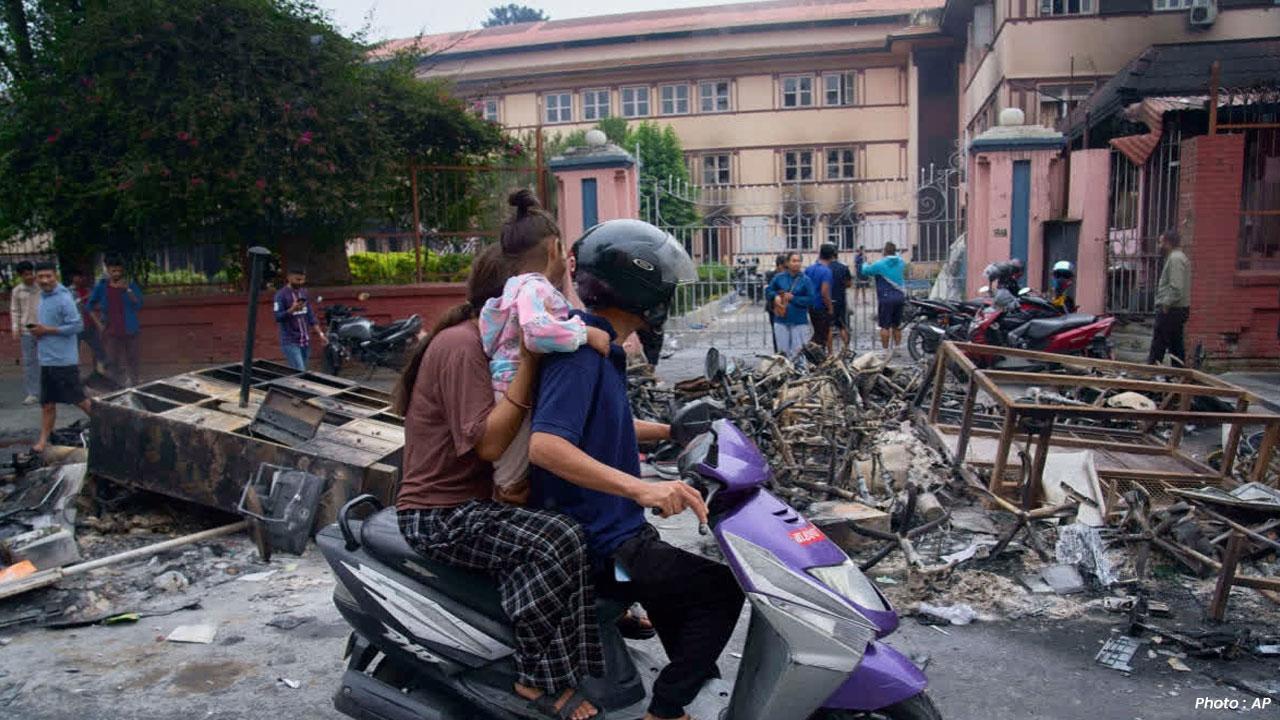
Kathmandu, Nepal – Nepal’s Supreme Court has revealed that important judicial documents were nearly destroyed during the recent Gen-Z protests, a student-led movement that shook the country and led to widespread violence. The Chief Justice, Prakashman Singh Raut, expressed deep grief over the damage caused to court buildings and pledged to resume operations as soon as possible.
Chief Justice Raut said that arson, vandalism, looting, and stone-pelting during the protests caused significant damage to court buildings. Many important documents, forming part of Nepal’s judicial history, were almost lost in the chaos.
“We remain steadfast and determined on the path of justice under all circumstances,” the Chief Justice said. “We pledge to resume court operations at the earliest to address citizens’ expectations of justice.”
The Supreme Court’s statement highlighted the severe impact of the protests on Nepal’s legal system and the country’s ability to function normally.
The violence has also taken a heavy human toll. According to Nepal Police, at least 51 people, including an Indian national, died during the protests. Many others were injured as students clashed with security forces, set fire to government buildings, and damaged properties.
Chief Justice Raut conveyed his condolences to the families of the deceased and wished a speedy recovery to those who were injured. He emphasized that the violence had affected ordinary citizens as well as public institutions.
The protests began on Monday as a response to a government ban on social media. What started as a campaign against this restriction quickly expanded into a larger movement reflecting public anger at corruption, political apathy, and perceived failures by the government.
Despite the lifting of the social media ban on Monday night, violence continued. Protesters torched several key government buildings, including Parliament, the President’s Office, the Prime Minister’s residence, offices of political parties, and homes of senior leaders.
The protests ultimately led to the fall of the KP Sharma Oli government. Amid the turmoil, former Chief Justice Sushila Karki was sworn in as Nepal’s first woman prime minister to head an interim government, bringing temporary political stability after days of uncertainty.
The Gen-Z protests have highlighted how public anger can quickly escalate into violence, affecting both people and critical institutions. The near destruction of judicial documents is a major concern, as it threatens Nepal’s legal and historical records. Courts are central to maintaining justice, and any damage to their resources can have long-term consequences for the rule of law.
Authorities are now working to secure court buildings, restore documents where possible, and ensure that court operations can resume safely. The Chief Justice emphasized the commitment of Nepal’s judiciary to continue delivering justice despite the challenges posed by the protests.
Experts note that such incidents demonstrate the need for stronger protection of public institutions and for constructive channels of protest that do not threaten lives or property.
The recent events show the power of youth movements, but also the dangers when protests turn violent. Nepal now faces the dual challenge of rebuilding its institutions and addressing the underlying concerns of its citizens. Dialogue, transparency, and accountability will be essential to prevent future unrest.
The Gen-Z protests in Nepal have left a deep impact on both society and institutions. While the interim government and the Supreme Court work to restore order, the country must reflect on the causes of the unrest. Protecting human life, public property, and the nation’s judicial records is vital for Nepal’s stability and democratic growth.
Chief Justice Raut’s message is clear: the judiciary remains committed to justice, even in the face of unprecedented challenges. Nepal’s path forward will require unity, responsibility, and respect for law and order, alongside addressing the voices of its young citizens.









PM Modi Pays Tribute to Mahatma Gandhi, Urges People to Support Khadi
PM Modi pays tribute to Mahatma Gandhi on Gandhi Jayanti and urges citizens to support Khadi and the

Amazon Seeks to Offload $8 Billion in Nvidia Chips to Investors
Amazon plans to move $8 billion in Nvidia chips to investors, using a new financing model to strengt

Samsung Raises Galaxy S26 Prices as Memory Chip Costs Rise
Samsung raises Galaxy S26 prices in South Korea as rising memory chip costs put pressure on smartpho

Lewis Hamilton Calls Singapore Grand Prix One of F1's Toughest Races
Lewis Hamilton discusses the demanding Singapore Grand Prix and brings Plus44 and Almave to Singapor

Denmark's Pandora Opens World's Largest Jewellery Factory in Vietnam
Pandora opens its largest jewellery factory in Vietnam, expanding global production, strengthening s

Gautam Gambhir Questions Batting-Friendly Pitches After India's Record ODI Chase
Gautam Gambhir questions batting-friendly ODI pitches after India’s record chase, calling for a bett

