
You have not yet added any article to your bookmarks!
Join 10k+ people to get notified about new posts, news and tips.
Do not worry we don't spam!
Post by : Anis Farhan
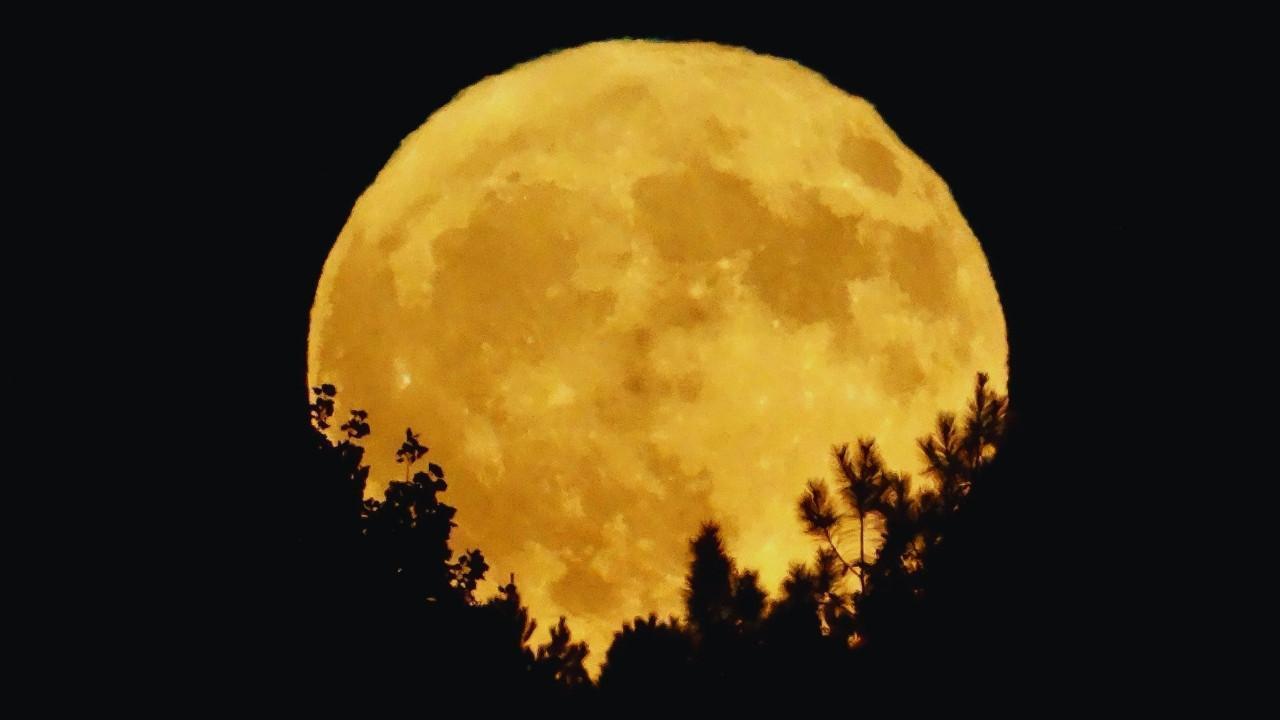
The night sky is set to dazzle with a celestial spectacle as the October 2025 Harvest Moon rises. This full moon, traditionally marking the end of the harvest season in the Northern Hemisphere, is special this year for several reasons. Not only does it coincide with the autumnal equinox, but it also qualifies as a supermoon, appearing larger and brighter than usual due to its proximity to Earth. Here's everything you need to know to witness this rare event.
The Harvest Moon is the full moon that occurs closest to the autumnal equinox, which typically falls around September 22. However, in 2025, the equinox occurred on September 22, making the full moon on October 6 the closest to this date. This timing gives the moon its name, as it historically provided additional light for farmers harvesting their crops late into the evening.
This year's Harvest Moon is also a supermoon, meaning it is at or near its closest point to Earth in its orbit, known as the perigee. When the moon is at perigee, it appears about 14% larger and 30% brighter than when it is at its farthest point, the apogee. This proximity makes the October 2025 Harvest Moon particularly striking in the night sky.
Viewing the moon near the horizon can enhance its appearance due to atmospheric effects. As the moon rises, its light passes through more of Earth's atmosphere, scattering shorter wavelengths and allowing longer wavelengths to dominate. This scattering effect often gives the moon a golden or orange hue, adding to the visual appeal of the supermoon.
The Harvest Moon will rise on the evening of October 6, 2025, and will be visible throughout the night. For the most dramatic view, observers should aim to watch the moonrise shortly after sunset. In most U.S. locations, the moon will rise in the eastern sky around sunset and will be visible for several hours as it climbs higher into the sky.
To experience the Harvest Moon in all its glory, it's best to find a location with:
Clear Eastern Horizon: A spot with an unobstructed view of the eastern sky ensures you won't miss the moonrise.
Minimal Light Pollution: Urban areas can hinder visibility due to artificial lighting. Rural or elevated locations away from city lights provide the best viewing conditions.
Stable Weather: Clear skies are essential for optimal viewing. Check local weather forecasts to choose a night with minimal cloud cover.
West Coast (e.g., California): Coastal areas with clear skies offer stunning views of the moon rising over the ocean.
Midwest (e.g., Illinois, Wisconsin): Open fields and elevated terrains provide unobstructed views of the eastern horizon.
Northeast (e.g., New York): Urban parks or elevated spots like rooftops can offer excellent viewing opportunities.
South (e.g., Texas, Florida): Flat terrains and clear skies make for ideal viewing conditions.
For photography enthusiasts, capturing the Harvest Moon can be a rewarding experience. Here are some tips to help you get the best shot:
Use a Tripod: Stability is crucial for clear, sharp images, especially in low-light conditions.
Wide-Angle Lens: A lens with a wide focal length allows you to capture the moon along with its surroundings, such as landscapes or cityscapes.
Manual Settings: Adjusting the camera's settings manually can help achieve the desired exposure and depth of field.
Timing: Shoot during the moonrise or moonset for dramatic effects, as the moon's light interacts uniquely with the atmosphere during these times.
While enjoying the Harvest Moon, it's important to be mindful of your surroundings:
Respect Nature: If you're in a natural setting, avoid disturbing wildlife and stay on designated paths.
Be Considerate: Keep noise levels low to avoid disturbing others who may also be enjoying the night sky.
Safety First: If you're traveling to a remote location, ensure you have proper lighting, communication devices, and inform someone of your whereabouts.
The October 2025 Harvest Moon is just the beginning of a series of exciting lunar events:
November 5, 2025: The Beaver Moon, another supermoon, will rise.
December 4, 2025: The Cold Moon, concluding the year's supermoon series, will be visible.
Each of these moons offers unique viewing opportunities and characteristics, making them worth looking forward to.
The October 2025 Harvest Moon presents a rare and beautiful opportunity to connect with the cosmos. Whether you're an avid astronomer or a casual skywatcher, taking the time to witness this supermoon can be a memorable experience. Remember to choose a suitable viewing location, check the weather, and bring along your camera to capture the moment. Happy moon gazing!
The information provided in this article is based on available astronomical data and forecasts. Viewing conditions may vary depending on local weather and atmospheric conditions. Always prioritize safety and local regulations when planning outdoor activities.









AI Companies Expected to Drive Most US Earnings Growth in Q3
AI companies are expected to drive US third-quarter earnings growth as investors assess tech profits

Money Market Funds See Record Inflows as Global Bond Selloff Intensifies
Global money market funds attract $153.81 billion as bond yields rise, inflation fears persist and i

Meta Bans TikTok Ads on Facebook and Instagram in Seven Countries
Meta has banned TikTok ads in seven countries, escalating competition over social media users, adver

ASML and Zeiss Target Next-Generation Chip Technology in 10 Years
ASML and Carl Zeiss are developing Hyper NA technology to print smaller chip circuits, with the next

Rabada Misses First Australia Test as South Africa Pick Two Spinners
Kagiso Rabada misses the opener as South Africa vs Australia begins, with Anrich Nortje returning an

Starc Compares Australia's Tough Year to McIlroy's Major Sweep
Mitchell Starc says Australia winning three away Test series and the World Cup would match Rory McIl

