
You have not yet added any article to your bookmarks!
Join 10k+ people to get notified about new posts, news and tips.
Do not worry we don't spam!
Post by : Rameen Ariff
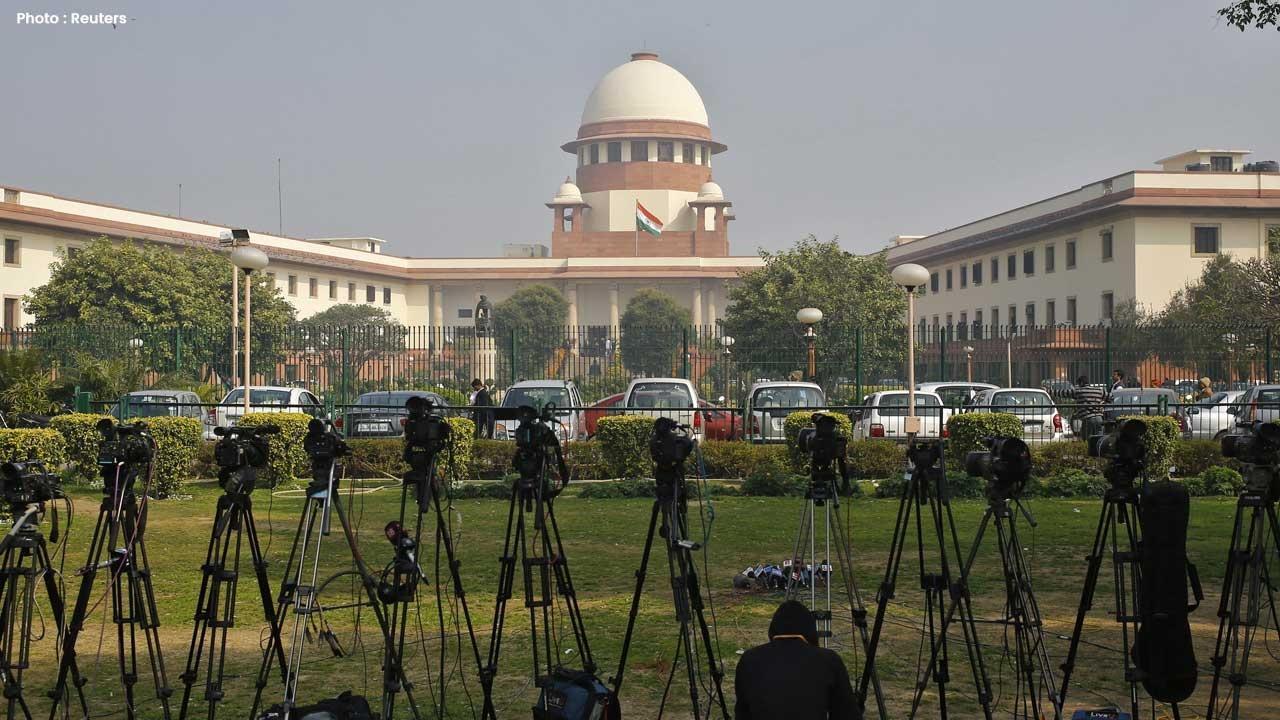
On Friday, the Supreme Court of India declared that the pilots of Air India Flight AI-171, which tragically went down shortly after departing from Ahmedabad on June 12, killing over 250 individuals, were not at fault. The court emphasized that no investigative report had placed blame on the pilots and insisted that their families should not bear any stigma from this incident.
Justices Surya Kant and Joymalya Bagchi addressed the worries of Pushkaraj Sabharwal, father of Captain Sumeet Sabharwal, the pilot of the doomed flight. They assured the family that the court would officially document that the pilots have been exonerated from responsibility in this dreadful event.
“This was an incredibly unfortunate accident,” remarked the bench. “You should not feel burdened by any implication that your son is at fault. There is absolutely no insinuation against the pilot,” the justices stated, reaffirming that the initial report found no pilot error.
The Supreme Court made these remarks while examining a petition filed by Captain Sabharwal’s father along with the Federation of Indian Pilots, calling for a judicially supervised investigation into the crash. This petition contests the preliminary findings of the Aircraft Accident Investigation Board (AAIB), which initially indicated a potential “human error.”
The petitioners argue that the investigation was uneven and failed to consider crucial evidence pointing toward a possible electrical or systems failure. They asserted that the AAIB shifted focus unduly toward “pilot error” without thoroughly investigating potential technical faults in the Boeing 787 Dreamliner’s control systems.
Senior advocate Gopal Sankaranarayanan, representing the petitioners, claimed the inquiry was neither impartial nor transparent. He pointed out that certain questions posed to the pilot’s family were inappropriate, and selective leaks to the media distorted the public perception.
The Supreme Court noted that reports from foreign media, including the Wall Street Journal, bear no legal relevance in India. The bench remarked, “You may have considered filing a suit in the U.S. against such publications. None of the 1.42 billion citizens of India think the pilots should be blamed.”
The justices reiterated that the inquiry's goal is not to assign blame, but rather to prevent future tragedies. They advised the petitioners that challenges to the investigation processes must question the applicable regulations outlined under the Aircraft (Investigation of Accidents and Incidents) Rules.
On June 12, Air India Flight AI-171 took off from Ahmedabad’s Sardar Vallabhbhai Patel International Airport, carrying 230 passengers and 12 crew. The aircraft crashed shortly thereafter, resulting in the deaths of 229 passengers, the entire crew, and 19 individuals on the ground.
The AAIB's initial report indicated that both engine fuel control switches shifted from RUN to CUTOFF mere seconds after takeoff, resulting in a sudden loss of thrust. The cockpit voice recorder captured a brief conversation between the pilots, with one questioning whether the fuel cutoff was intentional.
Although the Ram Air Turbine (RAT)—a backup power system—automatically activated and one engine regained power temporarily, the aircraft could not maintain altitude and crashed shortly after issuing a Mayday signal.
The petitioners argue that the early RAT deployment indicates a significant electrical or systems failure rather than human error. They highlight instances of similar technical issues in Boeing 787 aircraft globally, advocating for an independent forensic analysis to investigate potential design flaws.
Furthermore, the petition underscores that blaming the deceased pilots, particularly Captain Sumeet Sabharwal—an experienced aviator with over 15,600 flight hours and a pristine record—is unjustified and lacks factual basis. They insist that the investigation must not tarnish the legacy of those who perished while serving passengers.
To ensure transparency, the petition calls for a court-monitored investigation, ideally led by a retired Supreme Court judge alongside a panel of aviation specialists. The petitioners caution that a hurried or biased inquiry could jeopardize both justice and future aviation safety.
The case is scheduled for a hearing next week, alongside a similar appeal from the NGO Safety Matters Foundation, which seeks an impartial and independent inquiry into the crash. The Supreme Court reiterated that investigations into aviation accidents should be transparent and fair, ensuring that the families of the victims don’t suffer additional emotional hardship from speculation or misinformation.










PM Modi Pays Tribute to Mahatma Gandhi, Urges People to Support Khadi
PM Modi pays tribute to Mahatma Gandhi on Gandhi Jayanti and urges citizens to support Khadi and the

Amazon Seeks to Offload $8 Billion in Nvidia Chips to Investors
Amazon plans to move $8 billion in Nvidia chips to investors, using a new financing model to strengt

Samsung Raises Galaxy S26 Prices as Memory Chip Costs Rise
Samsung raises Galaxy S26 prices in South Korea as rising memory chip costs put pressure on smartpho

Lewis Hamilton Calls Singapore Grand Prix One of F1's Toughest Races
Lewis Hamilton discusses the demanding Singapore Grand Prix and brings Plus44 and Almave to Singapor

Denmark's Pandora Opens World's Largest Jewellery Factory in Vietnam
Pandora opens its largest jewellery factory in Vietnam, expanding global production, strengthening s

Gautam Gambhir Questions Batting-Friendly Pitches After India's Record ODI Chase
Gautam Gambhir questions batting-friendly ODI pitches after India’s record chase, calling for a bett

