
You have not yet added any article to your bookmarks!
Join 10k+ people to get notified about new posts, news and tips.
Do not worry we don't spam!
Post by : Saif Rahman
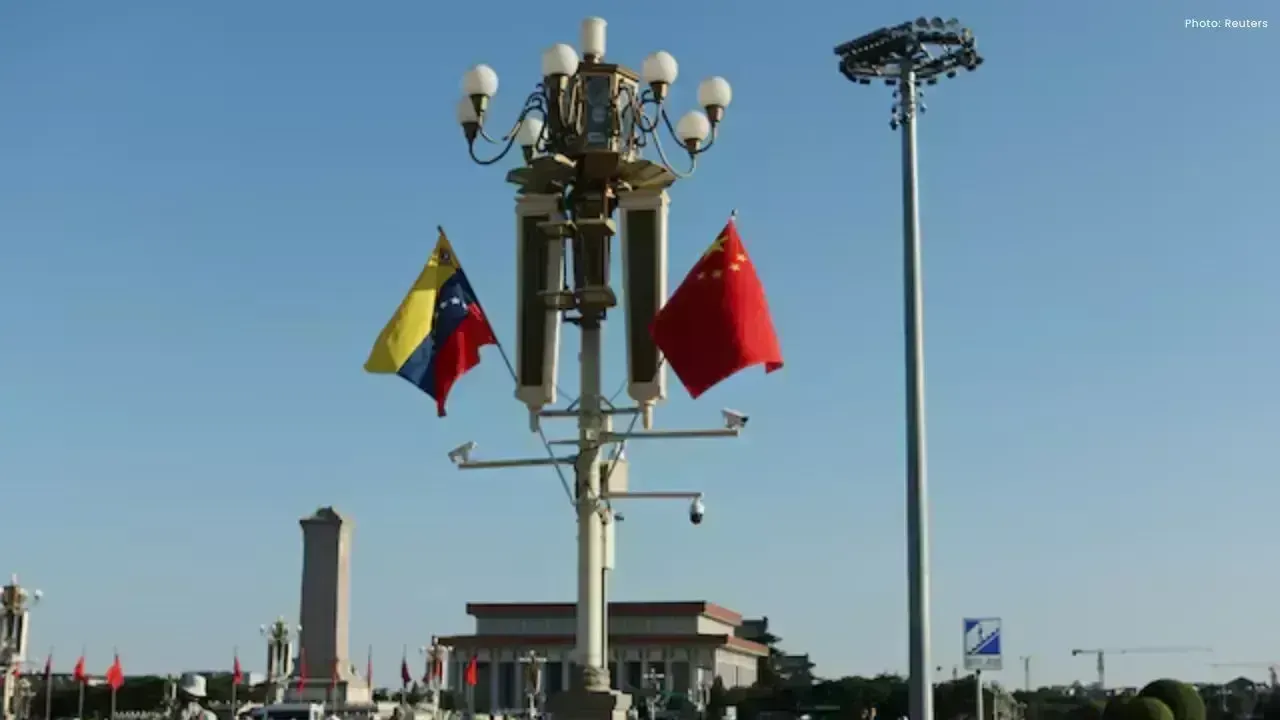
Venezuela's financial entanglement with China has gained renewed attention in light of recent U.S. actions that have disrupted its debt repayment methods. At the core of this issue is oil, Mexico's most critical asset and revenue source. Grasping the extent of Venezuela's debt to China and the integral role of oil sheds light on the prevailing political and economic tensions in the region.
Over the past twenty years, China has emerged as one of Venezuela's primary financial backers. Research from AidData indicates that Chinese government-linked lenders extended approximately 106 billion dollars in loans from 2000 to 2018. These loans were primarily issued during periods of elevated oil prices when Venezuela was perceived as a strong energy ally. However, years of mismanagement, economic hardship, and dwindling oil production led to Venezuela defaulting on its debts in 2017.
Since that time, accurately determining how much Venezuela owes China has proven challenging. Estimates differ, given Venezuela's long-standing lack of transparent debt reporting. AidData and investment bank Societe Generale suggest that the outstanding debt is around 10 billion dollars, while JP Morgan estimates it to be between 13 and 15 billion dollars. Nonetheless, it is evident that China remains Venezuela’s most significant creditor.
The reason for oil's involvement is substantial, as many of these loans were “oil-backed.” This structure means that rather than repaying in cash, Venezuela agreed to service its debt through crude oil shipments. Such arrangements were primarily facilitated through the China Development Bank and Venezuela’s state-run oil company, PDVSA. Even amidst sanctions and defaults on other debts, oil deliveries to China persisted.
Under these terms, Venezuela exported oil to China, with revenues from sales funneling into accounts managed by Beijing. These funds were then utilized for interest payments and potentially other portions of the debt. PDVSA representatives have indicated that China granted Venezuela a grace period starting in 2019, allowing the country to defer repayments while continuing to deliver oil.
The absence of reliable data has engendered confusion for analysts outside the country. Venezuela has not disclosed comprehensive debt figures for years, with the last partial data release by its central bank dating back to 2019. The International Monetary Fund has similarly not conducted a full economic assessment since 2004, necessitating reliance on approximations using oil export data, internal sources, and public statements.
Recent actions by the U.S. government have further complicated matters. Washington has taken control of funds generated from Venezuelan oil exports, asserting that these proceeds will be kept in a foreign-dominated account. For China to continue receiving payments, the U.S. would need to allocate part of these earnings to Beijing, though U.S. officials have indicated that such an arrangement may be improbable amidst ongoing political tensions.
Beyond debt repayment, China has vested interests in Venezuela’s oil industry. Its state oil company, CNPC, has established joint ventures with PDVSA, including one producing over 100,000 barrels per day. The implications of U.S. control over these operations remain uncertain.
Ultimately, the dynamics of Venezuela's indebtedness to China exemplify the intricate links between oil, geopolitics, and finance on the global stage. Oil enabled Venezuela to borrow heavily in the past, serving as the primary mechanism for maintaining payments to China post-default. Now, with U.S. interventions reshaping oil flow, the sustainability of this repayment framework is in jeopardy. The outcomes will significantly influence not just Venezuela and China, but also the power dynamics within global energy markets.










PM Modi Pays Tribute to Mahatma Gandhi, Urges People to Support Khadi
PM Modi pays tribute to Mahatma Gandhi on Gandhi Jayanti and urges citizens to support Khadi and the

Amazon Seeks to Offload $8 Billion in Nvidia Chips to Investors
Amazon plans to move $8 billion in Nvidia chips to investors, using a new financing model to strengt

Samsung Raises Galaxy S26 Prices as Memory Chip Costs Rise
Samsung raises Galaxy S26 prices in South Korea as rising memory chip costs put pressure on smartpho

Lewis Hamilton Calls Singapore Grand Prix One of F1's Toughest Races
Lewis Hamilton discusses the demanding Singapore Grand Prix and brings Plus44 and Almave to Singapor

Denmark's Pandora Opens World's Largest Jewellery Factory in Vietnam
Pandora opens its largest jewellery factory in Vietnam, expanding global production, strengthening s

Gautam Gambhir Questions Batting-Friendly Pitches After India's Record ODI Chase
Gautam Gambhir questions batting-friendly ODI pitches after India’s record chase, calling for a bett

