You have not yet added any article to your bookmarks!
Join 10k+ people to get notified about new posts, news and tips.
Do not worry we don't spam!
Post by : Anis Farhan
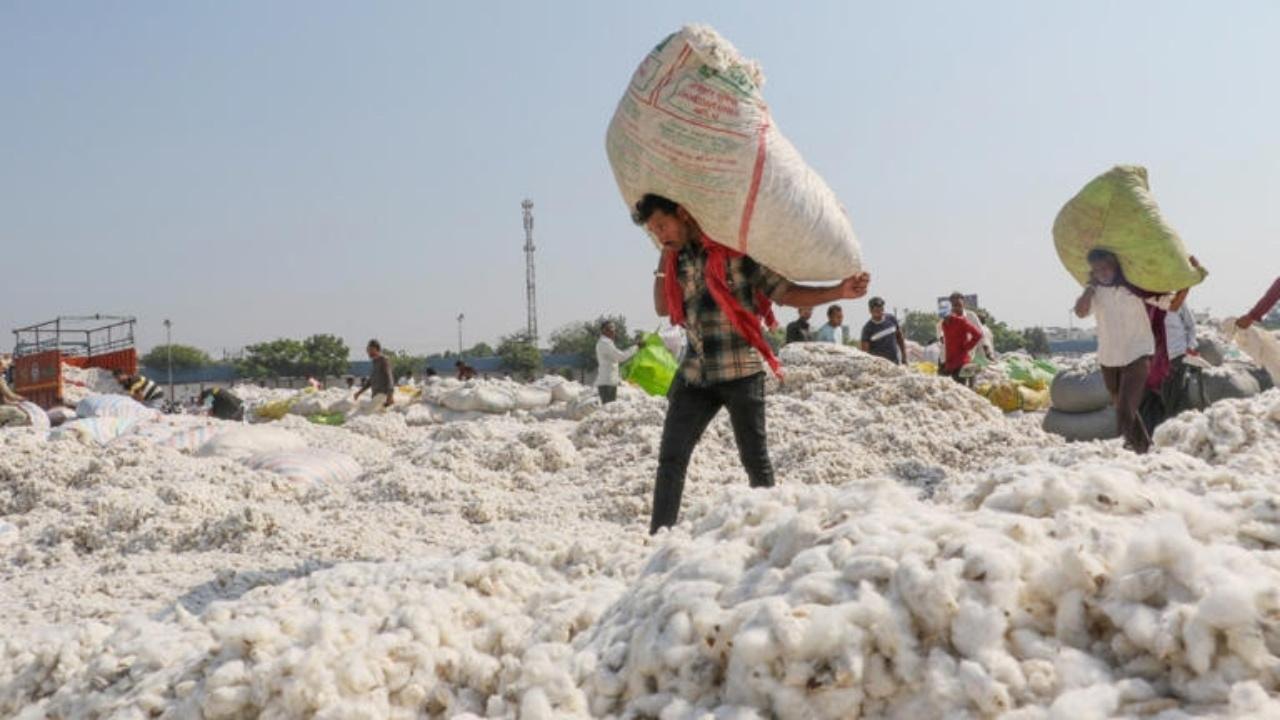
Bangladesh, one of the world’s largest textile exporters, is moving to recalibrate its cotton sourcing strategy amid a significant new trade agreement with the United States. Reports indicate that the South Asian nation’s interim government is likely to shift raw cotton imports away from India toward U.S. producers, driven by a clause in the recently signed U.S.–Bangladesh reciprocal trade deal that offers zero tariffs on textile and apparel exports if manufacturers use American cotton or man-made fibres.
The emerging development represents a noteworthy pivot in Bangladesh’s trade and supply chain dynamics — one that carries implications not only for the textile giants of South Asia but also for global cotton markets, regional geopolitics, and bilateral trade relationships. This article explores the details of the pact, the motivations behind Bangladesh’s policy shift, the potential impact on India’s cotton exports, and the broader economic and strategic context shaping this decision.
In early February 2026, Bangladesh’s interim government signed a reciprocal trade agreement with the United States that cuts the U.S. tariff on Bangladeshi imports to 19 per cent and includes a pivotal provision for duty-free entry of specific textile and apparel products. Under this clause, Dhaka can secure zero reciprocal tariff treatment for exports to the American market provided that those goods are manufactured using cotton or man-made fibres sourced from the United States.
The mechanism is designed to encourage Bangladeshi textile producers to use U.S. raw materials as an incentive for tariff exemption, thereby opening up stronger export competitiveness in the U.S. — one of Bangladesh’s most important markets. Historically, Bangladesh has depended heavily on imported cotton for its ready-made garment (RMG) industry because the country does not produce sufficient cotton domestically. Indian cotton has traditionally been a major source, but the tariff conditions have now created a compelling case for diversification toward U.S. supply.
Officials familiar with the agreement describe this clause as a “game changer” for Bangladesh’s trade strategy, particularly for a sector that drives roughly 80 per cent of the country’s export earnings and employs millions of workers.
The Bangladeshi textile industry — a cornerstone of the nation’s economy — is poised to respond strategically to the incentives embedded in the new trade deal. By aligning raw material sourcing with tariff eligibility, producers may achieve important cost advantages for garments destined for the United States.
Under the agreement, textiles produced with U.S. cotton can enter the U.S. at zero reciprocal tariff, lowering the cost structure for Bangladesh’s garment exporters and strengthening their competitive edge in the world’s largest apparel market. This is significant because duties can impose substantial costs on exporters, especially in labour-intensive industries with narrow profit margins.
By converting raw materials to duty-free finished goods, Bangladesh potentially maximises the financial benefits of the pact while expanding market access for its textile products.
The economic logic behind the potential cotton switch is driven by more than just tariff calculations. Bangladesh’s leaders appear intent on deepening ties with the United States — one of the largest destinations for its garment exports — while ensuring that regulatory conditions do not erode the competitiveness of its primary industry.
Bangladesh’s textile manufacturers have long sourced cheaper cotton from neighbours such as India or from West African producers. However, the zero-tariff clause effectively incentivises manufacturers to use U.S. cotton where it results in overall lower landed costs when compared to importing textiles from Bangladesh without tariff benefits.
Industry experts point out that factors like freight costs, cotton quality, and lead times will also play a role in how producers adjust their sourcing choices. For example, while U.S. cotton may offer tariff advantages, it may also carry higher shipping costs or require adjustments in supply chain logistics.
For decades, India has been a principal supplier of raw cotton and cotton yarn to Bangladesh, benefiting from geographic proximity and well-developed trade linkages. However, evolving treaty terms with partners like the United States could alter this dynamic.
Recent export data reveal that India remained a significant supplier of cotton yarn to Bangladesh even as the mix of raw cotton origins diversified in recent years to include countries like Brazil and the United States.
A shift away from Indian cotton could create headwinds for Indian raw material exporters. While cotton yarn from India has remained competitive due to shorter shipping routes and cost advantages, the new trade incentives could present competitive challenges, especially if Bangladeshi manufacturers decide to prioritise U.S. inputs to secure tariff exemptions on final goods.
Though Indian suppliers continue to hold a lead in certain product categories — including cotton yarn — tariff-driven incentives from the U.S. may prompt portions of the industry to rethink supply channels. Indian cotton producers and exporters may need to adapt to retain market share, potentially by pursuing deeper competitiveness or negotiating trade arrangements that improve access to key markets.
The cotton shift highlights larger patterns in global trade realignment. Bangladesh’s use of trade incentives to secure tariff benefits in its largest export market reflects a sophisticated approach to navigating global value chains, where supply-side decisions are increasingly influenced by trade agreements and tariff rates rather than purely geographic or historical sourcing relationships.
The evolving scene also underscores how middle-income and developing economies can leverage trade deals to diversify their supplier bases, mitigate geopolitical risk, and expand economic ties with powerful trading partners, such as the United States.
While the incentives are clear, the transition toward greater reliance on U.S. cotton is not without challenges. Cotton quality varies by region, and textile manufacturers often select raw materials based on specific fibre properties suitable for different products. This means complete replacement of traditional suppliers may not be immediate, and producers are likely to adopt hybrid sourcing strategies to balance cost, quality, and tariff benefits.
Producers will also need to evaluate how transportation costs, shipment lead times, and logistics complexities affect the overall economics of sourcing U.S. cotton versus other origins.
The interim government of Bangladesh — led by economist Muhammad Yunus — has emphasised economic resilience and diversification, particularly amid political transitions and broader regional dynamics. The cotton sourcing shift can be viewed as part of this strategic posture, where policy choices are designed to align with economic benefits and long-term export growth.
Bangladesh’s export-oriented economy, with a heavy reliance on the ready-made garment sector, has navigated multiple trade environments, tariff regimes, and diplomatic negotiations in recent years. By securing tariff advantages through strategic raw material sourcing, Dhaka is signalling a willingness to innovate in trade policy to sustain growth.
Looking ahead, Bangladesh’s decision to potentially shift cotton imports represents a strategic recalibration that may reverberate beyond the textile industry. Strengthened trade ties with the United States could encourage additional foreign investment and enhanced market access in other sectors.
For India and other regional cotton suppliers, the situation presents both a competitive challenge and an opportunity to reassess trade relationships and negotiate agreements that ensure their products remain attractive within the changing global trade framework.
As Bangladesh continues to evolve its economic policy and trade orientation, the cotton sourcing shift will remain a key indicator of how trade incentives can influence industrial strategy and international commerce.
This article synthesises available information on Bangladesh’s trade agreement with the United States and emerging policy directions related to cotton sourcing. It is intended for informational purposes and does not constitute professional economic or trade advice.








George Russell Wins Dutch GP Sprint, Boosts Mercedes Morale
George Russell wins the Dutch GP Sprint from pole as Mercedes teammate Kimi Antonelli extends his F1

Australia 50/3 After Bangladesh Bowled Out for 64 in Second Test
Australia reached 50/3 after Bangladesh were bowled out for 64 in the second Test, with Mitchell Sta

Jordan Burroughs Returns to Wrestling with 2028 Olympic Dream
Jordan Burroughs returns to wrestling with Real American Freestyle as the Olympic champion eyes a po

Lamborghini Catches Fire on Singapore's ECP, Causing Heavy Traffic
A Lamborghini caught fire on Singapore's ECP, causing heavy traffic and bus delays. No injuries were

Bangkok Airport Duty-Free Area Flooded by Pipe Burst
A burst water pipe flooded the duty-free shopping area at Bangkok's Suvarnabhumi Airport on July 16,
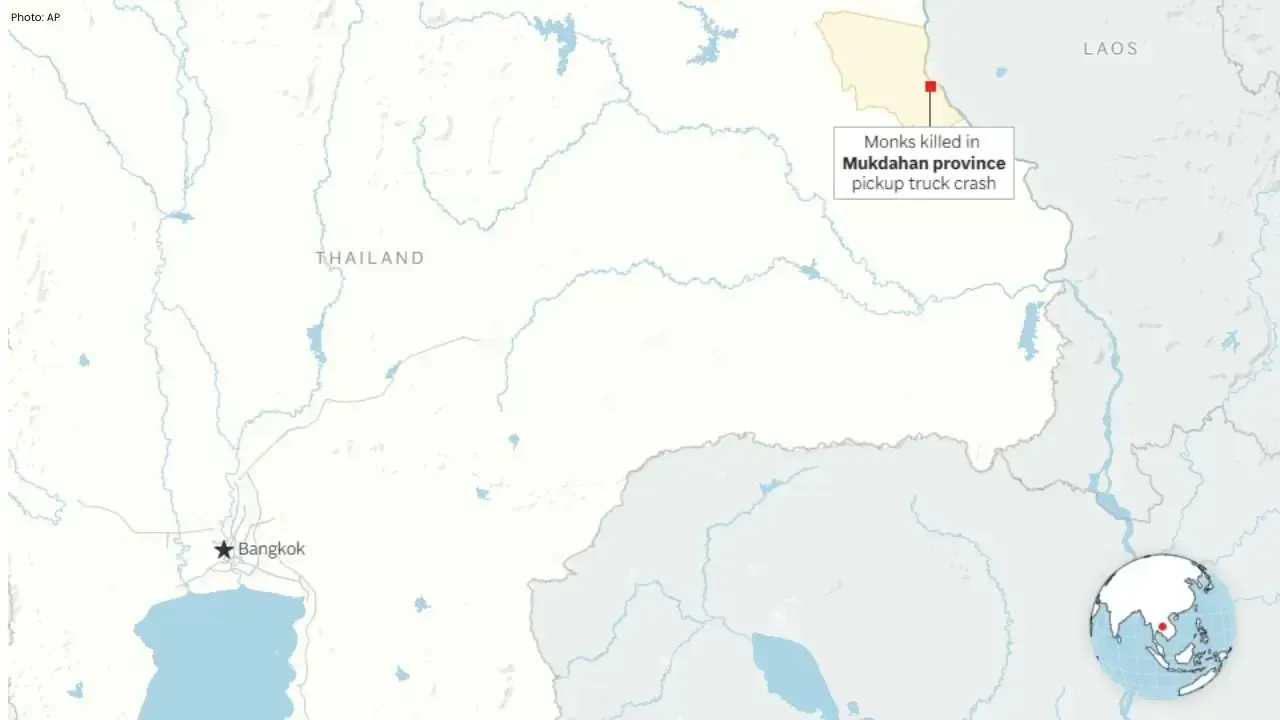
Nine Monks Killed in Thailand Pickup Truck Tragedy
An 11-year-old boy driving a pickup truck crashed into monks during a pilgrimage in northeastern Tha