
You have not yet added any article to your bookmarks!
Join 10k+ people to get notified about new posts, news and tips.
Do not worry we don't spam!
Post by : Anis Farhan
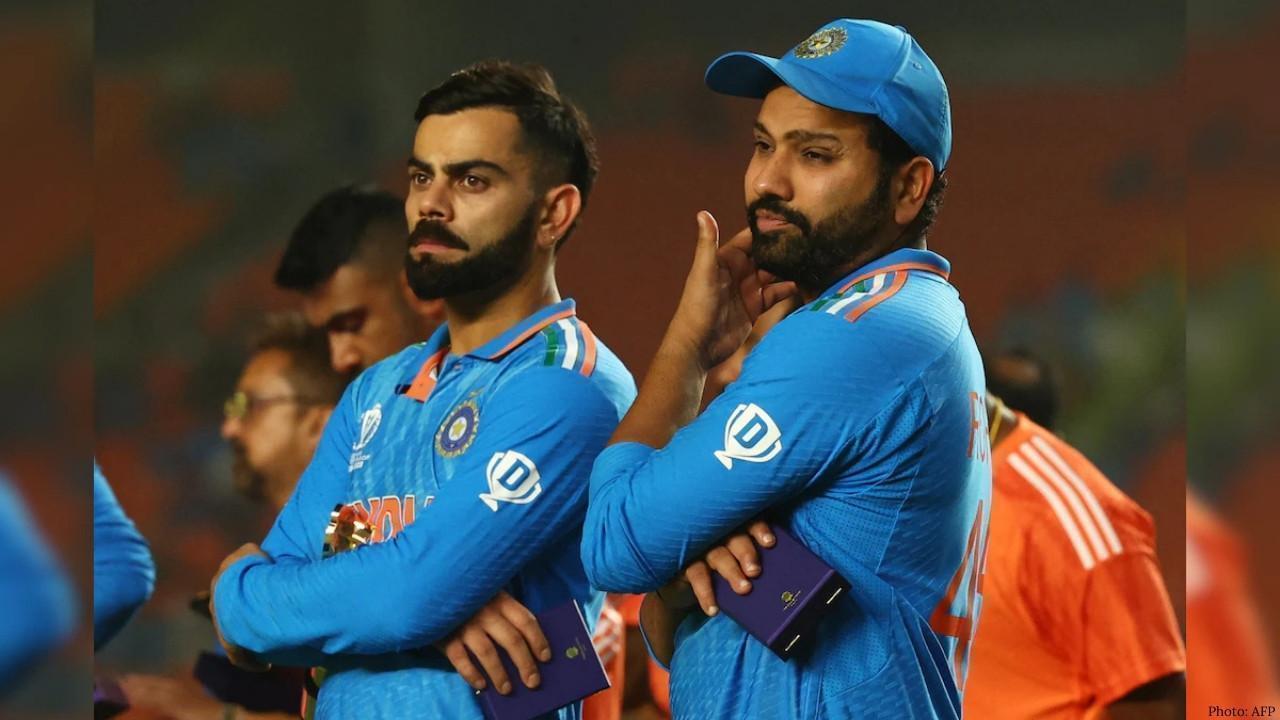
The Board of Control for Cricket in India (BCCI) has triggered major discussion in Indian cricket after placing two of the country’s biggest names — Virat Kohli and Rohit Sharma — in Grade B of its newly announced central contract list for 2025–26.
The move, seen as one of the most headline-making contract revisions in recent years, has come as part of a broader structural change by the board, including the removal of the A+ category and a sharper focus on players available across formats.
While the decision has led to widespread debate, reports indicate that the shift is largely tied to eligibility rules, format participation, and the revised contract structure, rather than any direct reflection of their stature or legacy in Indian cricket.
The BCCI released its annual central contract list for the 2025–26 cycle, covering the period from October 1, 2025, to September 30, 2026.
The board introduced a simplified grading system and significantly reshuffled the top bracket.
For the first time in several seasons, the contract list did not include the earlier A+ category, which previously represented the highest retainer tier for India’s most valuable all-format players.
The main reason behind the demotion of both players lies in a mix of contract restructuring and their reduced involvement across formats.
The BCCI’s decision to scrap the A+ grade is being viewed as the most decisive change in the new retainership structure.
Until last season, the A+ category typically included players considered core to the Indian setup across formats. Kohli and Rohit had been long-time occupants of this tier.
With the A+ bracket now removed, the board has made Grade A the highest tier — and reserved it for a smaller, more format-active group.
Both Rohit and Kohli have reduced their workload in recent years, with each moving away from at least one format.
Rohit Sharma stepped away from T20 internationals earlier, while Kohli’s availability across formats has also narrowed compared to his peak years.
Reports suggest the BCCI has now linked the highest-grade contracts more closely to multi-format participation, particularly with India’s packed calendar and growing emphasis on workload management.
The new contract list is being interpreted as a signal of a broader strategic transition.
The board appears to be rewarding players who are expected to form the backbone of India’s teams in the next cycle, especially those active in Tests, ODIs, and T20Is.
This shift has also strengthened the narrative that the BCCI is preparing for a post-transition era while still retaining senior players within a high but slightly lower tier.
With the revised list, only a small number of players have been placed in the new top bracket.
The highest category reportedly includes:
Shubman Gill
Jasprit Bumrah
Ravindra Jadeja
These selections indicate the board’s preference for players delivering consistently across formats and remaining central to India’s team planning.
Grade B features several established and high-impact players, including:
Virat Kohli
Rohit Sharma
KL Rahul
Hardik Pandya
Rishabh Pant
Suryakumar Yadav
Shreyas Iyer
Mohammed Siraj
Kuldeep Yadav
Yashasvi Jaiswal
Washington Sundar
The category is now seen as a major “core squad” bracket, containing both senior match-winners and next-generation leaders.
Grade C is expected to include players who have entered the national setup recently, are in rotation, or are being developed for long-term roles.
The grading system directly impacts the annual retainership fees.
Under the earlier structure, A+ players were among the highest-paid in Indian cricket’s central contracts. With Kohli and Rohit now in Grade B, their retainership is expected to be lower compared to previous seasons.
While match fees, IPL earnings, endorsements, and other commercial deals continue to form a major part of their income, central contracts remain an important symbolic and administrative recognition of a player’s standing.
The demotion has drawn attention not only because of the names involved, but also because Kohli and Rohit remain among India’s most recognisable sporting icons.
Their influence extends far beyond the field:
They remain key figures in India’s ODI plans
Their popularity drives viewership and sponsorship
They continue to be match-winners in high-pressure situations
As a result, their movement from the top bracket has been widely viewed as a landmark moment in Indian cricket administration.
The answer is no.
Being in Grade B does not indicate exclusion from the Indian team. It only reflects the board’s grading criteria for central retainership.
Both players are still expected to remain critical for India’s ODI ambitions, especially with major ICC events and high-profile bilateral series continuing to hold importance.
The 2025–26 contract list is being seen as a strong signal of the board’s evolving approach.
The new structure suggests the BCCI is rewarding players who are consistently available and active across formats, especially with India’s intense schedule.
The contract reshuffle also indicates that the board is aligning top retainership status with players expected to lead India’s next competitive cycle.
By removing the A+ grade, the BCCI has created a tighter hierarchy, making Grade A more exclusive and Grade B more competitive.
With the contract list now public, the focus will shift back to cricketing priorities.
Kohli and Rohit remain among India’s most experienced players, and their performance in ODIs and major tournaments will continue to shape their roles going forward.
At the same time, the contract changes are likely to increase scrutiny around selection policies, workload management, and how the BCCI balances experience with transition.
The placement of Virat Kohli and Rohit Sharma in Grade B in the BCCI’s 2025–26 central contract list marks a significant administrative shift, driven by structural changes and the board’s emphasis on multi-format availability.
While the move has surprised many fans, it appears to reflect a broader strategy focused on building India’s next core group, rather than questioning the stature of two of the country’s greatest modern-era cricketers.
Disclaimer:
This report is based on publicly available information and media reports regarding the BCCI central contract list for 2025–26. Contract categories, retainership values, and selection criteria may be subject to revision by the BCCI. This article does not represent official communication from the BCCI.










PM Modi Pays Tribute to Mahatma Gandhi, Urges People to Support Khadi
PM Modi pays tribute to Mahatma Gandhi on Gandhi Jayanti and urges citizens to support Khadi and the

Amazon Seeks to Offload $8 Billion in Nvidia Chips to Investors
Amazon plans to move $8 billion in Nvidia chips to investors, using a new financing model to strengt

Samsung Raises Galaxy S26 Prices as Memory Chip Costs Rise
Samsung raises Galaxy S26 prices in South Korea as rising memory chip costs put pressure on smartpho

Lewis Hamilton Calls Singapore Grand Prix One of F1's Toughest Races
Lewis Hamilton discusses the demanding Singapore Grand Prix and brings Plus44 and Almave to Singapor

Denmark's Pandora Opens World's Largest Jewellery Factory in Vietnam
Pandora opens its largest jewellery factory in Vietnam, expanding global production, strengthening s

Gautam Gambhir Questions Batting-Friendly Pitches After India's Record ODI Chase
Gautam Gambhir questions batting-friendly ODI pitches after India’s record chase, calling for a bett

