
You have not yet added any article to your bookmarks!
Join 10k+ people to get notified about new posts, news and tips.
Do not worry we don't spam!
Post by : Rameen Ariff
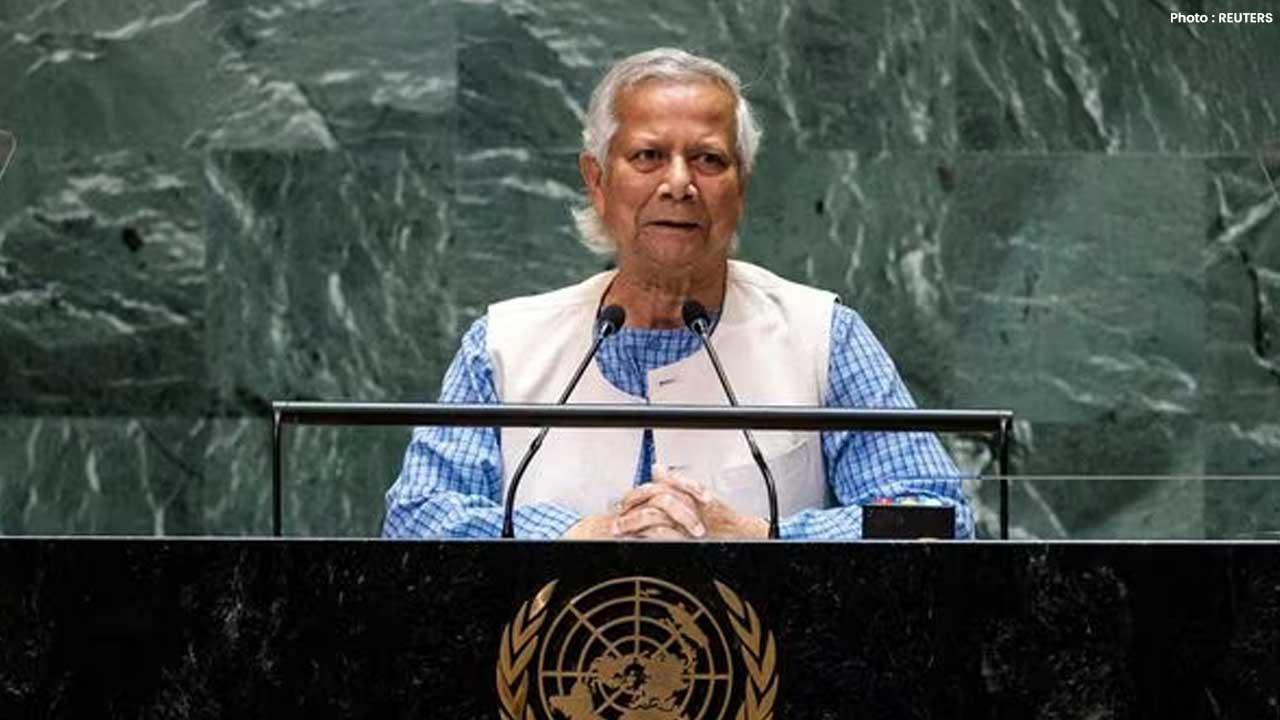
The interim government of Bangladesh, led by Nobel Peace Prize laureate Muhammad Yunus, has given political parties a one-week deadline to resolve disputes surrounding a key democratic reform charter. The ultimatum, announced on Monday, comes amid growing tensions between parties over the path forward for the South Asian nation’s political transition.
The Yunus administration, which took charge following the ouster of former Prime Minister Sheikh Hasina in August 2024, has been pushing for sweeping constitutional reforms to prevent any return to authoritarian rule. Yunus, who serves as the “chief advisor” of the interim government, described the political system he inherited as “completely broken down” and emphasized that the reform charter represents the cornerstone of his legacy and a safeguard for the country’s democratic future.
Key political factions signed the reform document—dubbed the “July Charter” after the uprising that ended Hasina’s rule—during a ceremony in October. However, divisions have persisted, with several parties insisting that a national referendum should ratify the charter before implementation.
Asif Nazrul, Bangladesh interim law minister, told reporters that despite extensive talks, political leaders remain split over the “timetable of the referendum and the topics to be included.” He warned that if no consensus is reached within the next week, the government will “act independently” to move the process forward.
The reform proposal includes crucial democratic safeguards such as a two-term limit for prime ministers, expanded presidential powers, and stronger checks and balances among the executive, judiciary, and legislature. Yunus has repeatedly stressed that these measures are essential to rebuild public trust in governance and ensure political stability ahead of the Bangladesh national elections expected in February 2026.
However, opposition figures have criticized the ultimatum. Salahuddin Ahmed, a senior leader of the Bangladesh Nationalist Party (BNP), likened the interim government’s assertiveness to “a referee trying to score a goal,” arguing that the decision to enforce reforms lies beyond its constitutional authority.
The BNP and Jamaat-e-Islami — the country’s largest Islamist party — have both signed the reform charter, while the National Citizen Party (NCP), composed mainly of student activists who led the 2024 uprising, has refused to do so. The NCP maintains that any political restructuring must be subject to direct approval from the people.
As Bangladesh navigates a fragile political transition, the coming week will be pivotal in determining whether Yunus’s vision for democratic reform gains consensus or sparks further confrontation.










PM Modi Pays Tribute to Mahatma Gandhi, Urges People to Support Khadi
PM Modi pays tribute to Mahatma Gandhi on Gandhi Jayanti and urges citizens to support Khadi and the

Amazon Seeks to Offload $8 Billion in Nvidia Chips to Investors
Amazon plans to move $8 billion in Nvidia chips to investors, using a new financing model to strengt

Samsung Raises Galaxy S26 Prices as Memory Chip Costs Rise
Samsung raises Galaxy S26 prices in South Korea as rising memory chip costs put pressure on smartpho

Lewis Hamilton Calls Singapore Grand Prix One of F1's Toughest Races
Lewis Hamilton discusses the demanding Singapore Grand Prix and brings Plus44 and Almave to Singapor

Denmark's Pandora Opens World's Largest Jewellery Factory in Vietnam
Pandora opens its largest jewellery factory in Vietnam, expanding global production, strengthening s

Gautam Gambhir Questions Batting-Friendly Pitches After India's Record ODI Chase
Gautam Gambhir questions batting-friendly ODI pitches after India’s record chase, calling for a bett

