You have not yet added any article to your bookmarks!
Join 10k+ people to get notified about new posts, news and tips.
Do not worry we don't spam!
Post by : Anis Farhan
Navratri, the nine-night festival dedicated to Goddess Durga, is celebrated with immense fervor across India and in Hindu communities worldwide. Each of the nine days honors a different form of Goddess Durga, with each form representing unique virtues and spiritual qualities. The second day of Navratri is devoted to Maa Brahmacharini, an incarnation of the goddess who embodies penance, devotion, and the relentless pursuit of righteousness.
Devotees believe that worshipping Maa Brahmacharini helps instill self-discipline, patience, and spiritual strength. Beyond the religious aspects, the day serves as a reminder of the importance of perseverance in life, ethical conduct, and the pursuit of knowledge. Across India, families decorate their homes, conduct special rituals, and engage in prayers to seek the blessings of the goddess.
The worship of Maa Brahmacharini is also symbolic of the human journey towards enlightenment, representing the time when Goddess Parvati undertook severe penance to unite with Lord Shiva. By emulating her dedication and focus, devotees seek to overcome obstacles, achieve inner peace, and lead disciplined lives.
Maa Brahmacharini is the second manifestation of Goddess Durga, representing severe penance, austerity, and unwavering devotion. Her name is derived from the Sanskrit words “Brahma”, meaning penance or devotion, and “Charini”, meaning one who practices. Together, Brahmacharini denotes one who has mastered the art of self-restraint through rigorous discipline and devotion.
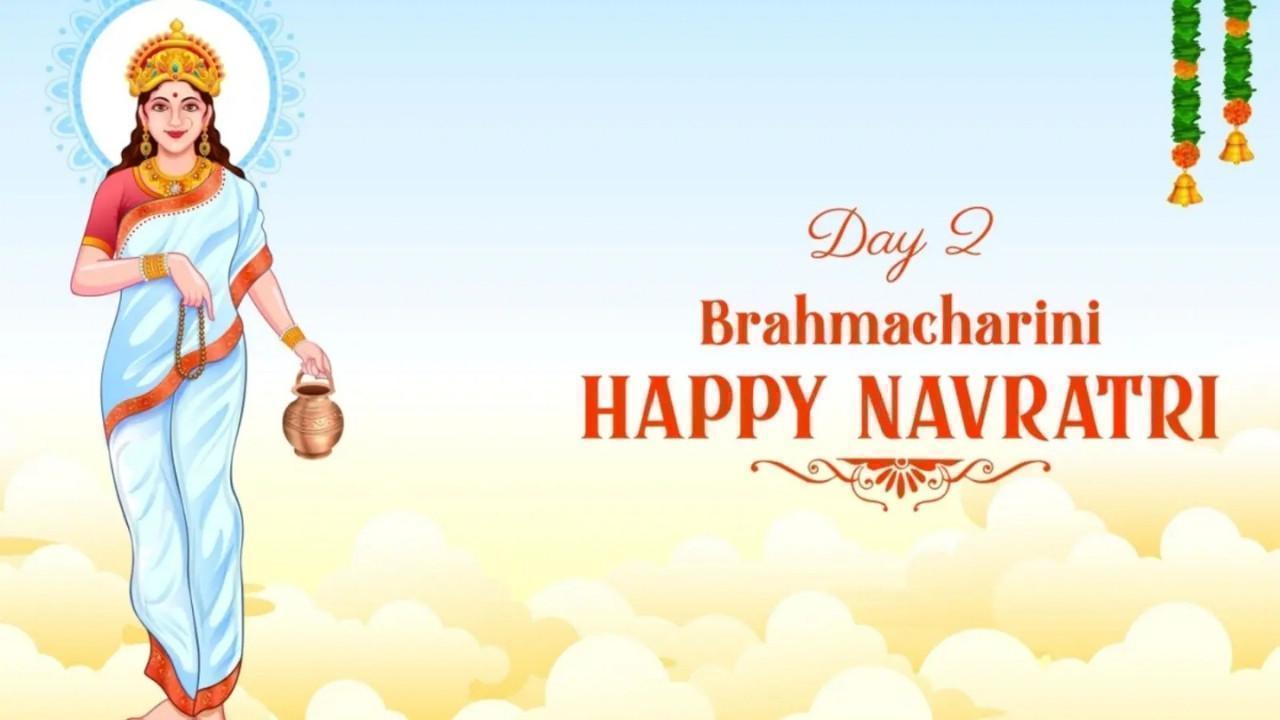
In Hindu mythology, Maa Brahmacharini is the form of Goddess Parvati when she performed intense penance in the Himalayas to win Lord Shiva as her husband. Legends describe her journey as one of extreme austerity, meditation, and determination. She is depicted holding a rosary (Japmala) in one hand and a kamandalu (water pot) in the other. The rosary represents spiritual wisdom and constant meditation, while the water pot symbolizes purity and sustenance. Her serene expression and simple attire reflect the values of patience, humility, and simplicity.
By worshipping Maa Brahmacharini, devotees aspire to imbibe these qualities into their own lives, fostering inner strength, focus, and spiritual clarity.
The second day of Navratri is highly significant for spiritual seekers and devotees alike. Maa Brahmacharini embodies several virtues that are essential for leading a balanced and purposeful life. Worshipping her is believed to confer the following benefits:
Self-discipline: Developing control over one’s mind, actions, and desires, which is essential for personal and spiritual growth.
Inner strength: Cultivating resilience and courage to face life’s challenges and obstacles with determination.
Wisdom: Gaining clarity and insight to make ethical and informed decisions.
Peace: Achieving mental calmness and emotional stability, which are vital for personal well-being.
Devotees believe that the blessings of Maa Brahmacharini not only bring spiritual growth but also remove obstacles in personal and professional life. The day is thus a reminder that devotion and hard work are the keys to success and spiritual fulfillment.
Worship on Day 2 of Navratri is a combination of traditional rituals, prayers, and symbolic offerings. Devotees follow practices that are believed to purify the body and mind and foster a closer connection with the goddess.
Early Rising: Devotees begin their day before sunrise, a time considered highly auspicious for spiritual activities.
Bathing and Purification: A ritual bath is taken to cleanse the body and mind, symbolizing readiness for divine worship.
Altar Setup: The worship area is cleaned thoroughly and decorated with white flowers, representing purity, devotion, and peace. A clean and serene environment is considered essential for connecting with Maa Brahmacharini.
Kalash Sthapana: A sacred pitcher (Kalash) filled with water, betel leaves, and a coconut is placed at the altar. This symbolizes the presence of divine energy and prosperity.
Lighting the Lamp: A ghee lamp is lit in front of the idol or image of Maa Brahmacharini, representing the dispelling of darkness and ignorance.
Offering Flowers: White flowers, particularly hibiscus and jasmine, are offered to the goddess as a symbol of purity and devotion.
Bhog (Offerings): White sweets, fruits, and milk are presented to the goddess as prasad. These simple offerings emphasize spiritual richness over material extravagance.
Chanting Mantras: Devotees recite mantras such as:
“ॐ देवी ब्रह्मचारिण्यै नमः”
(Om Devi Brahmacharinyai Namah)
Chanting is believed to invoke the goddess’s blessings and foster spiritual energy.
Durga Saptashati Path: Reading or listening to the Durga Saptashati, a sacred text detailing the exploits of Goddess Durga, is considered highly auspicious.
Aarti: The puja concludes with singing the aarti dedicated to Maa Brahmacharini, creating a devotional ambiance and invoking divine presence in the household.
Many devotees observe a fast on the second day of Navratri. Fasting may involve:
Abstaining from grains and non-vegetarian foods.
Consuming fruits, milk, nuts, and other satvik foods.
Maintaining spiritual focus through meditation and prayers.
The fast is believed to purify the body and mind, strengthen willpower, and enhance the devotee’s connection with the goddess. It also serves as a reminder of self-restraint, mirroring Maa Brahmacharini’s penance.
Color of the Day: White is the color associated with purity, peace, and spiritual calmness. Devotees wear white attire and decorate the altar with white flowers and ornaments to honor Maa Brahmacharini.
Bhog (Prasad): Offerings include white sweets, sugar, fruits, and milk. These symbolize simplicity, purity, and devotion, reflecting the goddess’s own austere lifestyle.
The focus on purity and simplicity reinforces the values of minimalism and spiritual clarity in everyday life.
The life of Maa Brahmacharini imparts several key lessons to devotees:
Penance and Discipline: Dedication and self-restraint are essential to achieve long-term goals and spiritual growth.
Devotion and Faith: Unwavering belief and loyalty to one’s principles help overcome challenges.
Patience and Perseverance: Enduring hardships with grace is a hallmark of spiritual maturity.
Simplicity and Humility: A modest lifestyle, free from excessive materialism, fosters inner peace and contentment.
By emulating her virtues, devotees can cultivate inner strength, make ethical decisions, and lead a more meaningful life.
While the traditional rituals remain central to Navratri celebrations, modern observances also include:
Community Gatherings: Devotees often participate in cultural programs, bhajans, and group prayers.
Charitable Acts: Many engage in acts of charity, donating food, clothes, or money to the needy in honor of Maa Brahmacharini’s virtues.
Digital Participation: In contemporary times, live streams of temple pujas allow devotees to participate remotely.
Meditation and Yoga: Practicing meditation and yoga on this day enhances spiritual focus and mental clarity, reflecting the goddess’s penance.
These modern practices ensure that the essence of Day 2 is preserved while adapting to contemporary lifestyles.
Across India, the second day of Navratri is celebrated with regional variations:
North India: Emphasis is placed on fasting, devotional songs, and evening aarti in temples.
West Bengal: Though Durga Puja dominates, special pujas dedicated to Brahmacharini are observed in households.
Gujarat: Community gatherings, Garba dances, and group prayers complement traditional worship.
South India: Temples conduct elaborate rituals, and devotees offer white flowers and fruits to the goddess.
Despite regional differences, the underlying theme of devotion, discipline, and penance remains consistent.
Day 2 of Navratri, dedicated to Maa Brahmacharini, is a celebration of penance, devotion, and spiritual discipline. Devotees honor her through rituals, fasting, prayers, and meditation, striving to emulate her virtues in their daily lives. The day serves as a reminder that spiritual growth requires patience, perseverance, and inner strength.
By embracing the teachings of Maa Brahmacharini, devotees can cultivate focus, clarity, and resilience, leading to a balanced and harmonious life. This day is not only a religious observance but also an opportunity for personal transformation and reflection, making it one of the most meaningful days of Navratri.
This article is intended for informational purposes only. The rituals and practices mentioned are based on traditional beliefs and customs. Readers are encouraged to consult knowledgeable spiritual guides or practitioners for personalized advice and guidance.










Rabada Misses First Australia Test as South Africa Pick Two Spinners
Kagiso Rabada misses the opener as South Africa vs Australia begins, with Anrich Nortje returning an

Starc Compares Australia's Tough Year to McIlroy's Major Sweep
Mitchell Starc says Australia winning three away Test series and the World Cup would match Rory McIl

France’s Sesterce Plans $11 Billion AI Data Centre in Finland
Sesterce plans a $11 billion AI data centre in Finland, with major expansion, green energy plans and

Danaher to Launch AI-Powered Autonomous Research Lab in 2027
Danaher plans an AI research lab for 2027, combining robotics and automation to speed up drug discov

Musk Welcomes German Support for Tesla Driver Assistance Tech as EU Approval Push Continues
Elon Musk welcomes Germany's backing for Tesla FSD as the company seeks EU approval amid speed, safe

Microsoft and Nvidia CEOs to Unveil AI Laptop at San Francisco Event
Microsoft and Nvidia showcase a new AI laptop with RTX Spark chips as they push powerful local AI co