You have not yet added any article to your bookmarks!
Join 10k+ people to get notified about new posts, news and tips.
Do not worry we don't spam!
Post by : Anis Farhan
Winter represents one of the most demanding phases in the natural world. Temperatures plunge, water sources freeze, vegetation dies back, and prey becomes scarce. For animals, these conditions mean increased energy demands at a time when food is hardest to find.
Survival during winter is a matter of efficiency. Animals must conserve heat, minimise energy loss, and maximise access to limited resources. Over thousands of years, evolution has shaped extraordinary solutions—ranging from thick fur and fat reserves to behavioural changes like migration and hibernation.
Understanding these adaptations not only deepens appreciation for wildlife but also highlights the delicate balance between animals and their environments.
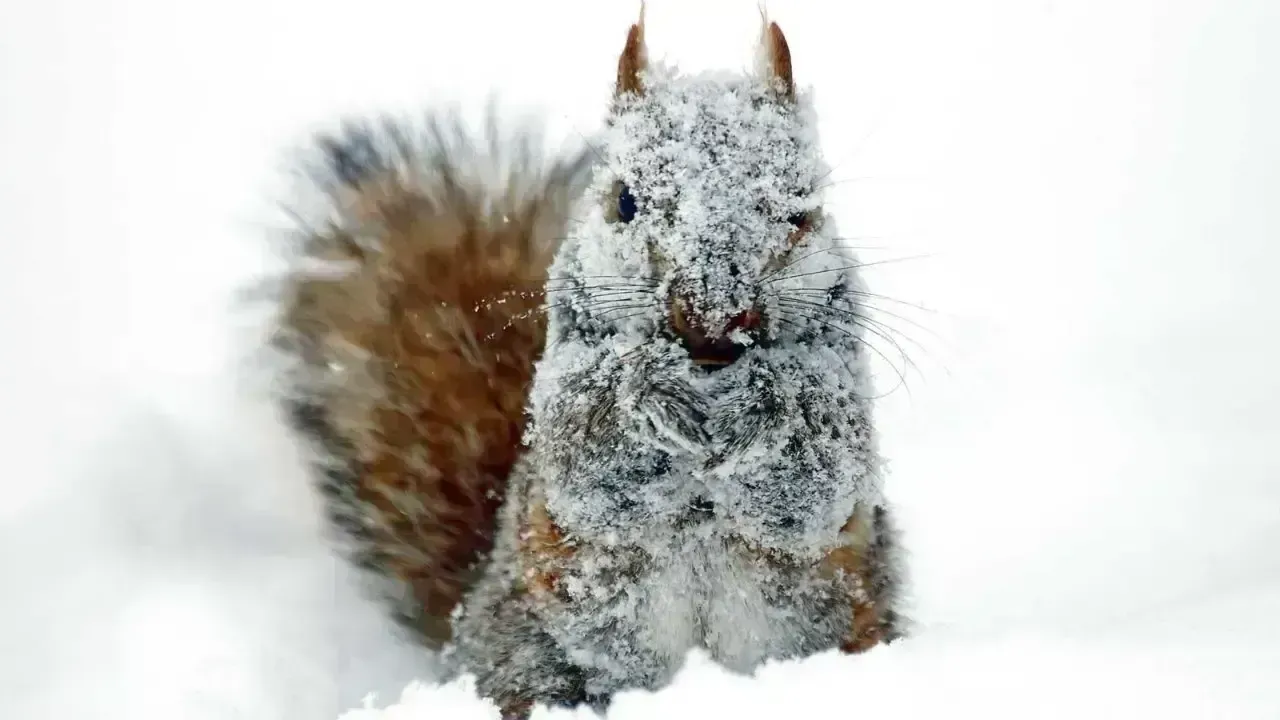
One of the most visible winter adaptations is thicker fur or denser feathers. Many animals grow a winter coat that is significantly heavier than their summer fur.
This insulation traps air close to the skin, creating a barrier that prevents body heat from escaping. In some species, the winter coat also contains hollow hairs that improve insulation without adding excessive weight.
Birds rely on feathers in a similar way. By fluffing up their feathers, they increase trapped air, reducing heat loss even in sub-zero temperatures.
Fat plays a dual role during winter. First, it acts as insulation, helping animals retain body heat. Second, it serves as a vital energy reserve when food is scarce.
Many animals build up fat stores during autumn, a process known as hyperphagia, where they eat excessively in preparation for winter. These reserves allow them to survive long periods with little or no food.
Marine animals and cold-region mammals often rely heavily on fat layers, as water and wind remove heat much faster than air.
Animals living in cold climates often have compact bodies with shorter limbs and ears. This reduces the surface area exposed to cold air, minimising heat loss.
Long, thin extremities lose heat more rapidly, so shorter appendages help conserve warmth. This principle is a classic example of how body shape evolves in response to climate.
Hibernation is one of the most effective strategies animals use to survive winter. During hibernation, an animal’s heart rate, breathing, and metabolism slow dramatically, reducing energy needs to a fraction of normal levels.
Body temperature may drop close to the surrounding environment, allowing the animal to conserve energy for months. Hibernators rely entirely on stored fat until spring arrives.
Not all hibernation is the same. Some animals enter deep, uninterrupted hibernation, while others experience lighter periods of dormancy with occasional awakenings.
Torpor is similar to hibernation but occurs for shorter periods—sometimes just overnight. Animals lower their metabolic rate temporarily to conserve energy during cold nights or food shortages.
This strategy is especially common among small animals that cannot store large fat reserves. By entering torpor, they reduce energy demands during the most challenging hours.
Rather than endure harsh winters, many animals migrate to regions with milder climates and abundant food. Migration allows animals to avoid extreme cold altogether.
This strategy requires remarkable navigation skills and endurance, as animals often travel thousands of kilometres. Migration is energy-intensive but ultimately less costly than surviving a winter with limited resources.
Timing is critical. Animals must leave before conditions become lethal and return when resources are once again available.
Animals adapted to cold environments often have the ability to regulate their metabolism efficiently. Some species can slow metabolic processes to reduce energy consumption, while others increase metabolism to generate heat.
This flexibility allows animals to respond dynamically to changing conditions, conserving energy when possible and producing heat when necessary.
In extreme cold, freezing can damage cells and tissues. Some animals produce specialised proteins that prevent ice crystals from forming inside their bodies.
These antifreeze-like substances lower the freezing point of bodily fluids, allowing animals to survive temperatures that would otherwise be fatal.
Such adaptations are especially important for animals that remain active during winter rather than entering dormancy.
Cold temperatures can restrict blood flow to extremities, increasing the risk of frost damage. Many animals have specialised circulatory systems that minimise heat loss while maintaining function.
By controlling blood flow to exposed areas like feet and tails, animals reduce heat loss without causing tissue damage.
Some animals change colour with the seasons, turning white or lighter in winter. This provides effective camouflage in snowy environments, helping them avoid predators or ambush prey.
Colour change is controlled by daylight length rather than temperature, ensuring the transition occurs at the right time of year.
This adaptation highlights how survival is not only about staying warm but also about avoiding detection.
Winter camouflage is especially important when vegetation disappears and landscapes become uniformly white. Animals that fail to blend in become easy targets.
Camouflage reduces the need for energy-intensive escapes, conserving valuable resources during winter months.
Many animals retreat underground during winter, where temperatures are more stable and protected from wind and predators.
Burrows provide insulation and allow animals to conserve energy. Snow itself can act as an insulating layer, trapping warmth beneath the surface.
Living underground also reduces exposure to storms and extreme cold.
Some animals use natural shelters such as caves, hollow trees, or rock crevices. Others build nests or dens specifically designed to retain heat.
Group living can also provide warmth. By huddling together, animals share body heat and reduce individual energy loss.
Many animals store food during autumn to prepare for winter scarcity. These caches may be hidden underground, inside trees, or beneath snow.
Food storage allows animals to remain active without relying entirely on unpredictable winter foraging.
Memory and spatial awareness play a crucial role in retrieving stored food months later.
When preferred food sources disappear, animals adapt by switching diets. Herbivores may consume bark or roots, while predators adjust hunting strategies to target available prey.
Flexibility in diet is often the difference between survival and starvation during prolonged winters.
Group behaviour is a powerful winter survival strategy. Animals that huddle together reduce heat loss by sharing warmth and minimising exposed surface area.
This behaviour is common among birds and mammals and significantly reduces individual energy expenditure.
In some species, group living also improves vigilance against predators. While some individuals rest or conserve energy, others remain alert.
This shared responsibility enhances survival odds for the entire group.
Aquatic animals face unique winter challenges as surface waters freeze. Many survive by remaining in deeper water, where temperatures are more stable.
Water retains heat better than air, allowing aquatic life to persist beneath ice layers.
Aquatic animals often reduce movement and feeding during winter to conserve energy. Slower metabolism allows survival until conditions improve.
Climate change has altered traditional winter patterns, creating challenges for animals adapted to predictable seasonal cycles.
Warmer winters can disrupt hibernation timing, food availability, and camouflage effectiveness.
When snow cover is inconsistent, animals that change colour may become more visible to predators. Similarly, early thaws can exhaust fat reserves prematurely.
These mismatches highlight how finely tuned winter adaptations are—and how vulnerable they can be to rapid environmental change.
Animal winter adaptations showcase the power of evolution and resilience. Each strategy represents a finely balanced solution shaped by survival pressures over millennia.
Understanding these adaptations helps scientists predict how species may respond to environmental changes and informs conservation efforts.
Protecting winter habitats is crucial, as even the most adapted animals depend on stable ecosystems to survive.
Extreme winter conditions test the limits of life, yet animals across the planet demonstrate astonishing adaptability. Through physical insulation, behavioural strategies, physiological changes, and social cooperation, they endure months of cold, darkness, and scarcity.
These survival strategies are not random—they are precise responses to environmental pressures, refined over generations. As winters continue to change, studying these adaptations becomes more important than ever, reminding us of nature’s ingenuity and the delicate balance that sustains life in even the harshest conditions.
Disclaimer:
This article is intended for informational and educational purposes only. It presents general observations about animal behaviour and adaptations and does not replace scientific or ecological research conducted in specific environments.










AI Companies Expected to Drive Most US Earnings Growth in Q3
AI companies are expected to drive US third-quarter earnings growth as investors assess tech profits

Money Market Funds See Record Inflows as Global Bond Selloff Intensifies
Global money market funds attract $153.81 billion as bond yields rise, inflation fears persist and i

Meta Bans TikTok Ads on Facebook and Instagram in Seven Countries
Meta has banned TikTok ads in seven countries, escalating competition over social media users, adver

ASML and Zeiss Target Next-Generation Chip Technology in 10 Years
ASML and Carl Zeiss are developing Hyper NA technology to print smaller chip circuits, with the next

Rabada Misses First Australia Test as South Africa Pick Two Spinners
Kagiso Rabada misses the opener as South Africa vs Australia begins, with Anrich Nortje returning an

Starc Compares Australia's Tough Year to McIlroy's Major Sweep
Mitchell Starc says Australia winning three away Test series and the World Cup would match Rory McIl