
You have not yet added any article to your bookmarks!
Join 10k+ people to get notified about new posts, news and tips.
Do not worry we don't spam!
Post by : Meena Ariff
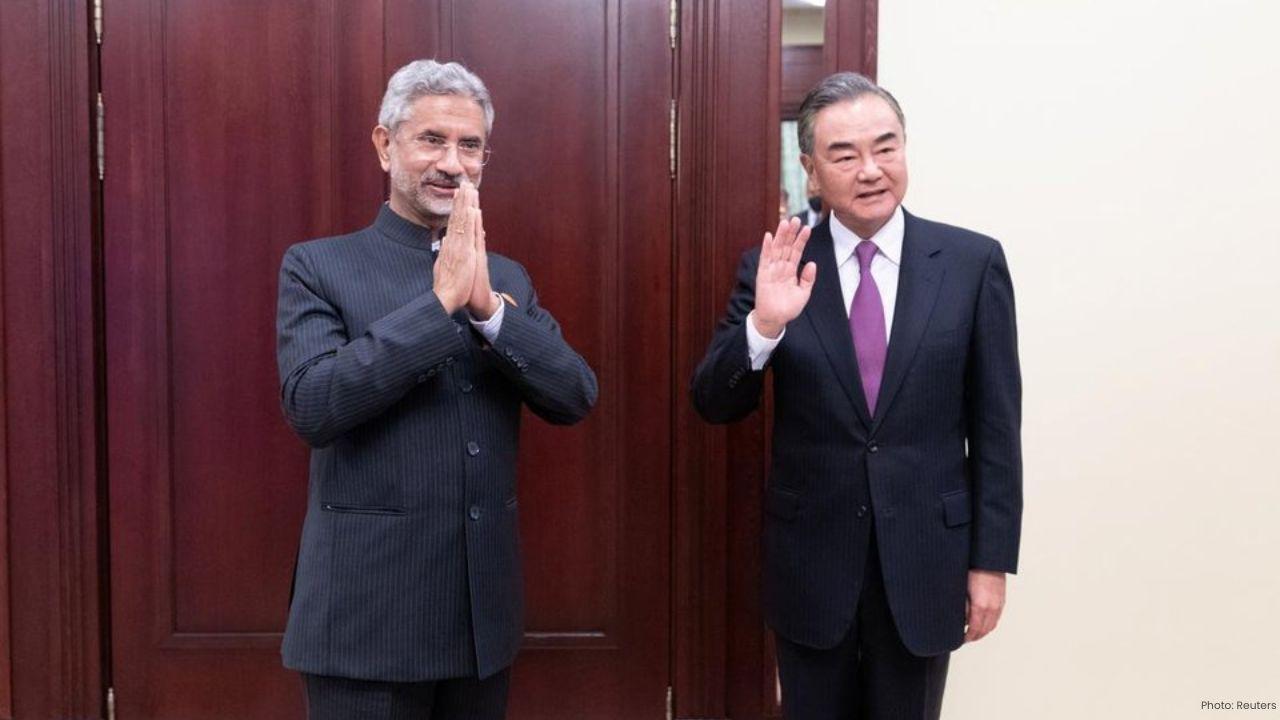
Indian Foreign Minister Subrahmanyam Jaishankar and his Chinese counterpart Wang Yi met to discuss a wide range of issues, including border security, trade, and bilateral exchanges, to strengthen cooperation between the two countries. The discussions were seen as a step toward restoring trust and building a stable and forward-looking relationship.
During the talks, Mr. Jaishankar said that the discussions covered economic and trade issues, including border trade and connectivity. They also focused on pilgrimages, people-to-people contacts, and river data sharing to improve cooperation on water resources.
He emphasized that these discussions would help maintain peace along the border and promote constructive engagement between the two countries.
Mr. Wang Yi noted that exchanges and dialogue at all levels had been gradually restored, and that bilateral relations were slowly returning to a cooperative phase. He also suggested that both India and China, as major developing nations, should set an example for other countries by strengthening unity and cooperation.
Mr. Wang stated that the two countries should treat each other as partners and opportunities, not as rivals or threats, highlighting the need for a correct strategic understanding between the Asian powers.
Border Security and Peace
A central part of the discussions was the border issue, especially along the disputed western Himalayas. Mr. Jaishankar stressed that the foundation for positive momentum in India-China relations lies in the ability to jointly maintain peace in border areas.
He noted that both nations have experienced difficult periods in their relationship, and moving forward requires candid and constructive dialogue.
The talks also highlighted the need to reduce military presence along the border following a deadly clash in 2020, where 20 Indian soldiers and four Chinese soldiers lost their lives. Reducing tension along this border is crucial for maintaining stability and fostering cooperation.
Context of the Visit
Mr. Wang Yi visited India to hold the 24th round of border talks with India’s National Security Adviser Ajit Doval and to meet Prime Minister Narendra Modi. The discussions came days before Prime Minister Modi’s planned visit to China to attend the Shanghai Cooperation Organisation (SCO) summit, his first in several years.
The SCO summit brings together major regional powers, including Russia, and focuses on political and security cooperation in Asia. The timing of these talks is significant, as it sets the stage for broader cooperation ahead of the summit.
Past Relations and Recent Developments
India-China relations have seen both cooperation and conflict in recent years. Relations deteriorated sharply following a border clash in 2020, leading to casualties on both sides. Since then, both nations have taken steps to reduce tensions and restore dialogue.
In October, a milestone agreement was reached after talks between Chinese President Xi Jinping and Prime Minister Modi, aimed at lowering military tensions on the Himalayan border. This agreement helped thaw relations and opened the door for the high-level discussions between Mr. Jaishankar and Mr. Wang.
The recent talks reflect the desire of both countries to move past difficult periods, focusing on constructive engagement and mutual benefit.
Moving Forward: Cooperation and Strategic Understanding
Both India and China emphasized the importance of open communication and cooperation across multiple sectors, including trade, culture, and security. Leaders on both sides agreed that future engagement should be based on mutual respect and understanding, ensuring that neither country views the other as a threat.
Experts note that these talks are a positive step toward stabilizing one of the most important relationships in Asia. By focusing on border peace, trade, and bilateral exchanges, India and China aim to create an environment where both nations can work together as partners rather than competitors.
Significance for the Region
The discussions between India and China have broader implications for regional security and economic development. A cooperative approach between the two largest Asian economies can:
Reduce the risk of border conflicts and military escalation.
Promote trade and economic growth in the border areas.
Encourage people-to-people and cultural exchanges.
Strengthen the collective influence of developing countries in regional and global forums.
By addressing these issues collaboratively, India and China are signaling their commitment to stability, peace, and cooperation, not just bilaterally, but across Asia.
The India-China talks highlight the importance of dialogue, trust, and strategic understanding between the two major nations. Even after periods of tension, careful and constructive discussions can prevent conflicts and enhance cooperation.
While challenges remain, including the management of disputed borders and ongoing economic competition, the emphasis on communication, collaboration, and mutual respect shows that both nations are committed to building a stable and cooperative relationship.










PM Modi Pays Tribute to Mahatma Gandhi, Urges People to Support Khadi
PM Modi pays tribute to Mahatma Gandhi on Gandhi Jayanti and urges citizens to support Khadi and the

Amazon Seeks to Offload $8 Billion in Nvidia Chips to Investors
Amazon plans to move $8 billion in Nvidia chips to investors, using a new financing model to strengt

Samsung Raises Galaxy S26 Prices as Memory Chip Costs Rise
Samsung raises Galaxy S26 prices in South Korea as rising memory chip costs put pressure on smartpho

Lewis Hamilton Calls Singapore Grand Prix One of F1's Toughest Races
Lewis Hamilton discusses the demanding Singapore Grand Prix and brings Plus44 and Almave to Singapor

Denmark's Pandora Opens World's Largest Jewellery Factory in Vietnam
Pandora opens its largest jewellery factory in Vietnam, expanding global production, strengthening s

Gautam Gambhir Questions Batting-Friendly Pitches After India's Record ODI Chase
Gautam Gambhir questions batting-friendly ODI pitches after India’s record chase, calling for a bett

