
You have not yet added any article to your bookmarks!
Join 10k+ people to get notified about new posts, news and tips.
Do not worry we don't spam!
Post by : Saif Rahman
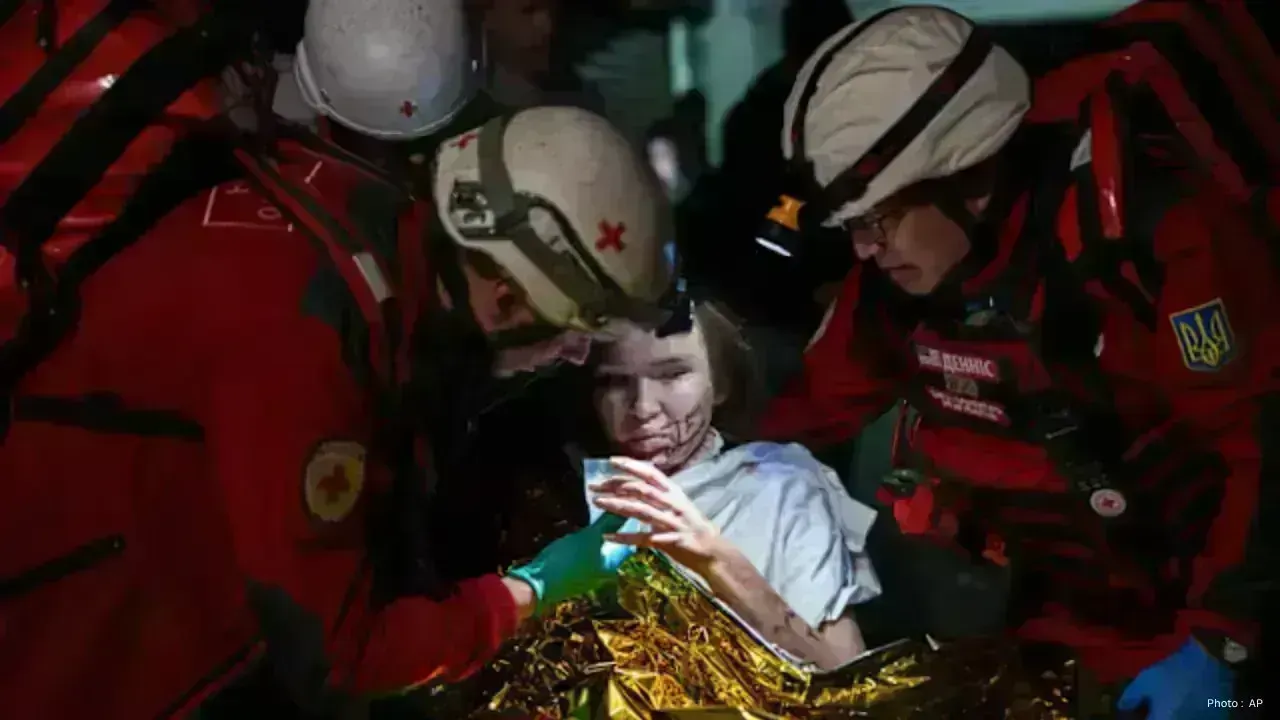
Recent missile and drone strikes associated with the protracted conflict between Russia and Ukraine have exacerbated tensions throughout Eastern Europe. Numerous regions within Ukraine experienced aerial bombardments, prompting immediate responses from emergency teams and air defense units as they dealt with explosions and incoming threats during this latest wave of aggression.
Local officials have initiated damage assessments as rescue crews work to aid civilians caught in the crossfire. There have been reports of significant disruptions to infrastructure and public services, with emergency alerts remaining active in various areas.
This latest surge in attacks underscores the ongoing volatility surrounding this conflict, which has inflicted tremendous destruction, displacement, and humanitarian crises over the years. Civilians in numerous urban areas spent extended periods in shelters throughout the night as air raid sirens and defense actions persisted.
Ukrainian authorities have reiterated their pleas for increased military aid and enhanced air defense systems from international partners. There is a continued emphasis on safeguarding infrastructure, residential neighborhoods, and crucial installations from persistent missile and drone strikes.
The conflict has dramatically reshaped Europe’s security landscape, prompting neighboring nations to bolster military preparedness, border surveillance, and cooperative defense strategies. National governments are expressing heightened concerns regarding the potential for escalated tensions and long-term regional stability.
European leaders, including Emmanuel Macron, are engaged in ongoing discussions regarding diplomatic coordination, defense provisions, and future security frameworks related to the conflict. The international community is keen on striking a balance between military assistance, humanitarian aid, and diplomatic accountability.
Focus also remains on Belarus due to its intertwined political and strategic ties with Russia. Analysts are keenly monitoring military dynamics and security collaborations with Belarus amid intensifying geopolitical strains.
The war has introduced severe humanitarian dilemmas, including civilian deaths, destruction of essential infrastructure, and mass dislocation. Millions have been impacted, with repeated assaults damaging housing, transportation, and energy facilities.
Global economic markets are reacting with caution in light of the conflict, as it correlates directly with energy pricing, food exports, defense budgets, and international trade variables. Economic uncertainties linked to geopolitical turmoil are a critical concern for governments and businesses worldwide.
Efforts at diplomatic resolution have consistently met obstacles, with ongoing hostilities, political disputes, and divergent strategic objectives complicating the landscape. International organizations continue advocating for dialogue and humanitarian protection, despite persistent military operations.
Experts emphasize that missile and drone warfare has become a defining characteristic of the conflict, significantly affecting logistics, infrastructure, and civilian morale. Consequently, the advancement of air defense capabilities is increasingly vital for nations confronted with modern aerial threats.
This latest round of confrontations has reignited discussions surrounding European military readiness, alliances, and regional defense strategies. NATO countries and their partners continue to bolster collaboration amidst rising concerns about broader instability.
Humanitarian agencies have repeatedly cautioned about the protracted social and economic fallout due to the war, particularly for civilians residing near active combat zones. Damage to essential public infrastructure and housing has complicated recovery initiatives across numerous regions.
Political analysts regard this conflict as one of the most severe geopolitical crises in contemporary Europe, significantly impacting international diplomacy, security strategies, and economic stability. The continuing assaults suggest that immediate de-escalation remains improbable as fighting persists across diverse locales.
As the situation unfolds, international focus is increasingly directed towards military developments, diplomatic endeavors, and the humanitarian landscape, shaping ongoing discussions within regional and global security frameworks.










PM Modi Pays Tribute to Mahatma Gandhi, Urges People to Support Khadi
PM Modi pays tribute to Mahatma Gandhi on Gandhi Jayanti and urges citizens to support Khadi and the

Amazon Seeks to Offload $8 Billion in Nvidia Chips to Investors
Amazon plans to move $8 billion in Nvidia chips to investors, using a new financing model to strengt

Samsung Raises Galaxy S26 Prices as Memory Chip Costs Rise
Samsung raises Galaxy S26 prices in South Korea as rising memory chip costs put pressure on smartpho

Lewis Hamilton Calls Singapore Grand Prix One of F1's Toughest Races
Lewis Hamilton discusses the demanding Singapore Grand Prix and brings Plus44 and Almave to Singapor

Denmark's Pandora Opens World's Largest Jewellery Factory in Vietnam
Pandora opens its largest jewellery factory in Vietnam, expanding global production, strengthening s

Gautam Gambhir Questions Batting-Friendly Pitches After India's Record ODI Chase
Gautam Gambhir questions batting-friendly ODI pitches after India’s record chase, calling for a bett

