
You have not yet added any article to your bookmarks!
Join 10k+ people to get notified about new posts, news and tips.
Do not worry we don't spam!
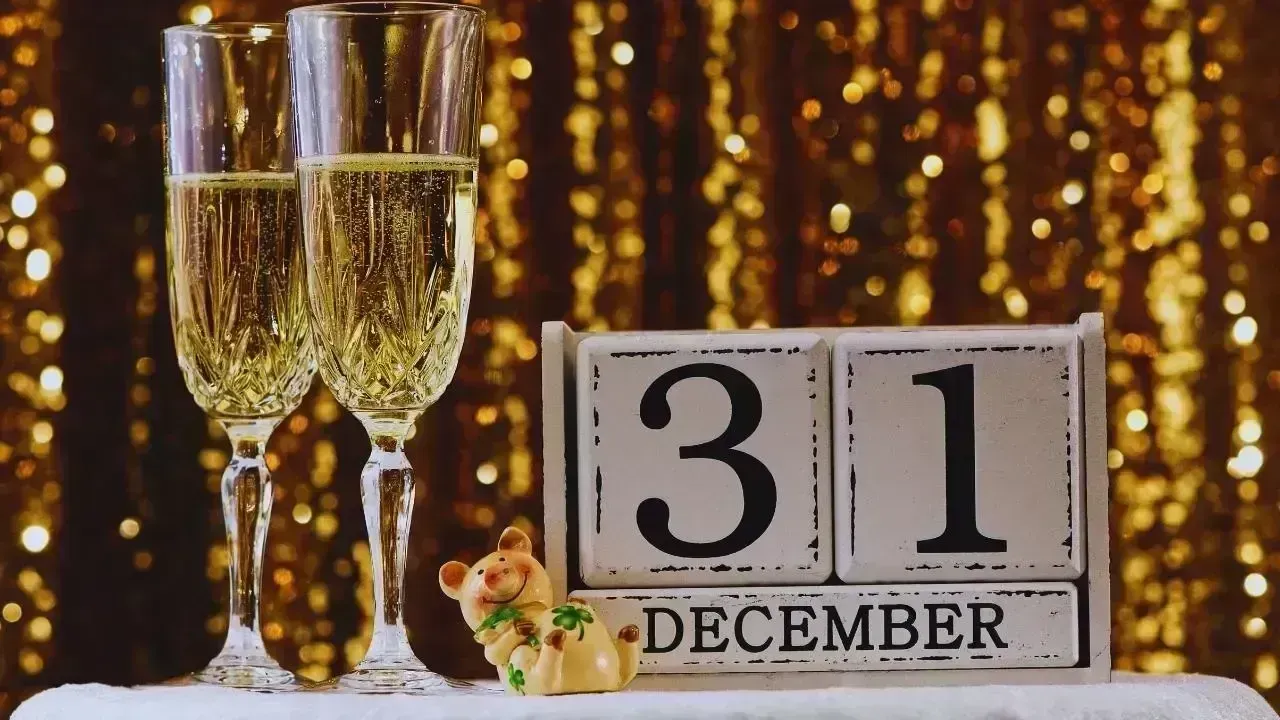
Post by : Anis Farhan
New Year’s Eve is one of the few moments on the calendar that belongs equally to every culture, religion, age group, and social class. As the final hours of the year tick away, the world seems to move in unison. Streets glow brighter, clocks are watched more closely, and emotions sit closer to the surface. It is a night that carries celebration and silence in equal measure.
Unlike festivals tied to belief systems or geography, New Year’s Eve is universal. Whether someone welcomes it with fireworks over a skyline, prayers in a quiet room, music at a crowded party, or solitude with memories, the meaning remains shared. It is the closing chapter of one story and the fragile opening line of another.
Long before digital clocks and televised countdowns, ancient civilisations were already observing the end of yearly cycles. Early calendars were built around agricultural rhythms, celestial movements, and seasonal change. For many societies, the end of the year symbolised survival — another full cycle completed, another chance granted.
As calendars evolved and societies modernised, New Year’s Eve slowly transformed from spiritual observance into social celebration. Bells replaced rituals, fireworks replaced bonfires, and public gatherings replaced private rites. Over centuries, the night became less about fear of the unknown and more about hope for renewal.
Human beings attach meaning to endings. New Year’s Eve creates a clean psychological break, allowing people to mentally separate who they were from who they hope to become. This sense of closure offers comfort, even if nothing physically changes at midnight.
There is power in believing tomorrow will be different. Even when logic tells us change takes time, New Year’s Eve allows a brief suspension of doubt. That illusion fuels motivation, courage, and optimism, if only for a while.
Across continents, the night is marked with light and sound. Fireworks illuminate skies as symbols of joy and triumph. Families gather around food prepared specially for the occasion, believing shared meals bring unity into the coming year.
Not all celebrations are loud. Some cultures favour reflection over noise. Writing wishes, lighting candles, offering prayers, or spending the final moments in silence are common practices that emphasise intention rather than spectacle.
Televised countdowns, livestreamed celebrations, and social media posts have reshaped how people experience the night. Even those alone are now digitally connected to millions counting down together. The night has become both deeply personal and globally shared.
In recent years, virtual gatherings have gained popularity. Video calls, online concerts, and digital countdowns allow people separated by distance to share the moment. This shift reflects how traditions adapt without losing meaning.
New Year’s resolutions are rooted in optimism. They represent belief in personal agency — the idea that tomorrow’s version of oneself can be better than today’s. Whether realistic or not, resolutions provide emotional direction.
The enthusiasm of New Year’s Eve often collides with reality in the weeks that follow. Without structure or patience, motivation wanes. Still, the act of setting intentions itself holds value, even when goals evolve or change.
Hotels, airlines, restaurants, and event venues experience peak demand. The night fuels one of the year’s largest global consumer spending surges, driven by celebration, gifting, and travel.
Local vendors, street performers, food sellers, and service workers rely heavily on New Year’s Eve. For many, it represents a crucial income opportunity that carries them into the early months of the year.
While the night is associated with happiness, it also amplifies loneliness and reflection. For some, it highlights losses, unmet goals, or uncertainty. These emotions coexist with celebration, reminding us that the night is deeply human.
The final hours of the year naturally prompt self-assessment. Achievements, regrets, relationships, and missed chances all surface. This reflection is not weakness but awareness — a sign of emotional maturity.
With heightened festivities come risks. Crowded spaces, alcohol consumption, and late-night travel demand caution. Responsible celebration ensures that joy does not turn into regret.
Cities worldwide deploy safety measures, emergency services, and crowd management strategies. These efforts highlight the collective responsibility that underpins a successful celebration.
The way communities celebrate reflects social values. Extravagant displays show economic confidence, while intimate gatherings emphasise connection. Each celebration tells a story about priorities and identity.
Younger generations are redefining the night. Experiences are replacing excess, meaning is replacing noise, and wellness is gaining prominence over indulgence. Traditions evolve, but the essence remains.
Counting down the final seconds creates anticipation and unity. It compresses time into a shared experience, making strangers feel connected through collective expectation.
The instant after midnight is symbolic. It carries relief, hope, and possibility. Even sceptics feel a subtle emotional shift — proof that belief does not require certainty.
In a world that rarely slows down, New Year’s Eve forces a pause. It invites reflection before movement, silence before noise, and thought before action.
As long as humans seek meaning in time, New Year’s Eve will endure. It offers permission to hope again, to forgive oneself, and to imagine a future shaped by intention rather than habit.
New Year’s Eve is not defined by fireworks or parties alone. It is a collective emotional checkpoint — a reminder that time moves forward whether we are ready or not. In its fleeting hours, it offers closure, connection, and courage. The night whispers a simple truth: endings are not failures; they are invitations to begin again.
This article is intended for informational and cultural reflection purposes only. It does not promote any specific belief system, lifestyle choice, or form of celebration. Individual experiences and traditions may vary widely across regions and communities.








AI Companies Expected to Drive Most US Earnings Growth in Q3
AI companies are expected to drive US third-quarter earnings growth as investors assess tech profits

Money Market Funds See Record Inflows as Global Bond Selloff Intensifies
Global money market funds attract $153.81 billion as bond yields rise, inflation fears persist and i

Meta Bans TikTok Ads on Facebook and Instagram in Seven Countries
Meta has banned TikTok ads in seven countries, escalating competition over social media users, adver

ASML and Zeiss Target Next-Generation Chip Technology in 10 Years
ASML and Carl Zeiss are developing Hyper NA technology to print smaller chip circuits, with the next

Rabada Misses First Australia Test as South Africa Pick Two Spinners
Kagiso Rabada misses the opener as South Africa vs Australia begins, with Anrich Nortje returning an

Starc Compares Australia's Tough Year to McIlroy's Major Sweep
Mitchell Starc says Australia winning three away Test series and the World Cup would match Rory McIl

