
You have not yet added any article to your bookmarks!
Join 10k+ people to get notified about new posts, news and tips.
Do not worry we don't spam!
Post by : Meena Ariff
Photo: Reuters
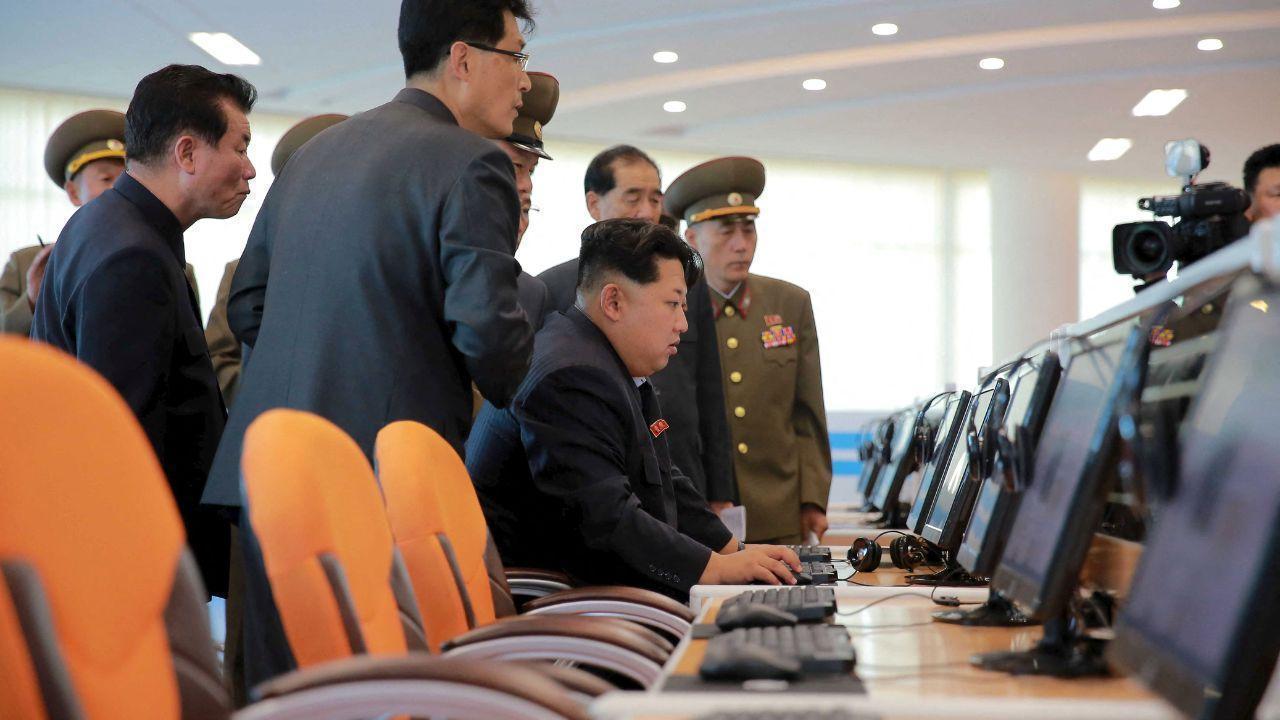
A North Korean defector has shared a rare and shocking story about how thousands of IT workers are secretly helping fund the North Korean government by working remotely for Western companies. These workers use fake identities to get jobs online, earn money, and send most of their earnings back to support the regime.
Meet Jin-su: A Former Insider
Jin-su (not his real name) used to be one of those IT workers. In an interview, he explained how the scheme works. He said he used hundreds of fake IDs to apply for jobs, mostly in the United States and Europe. He worked for companies under these false names and made around $5,000 a month, while some of his colleagues earned even more.
But here’s the twist: 85% of the money he earned had to be sent back to North Korea. Even though it felt unfair, Jin-su said it was still better than the poor conditions he faced back home.
“We know it's like robbery, but we just accept it as our fate,” he said.
How the Scam Works
North Korean IT workers are often sent abroad to places like China, Russia, or some African countries. From there, they can access the internet and look for jobs in Western companies. Since they cannot use their real names or nationalities due to international sanctions, they first try to pretend they are from China or Turkey.
They often pay people in countries like Hungary or the UK to use their identity. With that identity, they create online profiles that look like they belong to someone from the US or Europe. Because many freelance jobs don't need face-to-face meetings, it’s easier to pretend to be someone else. Most of the communication happens on platforms like Slack or email.
Jin-su said he mainly targeted US companies because they pay more. Sometimes, he said, more than one North Korean worker ends up getting hired at the same company—and the company doesn’t even realize it.
Why This Is Happening
North Korea has been under heavy international sanctions for years due to its nuclear weapons program. To survive, the government needs money. So, it sends workers abroad to earn foreign currency.
Some work in restaurants and factories, but others—like Jin-su—work in technology. A report from 2024 said these secret IT workers bring in between $250 million $600 million every year for the North Korean regime.
From Job Offers to Hacking
Most IT workers are focused on keeping their jobs and sending money back. But in some cases, they have also stolen data or hacked the companies that hired them. In one case, 14 North Koreans were charged in the US for earning $88 million by tricking companies and demanding ransom money after stealing data.
Real Experiences from the Tech World
Many hiring managers in the US and Europe have noticed strange behavior during job interviews. One manager said he saw candidates on video calls who refused to show their faces in the daytime, raising suspicion. Another shared a video where a candidate was using AI software to fake his appearance.
A cybersecurity company said it was almost certain that one of the job applicants was using FaceSwap tools to hide his real identity.
The Difficult Life of IT Workers Abroad
Jin-su said that when he worked in China, his life was very controlled.
“We weren’t allowed to go out and had to stay indoors all the time,” he said.
But he also said that being abroad gave him a chance to see Western media and news. That made him realize how different life was outside North Korea. Still, very few IT workers think about running away. Most are too afraid. If they are caught, their families back home could be punished.
Jin-su is one of the very few who managed to defect. He now lives in a safer country and still works in IT. While he makes less money now, he is happy that he can keep what he earns and live without fear.
This hidden world of secret workers shows how far North Korea will go to survive under sanctions. It also shows how remote work, though helpful in many ways, can be used for dangerous schemes. Companies must be more careful during hiring, and governments around the world are working to stop these cyber operations.









Rabada Misses First Australia Test as South Africa Pick Two Spinners
Kagiso Rabada misses the opener as South Africa vs Australia begins, with Anrich Nortje returning an

Starc Compares Australia's Tough Year to McIlroy's Major Sweep
Mitchell Starc says Australia winning three away Test series and the World Cup would match Rory McIl

France’s Sesterce Plans $11 Billion AI Data Centre in Finland
Sesterce plans a $11 billion AI data centre in Finland, with major expansion, green energy plans and

Danaher to Launch AI-Powered Autonomous Research Lab in 2027
Danaher plans an AI research lab for 2027, combining robotics and automation to speed up drug discov

Musk Welcomes German Support for Tesla Driver Assistance Tech as EU Approval Push Continues
Elon Musk welcomes Germany's backing for Tesla FSD as the company seeks EU approval amid speed, safe

Microsoft and Nvidia CEOs to Unveil AI Laptop at San Francisco Event
Microsoft and Nvidia showcase a new AI laptop with RTX Spark chips as they push powerful local AI co

