You have not yet added any article to your bookmarks!
Join 10k+ people to get notified about new posts, news and tips.
Do not worry we don't spam!
Post by : Anis Farhan
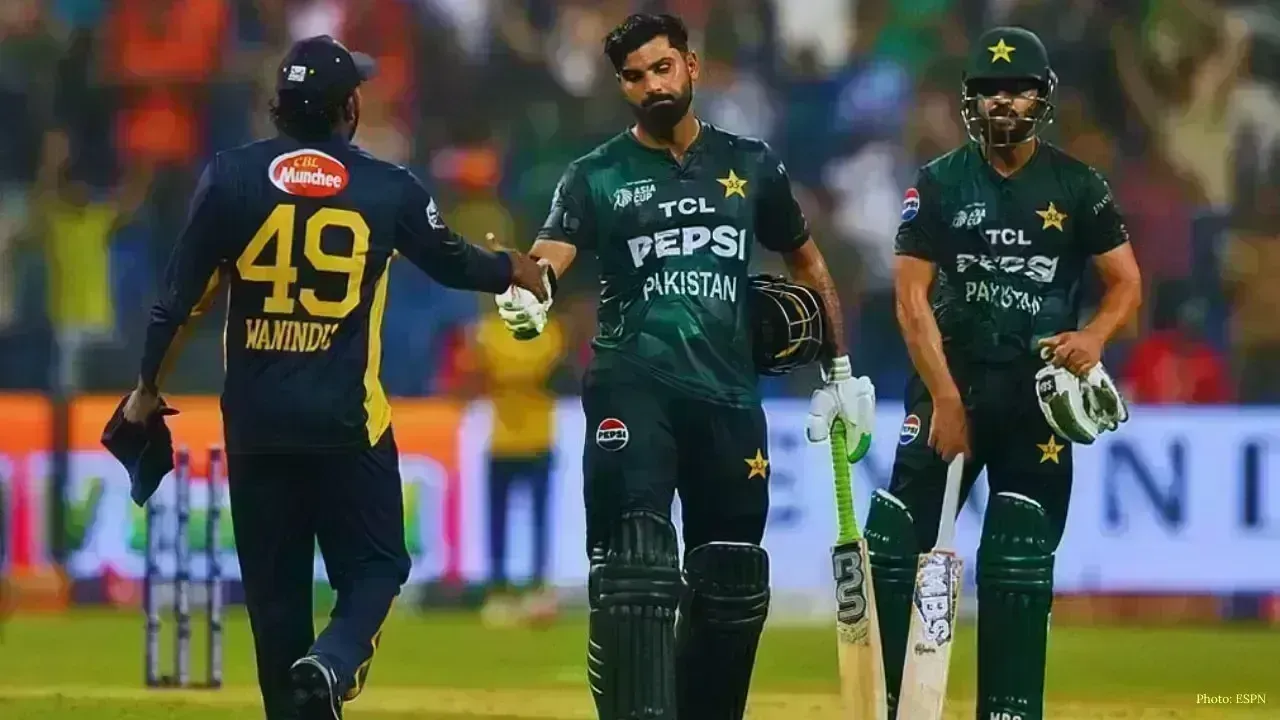
Pakistan could not have asked for a more convincing start to their T20I campaign. In the opening match of the series, the team delivered a near-perfect performance that underlined their growing confidence and clarity in white-ball cricket. The trio of Shadab Khan, Mirza Tahir Baig, and Abrar Ahmed stood at the heart of Pakistan’s dominance, each playing a decisive role in shaping an easy and authoritative win.
From the very first over, Pakistan looked sharper, more composed, and tactically superior. Whether it was disciplined bowling, sharp fielding, or controlled batting, the hosts dictated terms and never allowed the opposition to settle. The result was a comprehensive victory that sent a clear message about Pakistan’s intent in the series.
Beyond the scoreboard, the match offered encouraging signs for Pakistan’s team balance. The blend of youth and experience, pace and spin, aggression and control, all came together seamlessly. It was a performance that reflected planning, execution, and confidence.
Pakistan’s approach in the powerplay revealed a well-thought-out plan. Rather than chasing wickets recklessly, the bowlers focused on tight lines and lengths, forcing the batters into mistakes. The field placements were proactive, cutting off easy singles and creating pressure from the outset.
The opposition struggled to find rhythm as dot balls piled up. This early squeeze played a crucial role in tilting momentum firmly in Pakistan’s favour, making the rest of the innings an exercise in damage control for the visitors.
Sharp fielding amplified the bowlers’ efforts. Quick movement inside the circle and clean work in the deep ensured that even well-timed shots did not result in easy boundaries. This collective energy lifted the entire team and kept the opposition constantly under stress.
Shadab Khan’s impact went far beyond his bowling figures. As a leader on the field, he read the game astutely, rotating his bowlers at the right moments and adjusting fields with precision. His calm presence ensured Pakistan never lost grip on the contest.
With the ball, Shadab was economical and incisive. He varied his pace cleverly, using flight and drift to deceive batters. His ability to break partnerships at crucial moments ensured that the opposition could not build any meaningful momentum.
Shadab’s performance once again highlighted why he remains one of Pakistan’s most valuable T20 assets. His versatility allows the team to maintain balance, offering flexibility in both batting and bowling combinations. Performances like these strengthen his role as a core player in Pakistan’s T20 setup.
Mirza approached the game with maturity beyond his experience. From his first spell, he displayed control and confidence, hitting the right areas consistently. His ability to extract movement off the surface made him a constant threat.
Each over from Mirza increased the pressure, forcing batters into risky shots. His breakthrough wickets came at vital moments, preventing any late surge and ensuring the opposition remained on the back foot.
For a player eager to cement his place, this performance was a statement. Mirza showcased not just skill but temperament, proving that he can deliver under expectation. His contribution added depth to Pakistan’s bowling attack and provided selectors with positive reinforcement.
Abrar Ahmed’s spell was a masterclass in controlled spin bowling. Mixing subtle variations with unwavering accuracy, he made scoring difficult even for set batters. His unique action and sharp turn kept the opposition guessing throughout his spell.
Abrar’s ability to bowl wicket-to-wicket tightened the screws further. Batters struggled to line him up, resulting in mistimed shots and lost momentum.
The middle overs often decide the fate of T20 matches, and Abrar dominated this phase. By restricting runs and taking key wickets, he ensured Pakistan stayed firmly in control. His spell effectively ended any hopes of a competitive total from the opposition.
While Shadab, Mirza, and Abrar were the standout performers, the success was built on a collective effort. Each bowler understood their role and executed plans with discipline. There were no loose overs, no unnecessary risks, and no lapses in concentration.
The opposition’s innings never gained traction. Partnerships were short-lived, and the scoreboard pressure kept mounting. By the end of the innings, it was clear that Pakistan had done more than enough to set up a comfortable chase.
Pakistan’s bowling strategy reflected preparation and adaptability. Bowlers adjusted lengths based on conditions and batter tendencies, showing a clear understanding of match dynamics. This tactical awareness proved decisive.
Chasing the modest target, Pakistan’s batters adopted a composed approach. There was no rush, no unnecessary aggression. Instead, they focused on rotating strike, punishing loose deliveries, and steadily closing the gap.
Early wickets were avoided, ensuring the chase never felt pressured. The calmness in approach mirrored the confidence gained from the bowling performance.
Solid partnerships ensured that Pakistan remained on course throughout the chase. The batters communicated well, ran hard between the wickets, and capitalised on scoring opportunities. The target was achieved comfortably, underlining the dominance of the overall performance.
One of the biggest takeaways from the match was Pakistan’s team balance. The combination of spin options, pace support, and batting depth provided flexibility in all departments. This balance is crucial in T20 cricket, where adaptability often defines success.
The presence of multiple all-round contributors allowed Pakistan to maintain control regardless of match situations.
Performances like Mirza’s and Abrar’s highlight Pakistan’s growing bench strength. Young players stepping up on the international stage provide optimism for the future and healthy competition within the squad.
The opposition found it difficult to counter Pakistan’s spin attack. Poor shot selection and an inability to rotate strike contributed to their downfall. The lack of partnerships exposed their batting fragility.
During the chase, the opposition failed to apply consistent pressure. Loose deliveries and fielding lapses allowed Pakistan to maintain a steady scoring rate, eliminating any chance of a comeback.
Winning the first T20I convincingly gives Pakistan a significant psychological edge. Confidence gained from such a performance often carries forward, influencing decision-making and execution in subsequent matches.
While the win was comprehensive, maintaining intensity will be key. Consistency across matches is essential, especially against opponents eager to bounce back. Pakistan’s challenge will be to replicate this discipline in the remaining games.
Fans responded enthusiastically to Pakistan’s display, praising the balance and composure shown by the team. Performances from Shadab, Mirza, and Abrar generated optimism about Pakistan’s T20 prospects.
Such wins play a vital role in building confidence ahead of tougher assignments. They allow teams to fine-tune combinations and reinforce belief in strategies.
Pakistan’s easy victory in the first T20I was the result of clarity, execution, and collective responsibility. Shadab Khan’s leadership, Mirza’s precision, and Abrar Ahmed’s spin mastery formed the backbone of a dominant performance that left little room for doubt.
More than just a win, it was a statement of intent. Pakistan demonstrated that they possess not only talent but also the discipline and structure required to succeed in modern T20 cricket. As the series progresses, this opening performance sets a strong benchmark and promises exciting cricket ahead.
This article is for informational purposes only. Match analysis and interpretations are based on observed performances and may vary with subsequent games and conditions.










Rabada Misses First Australia Test as South Africa Pick Two Spinners
Kagiso Rabada misses the opener as South Africa vs Australia begins, with Anrich Nortje returning an

Starc Compares Australia's Tough Year to McIlroy's Major Sweep
Mitchell Starc says Australia winning three away Test series and the World Cup would match Rory McIl

France’s Sesterce Plans $11 Billion AI Data Centre in Finland
Sesterce plans a $11 billion AI data centre in Finland, with major expansion, green energy plans and

Danaher to Launch AI-Powered Autonomous Research Lab in 2027
Danaher plans an AI research lab for 2027, combining robotics and automation to speed up drug discov

Musk Welcomes German Support for Tesla Driver Assistance Tech as EU Approval Push Continues
Elon Musk welcomes Germany's backing for Tesla FSD as the company seeks EU approval amid speed, safe

Microsoft and Nvidia CEOs to Unveil AI Laptop at San Francisco Event
Microsoft and Nvidia showcase a new AI laptop with RTX Spark chips as they push powerful local AI co