
You have not yet added any article to your bookmarks!
Join 10k+ people to get notified about new posts, news and tips.
Do not worry we don't spam!
Post by : Shakul
Amid escalating tensions in the Middle East, Islamabad has become the center of crucial diplomatic efforts to de-escalate the ongoing conflict involving Iran, the United States, and Israel.
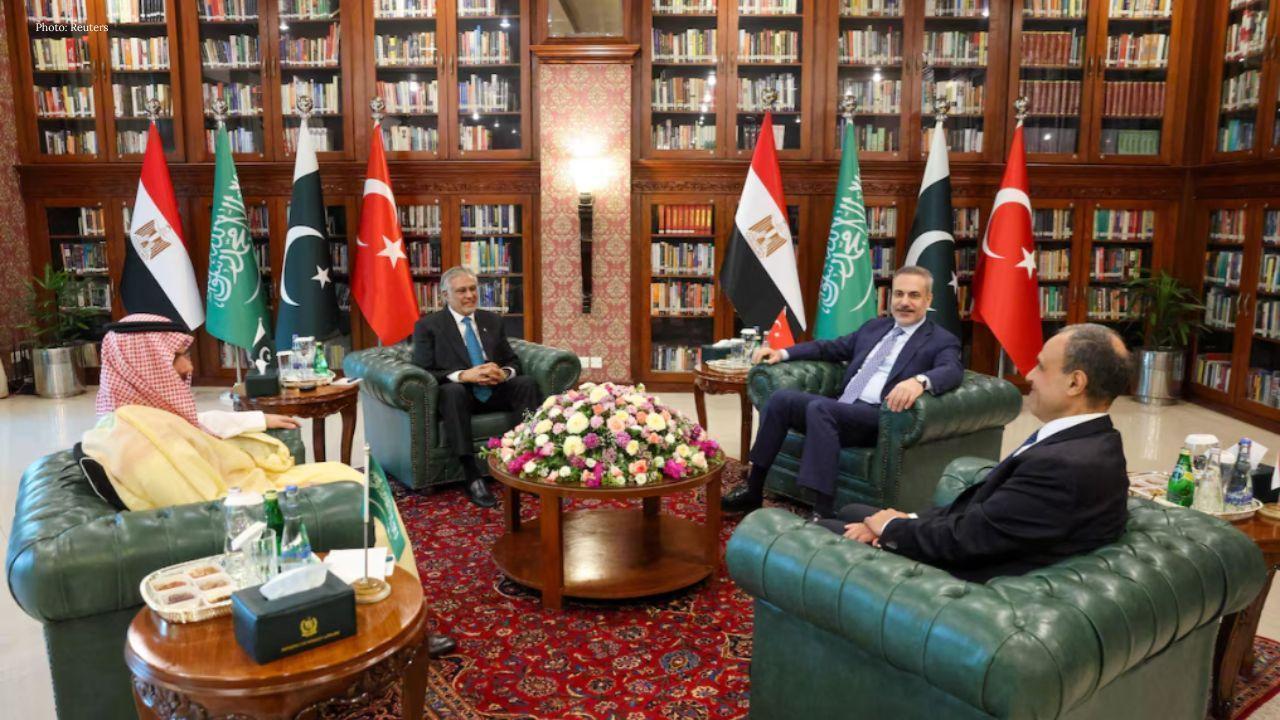
Foreign ministers from Turkey, Saudi Arabia, and Egypt gathered for high-level discussions with Pakistan’s leadership to find ways to reduce tensions and push for dialogue.
Key Leaders and Strategic Discussions
Pakistan’s Deputy Prime Minister and Foreign Minister Ishaq Dar hosted the meeting alongside counterparts including Hakan Fidan, Faisal bin Farhan, and Badr Abdelatty.
The talks aim to build a regional diplomatic bloc that could encourage negotiations and prevent further escalation of the conflict, which has already triggered a global energy crisis.
Strait of Hormuz and Global Impact
A major concern remains the disruption in the Strait of Hormuz, a critical route through which nearly 20% of the world’s oil supply passes.
As a positive development, Iran has reportedly allowed Pakistani-flagged ships to pass through the strait, signaling a small but important step toward easing tensions and restoring trade flow.
Pakistan’s Delicate Balancing Act
Pakistan finds itself in a complex position, maintaining close ties with both Gulf nations and Iran. Analysts describe Islamabad’s role as a “delicate balancing act,” as it attempts to act as a communication bridge rather than a direct mediator.
The country has condemned attacks in the region while carefully navigating its diplomatic language, especially regarding the roles of global powers.
Ceasefire Efforts and Challenges
The situation remains tense despite diplomatic efforts. Donald Trump has proposed a ceasefire plan, but Iran has rejected it, demanding security guarantees and reparations.
Meanwhile, Israeli Prime Minister Benjamin Netanyahu continues to support military actions, raising fears of further escalation.
Wider Regional and Economic Concerns
The ongoing conflict has severely impacted global energy markets and economies. Countries dependent on oil exports are facing financial strain, while nations like Pakistan risk economic instability due to rising fuel costs and potential job losses in Gulf regions.
Experts believe the Islamabad talks could lay the foundation for a broader regional alliance aimed at stabilizing the situation and reducing dependency on external powers.










PM Modi Pays Tribute to Mahatma Gandhi, Urges People to Support Khadi
PM Modi pays tribute to Mahatma Gandhi on Gandhi Jayanti and urges citizens to support Khadi and the

Amazon Seeks to Offload $8 Billion in Nvidia Chips to Investors
Amazon plans to move $8 billion in Nvidia chips to investors, using a new financing model to strengt

Samsung Raises Galaxy S26 Prices as Memory Chip Costs Rise
Samsung raises Galaxy S26 prices in South Korea as rising memory chip costs put pressure on smartpho

Lewis Hamilton Calls Singapore Grand Prix One of F1's Toughest Races
Lewis Hamilton discusses the demanding Singapore Grand Prix and brings Plus44 and Almave to Singapor

Denmark's Pandora Opens World's Largest Jewellery Factory in Vietnam
Pandora opens its largest jewellery factory in Vietnam, expanding global production, strengthening s

Gautam Gambhir Questions Batting-Friendly Pitches After India's Record ODI Chase
Gautam Gambhir questions batting-friendly ODI pitches after India’s record chase, calling for a bett

