
You have not yet added any article to your bookmarks!
Join 10k+ people to get notified about new posts, news and tips.
Do not worry we don't spam!
Post by : Shakul
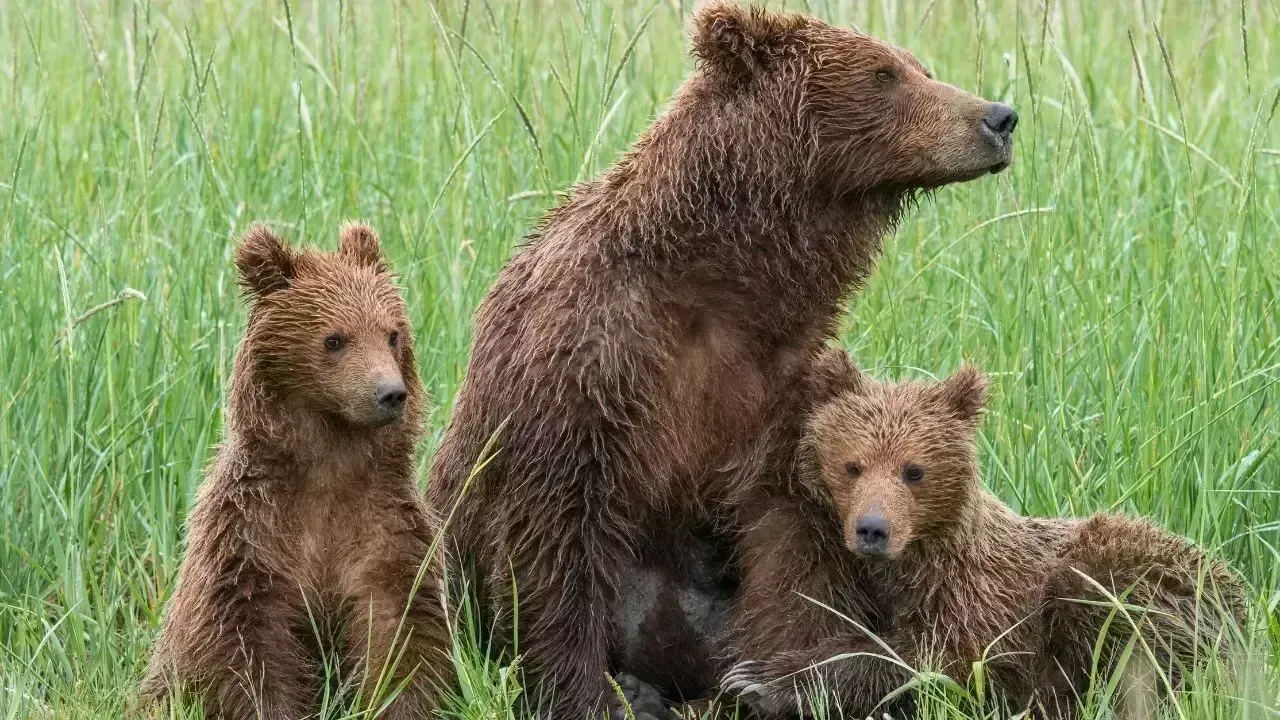
A rare and important wildlife sighting has been reported from Himachal Pradesh’s Kinnaur district after a female Himalayan brown bear and her two cubs were captured on camera inside the Rakcham-Chitkul Wildlife Sanctuary near the India-China border. Wildlife experts and conservationists have described the moment as a major achievement for biodiversity monitoring and wildlife conservation in the Himalayan region.
The footage was recorded by a forest department field team that included Block Forest Officer Santosh Kumar Thakur along with forest guards Chhayanand, Akshay and Pawan Kumar. Forest volunteer Alpana Negi was also part of the team. The sighting was further supported by renowned ornithologist and naturalist Gary Bhatti along with wildlife researchers Dr Bishwarup Satpati and Dr Rahul Deb Mandal.
The Himalayan brown bear is considered one of India’s rarest and most protected wild species. It receives the highest legal protection under Schedule I of the Wildlife Protection Act, 1972. The species is mainly found in high-altitude regions of Himachal Pradesh, Jammu and Kashmir, and Uttarakhand across several protected wildlife zones.
Experts stated that the sighting is extremely rare because Himalayan brown bears are naturally shy and solitary animals. Unlike Asian black bears that are often seen at lower altitudes and near human settlements, brown bears mostly remain above 2,500 metres in isolated mountain areas. They usually stay alone except during breeding and cub-rearing periods, making the appearance of a mother bear with two cubs highly uncommon.
The Rakcham-Chitkul Wildlife Sanctuary, located in the remote Himalayan belt of Kinnaur, is known for its fragile ecosystem and rich biodiversity. Wildlife experts believe the presence of the bear family indicates that the sanctuary continues to maintain a healthy ecological balance despite climate and environmental pressures in mountain regions.
According to researchers, Himalayan brown bears generally weigh between 100 and 150 kilograms and can stand nearly six feet tall when upright. Their diet mainly consists of herbs, roots, plants and berries, while only a small part of their food intake includes meat. Experts also describe the species as less aggressive and more gentle in nature compared to many other large bear species.
The sighting has generated excitement among wildlife lovers and conservation groups across India. Environmentalists say such rare observations help strengthen awareness about protecting endangered Himalayan wildlife and preserving natural habitats in sensitive border regions.










PM Modi Pays Tribute to Mahatma Gandhi, Urges People to Support Khadi
PM Modi pays tribute to Mahatma Gandhi on Gandhi Jayanti and urges citizens to support Khadi and the

Amazon Seeks to Offload $8 Billion in Nvidia Chips to Investors
Amazon plans to move $8 billion in Nvidia chips to investors, using a new financing model to strengt

Samsung Raises Galaxy S26 Prices as Memory Chip Costs Rise
Samsung raises Galaxy S26 prices in South Korea as rising memory chip costs put pressure on smartpho

Lewis Hamilton Calls Singapore Grand Prix One of F1's Toughest Races
Lewis Hamilton discusses the demanding Singapore Grand Prix and brings Plus44 and Almave to Singapor

Denmark's Pandora Opens World's Largest Jewellery Factory in Vietnam
Pandora opens its largest jewellery factory in Vietnam, expanding global production, strengthening s

Gautam Gambhir Questions Batting-Friendly Pitches After India's Record ODI Chase
Gautam Gambhir questions batting-friendly ODI pitches after India’s record chase, calling for a bett

