
You have not yet added any article to your bookmarks!
Join 10k+ people to get notified about new posts, news and tips.
Do not worry we don't spam!
Post by : Badri Ariffin
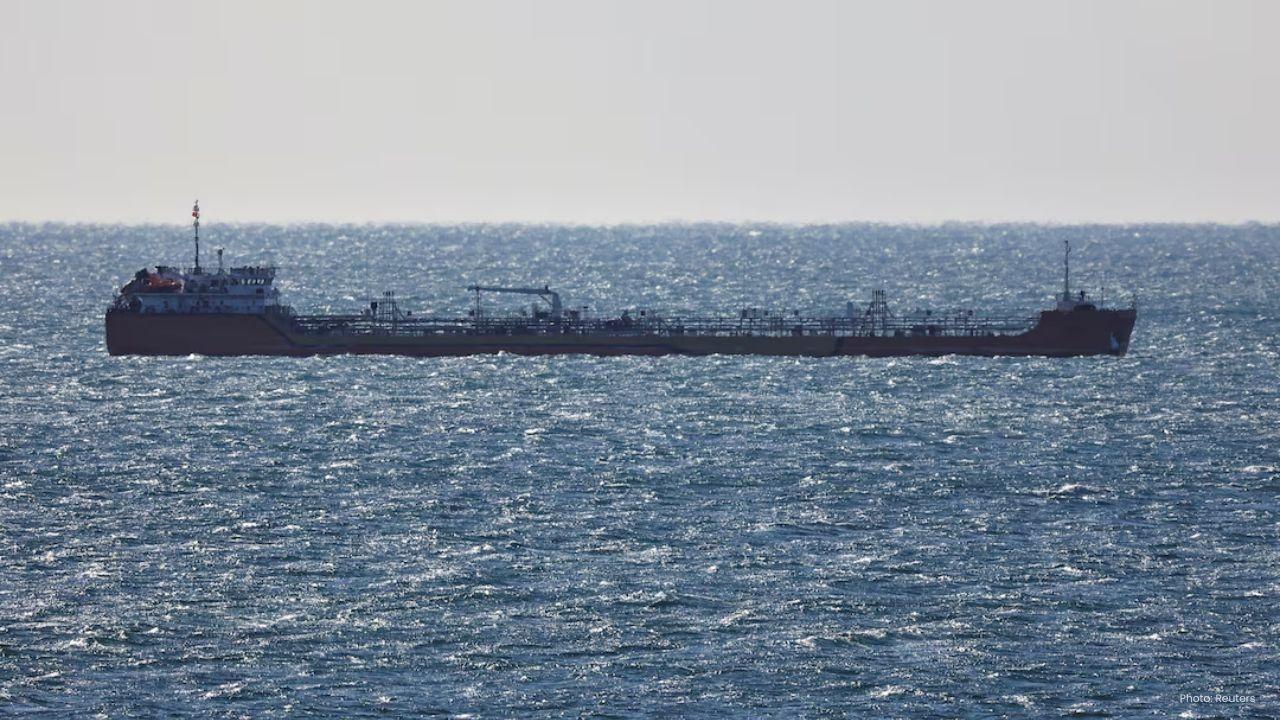
A sweeping wave of US sanctions taking effect on Friday has triggered a major shake-up in global oil flows, leaving close to 48 million barrels of Russian crude at risk of being stranded on the water. Tankers carrying Rosneft and Lukoil cargoes are now scattered across oceans, many without confirmed destinations, as buyers rush to avoid falling foul of the new rules.
The sanctions — Washington’s latest and most forceful attempt to squeeze Moscow’s wartime revenue — have already begun reshaping trade routes. Asian refiners, especially in India, are scrambling to secure alternative barrels, pushing demand for Middle East supplies sharply higher. The sudden surge has lifted freight rates on key routes to near five-year highs, reflecting the frantic pace of replacement buying.
Data from analytics firm Kpler suggests that millions of barrels of Russian Urals and ESPO grades are caught in transit or loading, with around 50 tankers originally charted toward China and India. But several ships are now drifting, rerouting, or delaying arrival as intermediaries distance themselves from cargoes linked to sanctioned firms. The vessels are spread from the Baltic Sea to the South China Sea, underscoring the scale of the disruption.
Russia, however, has kept crude exports flowing at a strong pace of about 3.4 million barrels a day, determined to avoid any perception of slowdown. Global benchmark prices have stayed relatively steady so far, signaling that traders expect markets to adjust — though the short-term turbulence is evident.
Still, even Moscow’s largest customers are moving cautiously. China and India, which have absorbed most discounted Russian barrels since 2022, face growing risk of secondary sanctions that could impact banks, insurers, and logistics partners. Their refiners are weighing each incoming shipment more carefully, creating fresh uncertainty around cargoes already en route.
A number of tankers that abruptly changed course in recent weeks have now resumed their journeys toward India. The Spirit 2, carrying about 730,000 barrels of Urals, made a U-turn near the Suez Canal earlier this month before signaling India once again. The Furia, another Aframax carrying a similar volume, reversed its Baltic route in late October but has now passed the Suez and is also moving toward India.
Others illustrate how quickly trade patterns are being rearranged. The Cindy, loaded with nearly 770,000 barrels of ESPO crude from Kozmino, is headed toward waters off Singapore and Malaysia — a region known for ship-to-ship transfers used to blur oil origins. Meanwhile, the Fortis, which had been bound for China, diverted to South Korea’s Yeosu after conducting a rare mid-voyage transfer near India.
The coming days will determine how much of Russia’s stranded crude ultimately finds a home. For now, the oil market is adjusting under pressure, with buyers moving fast, sellers shifting strategy, and dozens of tankers caught between shifting political lines and commercial realities.










PM Modi Pays Tribute to Mahatma Gandhi, Urges People to Support Khadi
PM Modi pays tribute to Mahatma Gandhi on Gandhi Jayanti and urges citizens to support Khadi and the

Amazon Seeks to Offload $8 Billion in Nvidia Chips to Investors
Amazon plans to move $8 billion in Nvidia chips to investors, using a new financing model to strengt

Samsung Raises Galaxy S26 Prices as Memory Chip Costs Rise
Samsung raises Galaxy S26 prices in South Korea as rising memory chip costs put pressure on smartpho

Lewis Hamilton Calls Singapore Grand Prix One of F1's Toughest Races
Lewis Hamilton discusses the demanding Singapore Grand Prix and brings Plus44 and Almave to Singapor

Denmark's Pandora Opens World's Largest Jewellery Factory in Vietnam
Pandora opens its largest jewellery factory in Vietnam, expanding global production, strengthening s

Gautam Gambhir Questions Batting-Friendly Pitches After India's Record ODI Chase
Gautam Gambhir questions batting-friendly ODI pitches after India’s record chase, calling for a bett

