You have not yet added any article to your bookmarks!
Join 10k+ people to get notified about new posts, news and tips.
Do not worry we don't spam!
Post by : Anis Farhan
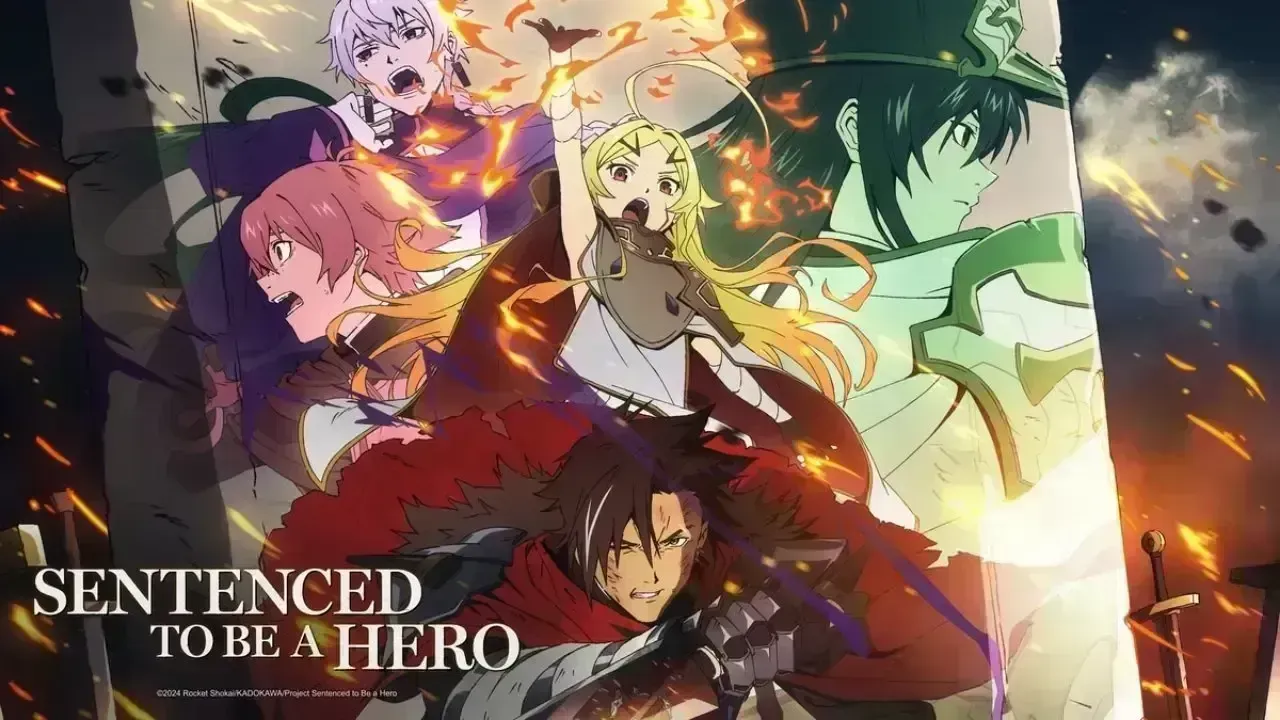
In an era where anime releases flood global streaming services every season, it takes something truly special for a new title to stand out. Sentenced To Be A Hero is one such phenomenon. From the moment it premiered on Crunchyroll, it captured the attention of viewers worldwide, not merely for its premise but for the emotional depth, striking visuals, and narrative complexity it brings to the fantasy genre.
Unlike many shows that build up gradually, this series hit the ground running. Early audience responses on Crunchyroll reflect overwhelmingly positive reactions, with scores approaching perfection. Such reception is rare; it speaks to a project that has resonated deeply across different age groups and cultural backgrounds.
This article explores the many layers of Sentenced To Be A Hero—why it has achieved such acclaim, the artistic elements that make it remarkable, and the broader questions it poses about heroism, justice, and identity. Through an in-depth look at its storytelling, characters, technical achievements, and thematic richness, we’ll examine how this anime redefines expectations and earns its place in the spotlight.
At its core, Sentenced To Be A Hero begins with a contradiction. Rather than celebrating a chosen one destined for greatness, the story introduces a protagonist condemned for crimes he did not commit. Instead of reward, he receives a sentence: to serve as a hero in a world wracked by demonic conflict.
This twist on the familiar fantasy formula immediately separates the series from its peers. Audiences expect fantasy heroes to be celebrated figures, uplifted by destiny or prophecy. Here, the protagonist’s journey begins with loss and injustice, challenging viewers to reconsider what it truly means to be heroic.
The setting is a kingdom still reeling from years of war against demonic forces. To turn the tide, the monarchy has adopted a controversial policy: those convicted of crimes are offered a chance at redemption—if they survive as frontline defenders against the demonic threat. Society greets this policy with fear and disdain, and the academy where these “sentenced heroes” train is as much a prison as a school.
This premise allows the narrative to explore not just action and adventure, but questions of morality, redemption, and the cost of sacrifice. It places human politics alongside supernatural warfare, creating a textured universe with room for both spectacle and introspection.
The central figure of the story is Hiro Valen, a man stripped of his reputation and thrust into a role he never wanted. What distinguishes Hiro from so many anime protagonists is not raw power or destiny, but his human vulnerability. He enters this world bruised, cynical, and struggling with the idea that a system that condemned him could somehow redeem him.
Instead of glossing over his pain, the series lets audiences witness his frustration and growth. Like many viewers, Hiro is forced to confront his own misconceptions about honor, duty, and trust. This complexity makes him compelling—he is not simply a hero because the plot demands it; he becomes one through choices that feel earned.
The supporting cast further enriches the narrative. Each character arrives with their own shadowed past and unresolved pain:
Mira Solis, a fierce combatant whose conviction stems from defending the powerless, embodies a quiet rage and desire for justice.
Leon Graves, once a pirate on the fringes of society, uses humor to mask a deep longing for belonging.
Asha Ren, a volunteer instructor with faith in redemption, challenges prejudice and becomes a beacon of hope among those society has written off.
Rather than orbiting Hiro as accessories to his journey, these characters bring their own arcs and struggles. Their interactions form the emotional backbone of the series, allowing audiences to connect with multiple perspectives rather than just a single protagonist.
In many works, antagonists are shadowy villains with simple motives. Sentenced To Be A Hero takes a different approach. The leaders orchestrating the kingdom’s policies, including Chancellor Dorian Kest, embody political ambition and pragmatic cruelty. They are not evil in the cartoonish sense, but calculated and self-serving.
On the other side stand demonic generals whose cultures and convictions add layers to the conflict. These foes are not mindless monsters but reflectiveness of broader themes: the fear of the other, the cost of war, and what it means to protect one’s people.
This depth makes confrontations about more than physical victory. They become ideological clashes, and audiences have praised this narrative richness, which contributes significantly to the series’ reception on Crunchyroll.
The series doesn’t just drop viewers into a generic fantasy world. Instead, it builds a place that feels lived in—where markets bustle with ordinary life, soldiers grumble about regulations, and everyday citizens fear the very heroes tasked with their protection.
Magic in this world is governed by clear systems and rituals, avoiding vague deus ex machina resolutions. Contracts between magic users and elemental forces are portrayed with rules and consequences, grounding the supernatural elements in tangible logic.
This level of detail elevates every scene, making battles feel consequential and every choice weighty. Early Crunchyroll viewer comments frequently highlight this immersive worldbuilding as a key factor in their enjoyment.
From the opening sequences, it’s clear this anime spares no effort in visual quality. The fluid animation, thoughtful framing, and cinematic motion make each episode a showcase of artistic discipline. Battles feel dynamic not because of flashy effects, but because of purposeful choreography that communicates stakes and consequence.
Characters move with natural nuance, landscapes shift with atmospheric detail, and every frame feels considered rather than rushed. For viewers accustomed to uneven quality in seasonal anime, this consistency stood out immediately.
Equally notable is the music. The soundtrack merges orchestral undertones with regional instrumentation, enhancing both quiet emotional scenes and intense battle sequences. Themes of loss, hope, and resilience are woven into the score without overwhelming dialogue or action.
The opening and ending themes have also sparked listener admiration for their melodic strength and lyrical relevance to the series’ core themes.
At its heart, Sentenced To Be A Hero is a story about redemption—but not in the tidy fairy-tale sense. Redemption here is messy, earned through struggle, betrayal, and self-questioning. Characters do not instantly transform because they choose to fight; they change because they confront themselves and each other.
This theme has resonated with fans who see their own struggles reflected in narratives that reject easy triumph.
The kingdom’s justice system is portrayed without romanticism. Punishment and public perception shape destinies, and the series constantly asks whether justice is something delivered by law or lived through compassion. These questions give the story philosophical richness that viewers have applauded.
Some anime rush into big battles or early twists to capture attention. Sentenced To Be A Hero takes its time. Its early episodes build context, deepen character dynamics, and establish stakes with patience. This deliberate pacing has garnered admiration from viewers who appreciate storytelling that prioritizes character and theme over immediate spectacle.
The series balances its darker moments with humor and warmth. Characters joke around campfires, share stories, and reveal vulnerabilities. These moments are not filler; they humanize the protagonists and make their triumphs all the more impactful.
Crunchyroll ratings show near-perfect scores for the initial episodes. Comments from viewers celebrate the series for its emotional impact, storytelling depth, and artistic quality. Many mention that they reread dialogue and revisited episodes to catch nuances they missed the first time.
These reactions reflect more than temporary enthusiasm; they indicate sustained engagement and emotional investment.
Reviewers have echoed audience sentiments, pointing to the show’s narrative maturity and thematic ambition. Critics highlight how it avoids clichés while still delivering satisfying progression and payoff.
Beyond technical praise, reviewers emphasize the show’s ability to balance political intrigue, character drama, and fantasy action—an achievement not easily matched.
The show’s success on Crunchyroll signals that fantasy anime with thoughtful worldbuilding and character depth can attract not just genre fans but mainstream audiences. It invites comparisons to classic literary fantasies while still feeling distinctly contemporary.
Across social media and fan forums, discussions range from theories about character motivations to debates over the ethics of the kingdom’s justice system. This cultural buzz illustrates how deeply the series has penetrated viewer consciousness—and why its acclaim feels earned rather than manufactured.
Perfect or near-perfect scores early in a series often generate pressure for sustained quality. In this case, fans eagerly await news of additional seasons or expansions. The narrative world is rich enough to support multiple arcs, and the emotional groundwork laid in initial episodes sets the stage for future growth.
With thoughtful storytelling already established, there is potential for spin-offs, deeper exploration of demon societies, and even prequel material that examines the origins of the kingdom’s controversial policies.
Sentenced To Be A Hero made a remarkable entrance on Crunchyroll, earning nearly perfect viewer scores through a marriage of thoughtful storytelling, distinctive characters, and masterful worldbuilding. Its success lies not merely in spectacle, but in its willingness to ask hard questions and portray heroes as human beings shaped by hardship, choice, and resilience.
The series stands as a compelling example of what happens when creators invest in depth over formula and viewers respond with passion rather than passive consumption. As Sentenced To Be A Hero continues to unfold, it may very well redefine what audiences expect from fantasy anime—proving that sometimes the hero’s journey begins not with destiny, but with consequences.
Disclaimer:
This article is written for informational and entertainment purposes. Opinions about ratings and reception are based on audience reactions at the time of publication and may evolve over time as more viewers engage with the series.







Rabada Misses First Australia Test as South Africa Pick Two Spinners
Kagiso Rabada misses the opener as South Africa vs Australia begins, with Anrich Nortje returning an

Starc Compares Australia's Tough Year to McIlroy's Major Sweep
Mitchell Starc says Australia winning three away Test series and the World Cup would match Rory McIl

France’s Sesterce Plans $11 Billion AI Data Centre in Finland
Sesterce plans a $11 billion AI data centre in Finland, with major expansion, green energy plans and

Danaher to Launch AI-Powered Autonomous Research Lab in 2027
Danaher plans an AI research lab for 2027, combining robotics and automation to speed up drug discov

Musk Welcomes German Support for Tesla Driver Assistance Tech as EU Approval Push Continues
Elon Musk welcomes Germany's backing for Tesla FSD as the company seeks EU approval amid speed, safe

Microsoft and Nvidia CEOs to Unveil AI Laptop at San Francisco Event
Microsoft and Nvidia showcase a new AI laptop with RTX Spark chips as they push powerful local AI co