
You have not yet added any article to your bookmarks!
Join 10k+ people to get notified about new posts, news and tips.
Do not worry we don't spam!
Post by : Shweta
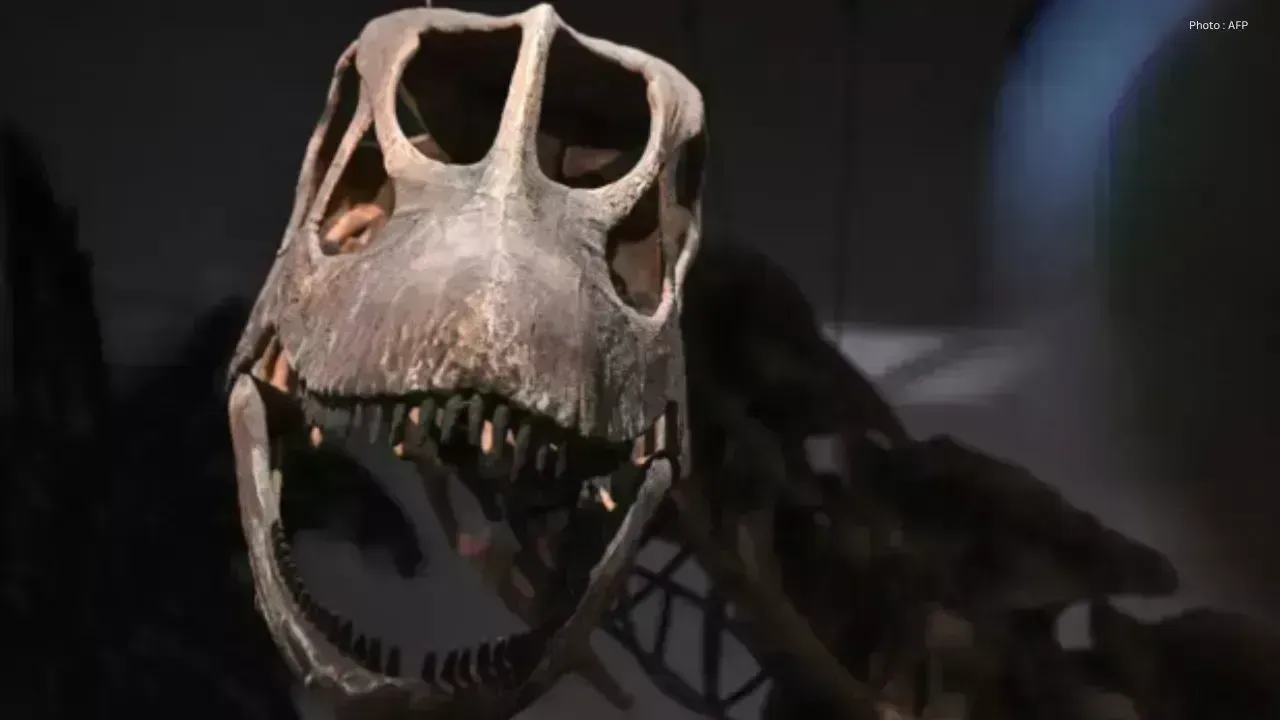
An impressive dinosaur discovery has been made in northeastern Thailand, unveiling what is now considered the largest dinosaur known in Southeast Asia. The announcement highlights fossil remains excavated from this region, promising valuable insights into the dinosaur's existence millions of years ago.
Thai paleontologists report that this dinosaur belongs to the sauropod family, characterized by their long necks and herbivorous diets. Estimates suggest this immense creature spanned over 30 meters and weighed several tons, marking it as the most significant dinosaur species identified in the area. The fossils, believed to be around 130 million years old from the Early Cretaceous period, were found in sedimentary rock formations.
Located in Nakhon Ratchasima province, known for its rich fossil history, the discovery included large vertebrae, limb bones, and tail fragments, which are essential for studying its anatomy and behavior.
Scientists hypothesize that this dinosaur thrived in a warm environment filled with rivers and vast floodplains supporting large herbivorous animals. The Early Cretaceous period presented Southeast Asia with a vastly different climate and diverse prehistoric fauna.
Paleontologists suggest that this newly discovered giant may either be a new species or closely related to previously identified sauropods from Asia and South America. Ongoing laboratory analyses aim to clarify its classification and evolutionary ties.
The significance of this finding is underscored by the fact that Southeast Asia has historically yielded fewer large dinosaur fossils compared to regions like China and Argentina. This discovery may enhance understanding of how enormous dinosaurs migrated and evolved on ancient continental landscapes.
The research team emphasized Thailand's growing prominence in global paleontology, with an increasing number of crucial fossil discoveries over recent decades. Fossil excavation initiatives by museums and research centers are expanding as interest in the region's prehistoric past grows.
Investigating the giant dinosaur's remains may reveal insights into its growth, diet, and behavioral patterns, with advanced scanning techniques being employed for detailed analysis. Future excavations hold promise for finding more fossils from this species or even unearthing entirely new prehistoric creatures.
This discovery has garnered significant attention from scientific circles and the public alike, being hailed as a remarkable paleontological achievement in the region. Officials are optimistic that these fossils might feature in museums, fostering science education and tourism.
Experts see the identification of Southeast Asia’s largest dinosaur as a critical advancement in understanding the planet’s ancient history. Continued research is anticipated to further illuminate the ecological dynamics that spanned the Asian continent millions of years before human existence.










PM Modi Pays Tribute to Mahatma Gandhi, Urges People to Support Khadi
PM Modi pays tribute to Mahatma Gandhi on Gandhi Jayanti and urges citizens to support Khadi and the

Amazon Seeks to Offload $8 Billion in Nvidia Chips to Investors
Amazon plans to move $8 billion in Nvidia chips to investors, using a new financing model to strengt

Samsung Raises Galaxy S26 Prices as Memory Chip Costs Rise
Samsung raises Galaxy S26 prices in South Korea as rising memory chip costs put pressure on smartpho

Lewis Hamilton Calls Singapore Grand Prix One of F1's Toughest Races
Lewis Hamilton discusses the demanding Singapore Grand Prix and brings Plus44 and Almave to Singapor

Denmark's Pandora Opens World's Largest Jewellery Factory in Vietnam
Pandora opens its largest jewellery factory in Vietnam, expanding global production, strengthening s

Gautam Gambhir Questions Batting-Friendly Pitches After India's Record ODI Chase
Gautam Gambhir questions batting-friendly ODI pitches after India’s record chase, calling for a bett

