
You have not yet added any article to your bookmarks!
Join 10k+ people to get notified about new posts, news and tips.
Do not worry we don't spam!
Post by : Rameen Ariff
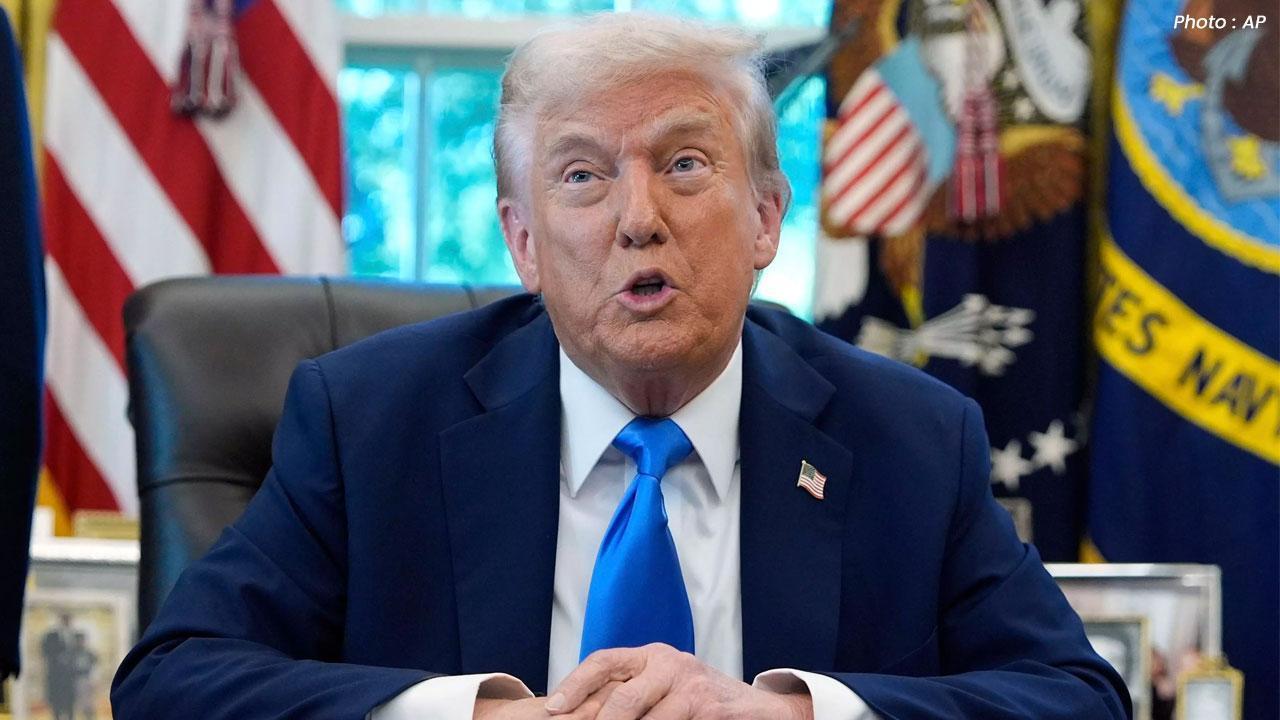
U.S. President Donald Trump has taken a bold step in his immigration policy by signing a proclamation that imposes a $100,000 fee on H-1B visa applicants. The H-1B visa, a temporary work permit for foreign professionals, is widely used by Indian IT experts and tech talent, making this move potentially significant for India’s skilled workforce.
The H-1B visa allows U.S. companies to hire foreign professionals in specialized fields, particularly science, technology, engineering, and mathematics. Established in 1990, it is granted initially for three years and can be extended up to six years. Applicants are selected via a lottery system through the U.S. Citizenship and Immigration Services (USCIS). The visa ensures comparable pay and working conditions to American workers.
Trump stated that the fee aims to ensure only the "very highly skilled" professionals enter the U.S., preventing replacement of American workers. White House officials described the H-1B program as one of the most abused visa categories, emphasizing that raising the fee will guarantee higher-skilled talent.
Indians are the largest beneficiaries of H-1B visas, accounting for 71% of approvals last year, while China made up 11.7%. Leading tech companies such as Amazon, Microsoft, and Meta rely heavily on Indian talent, with tens of thousands of visas granted annually.
The new $100,000 fee will add significant financial strain, especially for professionals needing multiple visa renewals. Green Card applicants may also face longer waits and additional costs. Furthermore, the U.S. government is reintroducing a more demanding citizenship test covering U.S. history and politics, requiring applicants to answer a portion orally.
Trump also announced a 'Gold Card' visa program, with fees set at $1 million for individuals and $2 million for businesses. This initiative targets "extraordinary" people capable of creating businesses and jobs in the U.S. The plan is designed to raise revenue, reduce taxes, and encourage high-impact immigration.
Secretary of Commerce Howard Lutnick criticized the employment-based Green Card program, noting that it historically admitted lower-income individuals who were more likely to rely on government assistance. The Gold Card program aims to prioritize top-tier talent and investment.
U.S. tech companies warn that these changes could create talent shortages and affect innovation. Analysts suggest the policy may push firms to consider hiring skilled professionals outside the U.S., potentially reducing the country’s competitiveness in the tech sector.
If implemented, the $100,000 H-1B fee and the Gold Card program could reshape immigration trends, affecting Indian professionals and investors while influencing U.S. businesses’ hiring strategies.










PM Modi Pays Tribute to Mahatma Gandhi, Urges People to Support Khadi
PM Modi pays tribute to Mahatma Gandhi on Gandhi Jayanti and urges citizens to support Khadi and the

Amazon Seeks to Offload $8 Billion in Nvidia Chips to Investors
Amazon plans to move $8 billion in Nvidia chips to investors, using a new financing model to strengt

Samsung Raises Galaxy S26 Prices as Memory Chip Costs Rise
Samsung raises Galaxy S26 prices in South Korea as rising memory chip costs put pressure on smartpho

Lewis Hamilton Calls Singapore Grand Prix One of F1's Toughest Races
Lewis Hamilton discusses the demanding Singapore Grand Prix and brings Plus44 and Almave to Singapor

Denmark's Pandora Opens World's Largest Jewellery Factory in Vietnam
Pandora opens its largest jewellery factory in Vietnam, expanding global production, strengthening s

Gautam Gambhir Questions Batting-Friendly Pitches After India's Record ODI Chase
Gautam Gambhir questions batting-friendly ODI pitches after India’s record chase, calling for a bett

