
You have not yet added any article to your bookmarks!
Join 10k+ people to get notified about new posts, news and tips.
Do not worry we don't spam!

Post by : Saif Rahman
The conflict in Ukraine has reached a pivotal juncture where technology plays a crucial role alongside soldiers in combat. Drones have emerged as vital assets for both Ukraine and Russia. However, the increasing prevalence of interference and jamming has complicated the operation of these drones significantly. In response, Ukrainian pilots are embracing sophisticated guidance systems to enhance their targeting capabilities.
One pilot, using the call sign Mex, recently revealed how these advancements enabled him to execute a significant strike. Operating with the 58th Separate Rifle Brigade, he aimed at what appeared to be a Russian tank located nearly 20 kilometers away. Traditionally, achieving accuracy at such distances is nearly unattainable, especially with Russian jamming efforts disrupting signals. Mex stated unequivocally, “Without the supplementary guidance, we couldn’t possibly hit it. No chance at all.”
Since the onset of the Russian invasion almost four years ago, advancements in drone technology have accelerated rapidly. Both Ukraine and Russia are now manufacturing millions of drones annually for reconnaissance, artillery guidance, and direct attacks. However, the mass deployment of drones from both sides has also led to intense signal-jamming measures, disrupting the connection between drones and their operators. Numerous drones often fail to reach their targets due to severed signals.
In response to these challenges, Ukraine has turned to AI-aided guidance systems. These innovations allow drones to complete their missions even if connectivity to the operator is lost. Mex elaborated that the drones initially capture an image of their target through onboard cameras. After locking onto the target, they autonomously navigate towards it, even amidst jamming interruptions. This capability is grounded in the technology's “memory bank,” which houses various images such as those of vehicles. When the drone identifies a target-like appearance, it recalibrates its course to proceed towards it. Mex mentioned, “If I set a point several kilometers away during the approach, the drone will automatically adjust when it detects the target.”
While these AI systems bolster Ukraine's operational effectiveness, they also raise ethical dilemmas. Concerns emerge over the implications of weaponry acting independently of human oversight. Currently, there are no robust international guidelines governing the use of AI in warfare. The Ukrainian government maintains a clear stance: AI does not independently initiate attacks; a human operator must authorize each strike. AI merely assists the drone in reaching its objective once approval is granted. Industry specialists caution that these systems are not infallible; their performance can vary based on environmental factors such as weather and battlefield conditions.
The ongoing conflict in Ukraine underscores the pivotal role of modern technology in warfare. Drones, once merely basic tools, are evolving into more intelligent and autonomous entities. This evolution aids Ukraine in defending itself against a formidable adversary, yet it compels a reevaluation of the future of warfare. As both Russia and Ukraine enhance their drone capabilities, the prevalence of AI-integrated weaponry is expected to rise. With countless drones navigating the skies and escalating countermeasures, the trajectory of this conflict will likely be increasingly shaped by technology. In such a chaotic environment filled with interference, advanced systems like those relied upon by pilots such as Mex may ultimately strengthen Ukraine's defense efforts.








APEC Members Emphasise Safe and Responsible Use of Artificial Intelligence
APEC members discuss responsible AI use, digital innovation and data governance as China and the US

Union of European Clubs Challenge UEFA and EFC Over EU Competition Rules
UEC files an EU competition complaint against UEFA and EFC, challenging club representation, governa

Mohammed Shami Retires From Test Cricket, Eyes White-Ball Career
Mohammed Shami retires from Test cricket after 13 years, with 229 wickets. He will continue playing

Singapore Warns Users About Privacy and Security Risks of AI Agents
Singapore warns users about AI agent security risks, data privacy, online scams and unauthorised acc

Chris Lynn Completes One-Month Ban After Positive Cocaine Test
Australian cricketer Chris Lynn completes a one-month ban after a positive cocaine test during the T
Djokovic Eyes Strong Season Finish as Health Improves Ahead of Paris Masters
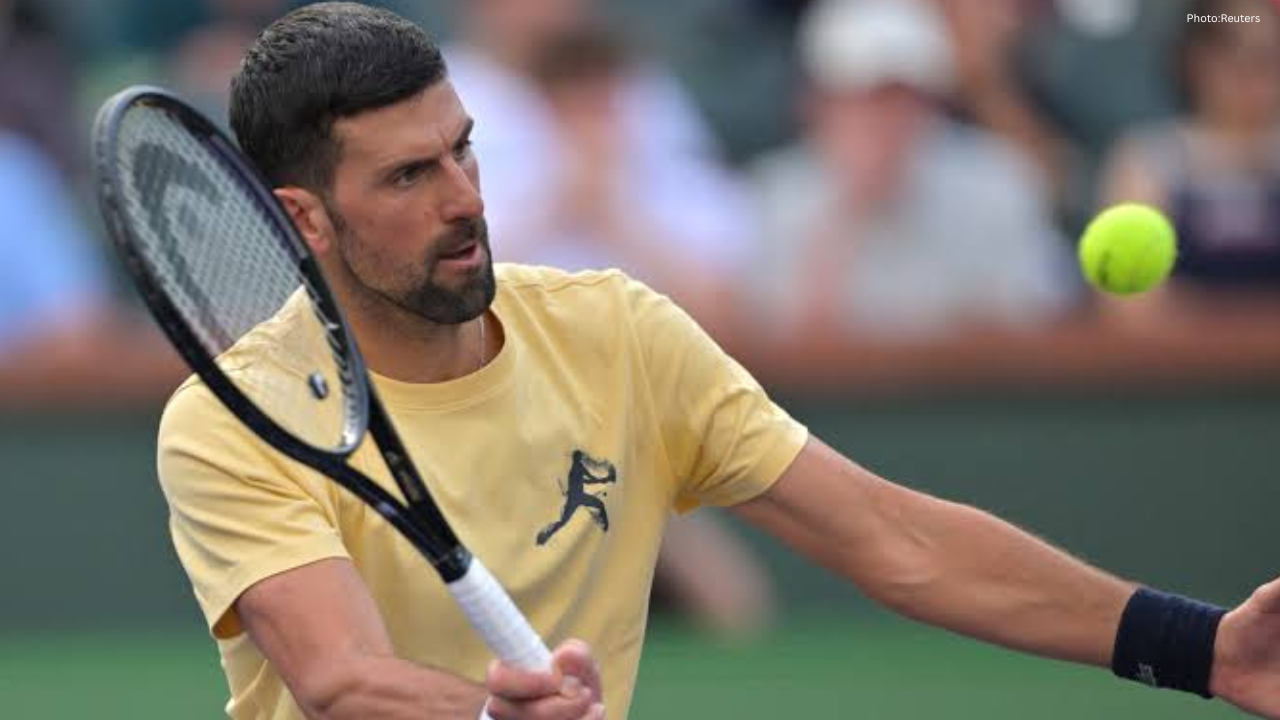
Novak Djokovic reports improved health and performance as he targets a strong Paris Masters finish a