You have not yet added any article to your bookmarks!
Join 10k+ people to get notified about new posts, news and tips.
Do not worry we don't spam!
Post by : Meena Ariff
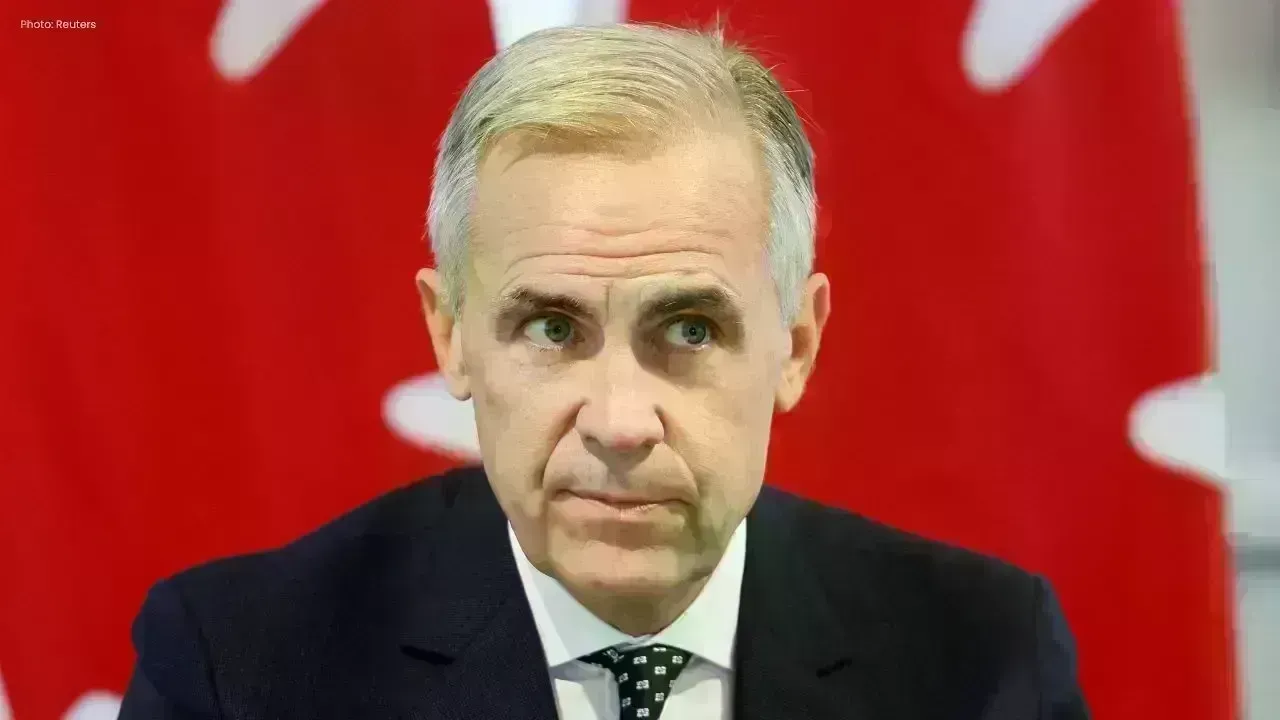
The leader of the United Nations’ HIV/AIDS program is urging Prime Minister Mark Carney to reconsider his administration’s announced cuts to foreign aid and global health funding. This move is viewed as a threat to the progress made against severe infectious diseases and could intensify global inequality.
While attending the G20 leaders’ summit in Johannesburg, UNAIDS executive director Winnie Byanyima implored Canada alongside other donor nations to uphold their international responsibilities.
“To Prime Minister Carney and all other donors, my message is clear: remain committed,” Byanyima stated in an interview. “Without global solidarity, we risk deepening inequalities, leading to a more precarious world.”
This statement follows Canada's unprecedented reduction to its contribution to the Global Fund, a crucial organization for combatting AIDS, tuberculosis, and malaria. Ottawa's latest commitment is down 17 percent from its 2022 allocation.
The Global Fund supplies essential medical resources, including mosquito nets and HIV treatments, primarily in impoverished regions. Health advocates warn that Canada's withdrawal will be keenly felt in nations where healthcare systems rely heavily on international support.
This reduction aligns with the federal budget's proposal for a $2.7 billion decrease in foreign aid spending over the next four years, contradicting Carney’s earlier assurance during his campaign that no cuts would occur.
Government representatives assert that this adjustment merely brings Canada’s aid spending back to pre-pandemic levels. The financial response was increased during COVID-19 to combat rising health crises, particularly in the fight against diseases like AIDS and tuberculosis. The U.S. has also seen a significant reduction in its aid this year.
Byanyima attended the G20 summit to present a comprehensive report commissioned by South Africa addressing the widening gap between affluent and impoverished nations. The report cautions that growing economic disparity is inciting public discontent, destabilizing political unity, and fostering environments prone to unrest.
It calls for policies aimed at narrowing income discrepancies, enhancing social safety nets, and reforming global financial regulations that entrap developing nations in debt cycles exacerbated by increasing interest rates and climate-related crises.
Byanyima highlighted Norway's investment in equality as a model, referencing Prime Minister Jonas Gahr Støre’s statement that his country has reaped greater economic benefits from enhancing women's workforce participation than from oil production over decades.
“Reducing inequalities at both national and international levels fosters stronger economies,” she emphasized while urging Canada to bolster global initiatives aimed at combating tax evasion and illicit financial flows.
In response to criticism regarding the cuts, Carney defended the government’s stance, saying even though Canada’s contribution to the Global Fund has decreased, its share of the fund’s overall budget has increased due to the fund’s reduced financial resources.
“We’ve had to make pragmatic and responsible decisions across the government, which includes reverting our aid budget to pre-COVID levels,” Carney explained in Johannesburg. “Even within these constraints, we aim to target areas where our assistance can have the most significant impact, particularly on this continent.”
Foreign Affairs Minister Anita Anand supported this viewpoint, asserting that Canada continues to be a considerable donor.
“Our contribution remains material and meaningful,” Anand reiterated. “Africa is our primary recipient of international help, and that support will persist.”
Critics, however, argue that this trend signifies a troubling shift away from Canada’s historical commitment to fostering human rights and development. Bloc Québécois MP Alexis Brunelle-Duceppe expressed concern over the growing connection between foreign aid and trade interests.
These funding cuts coincide with preparations for World AIDS Day on Monday. Advocates emphasize that while the world possesses the necessary tools to eradicate the HIV epidemic, the financial resources for delivering life-saving treatments remain insufficient.
Jayati Ghosh, an influential Indian economist and co-presenter of the inequality report with Byanyima, urged Canada to back reforms enabling developing nations to manufacture essential medications. She pointed out that stringent intellectual property regulations keep drug costs prohibitively high, obstructing poorer countries from developing their own treatments.
This issue gained prominence during the COVID-19 pandemic when many low-income nations experienced prolonged delays in receiving vaccines compared to wealthier counterparts—often receiving fewer doses than anticipated and lacking the authorization to produce their own.
“Governments need to broaden their perspective beyond foreign aid,” Ghosh asserted. “They must scrutinize the global policies they support that inadvertently exacerbate challenges for developing nations.”










Landfill Collapse in Cebu Kills Four, Dozens Missing as Rescue Continues
A massive landfill collapse in Cebu City has left four dead and dozens missing as rescuers race agai

Netanyahu Says Israel Aims to End US Military Aid Within 10 Years
Israeli PM Benjamin Netanyahu says Israel plans to gradually stop relying on US military aid within

Dhurandhar’s Box Office Roars On: Ranveer Singh’s Spy Thriller Shatters Records
Ranveer Singh’s Dhurandhar earns ₹3.6 Cr on Day 36, totaling ₹844.45 Cr in India. The spy thriller s

FCC Clears SpaceX to Launch 7,500 More Starlink Satellites Worldwide
SpaceX gets FCC approval to add 7,500 new Starlink satellites and upgrade frequencies, boosting glob

Indonesia Blocks Elon Musk’s Grok AI Over Unsafe AI Content
Indonesia temporarily blocks Elon Musk’s Grok chatbot due to unsafe AI-generated images. The move ai

PV Sindhu’s Malaysia Open Run Ends with Semifinal Loss to Wang Zhiyi
PV Sindhu’s comeback at Malaysia Open ends in semifinals as China’s Wang Zhiyi wins 21-16, 21-15. Si