You have not yet added any article to your bookmarks!
Join 10k+ people to get notified about new posts, news and tips.
Do not worry we don't spam!
Post by : Anis Farhan
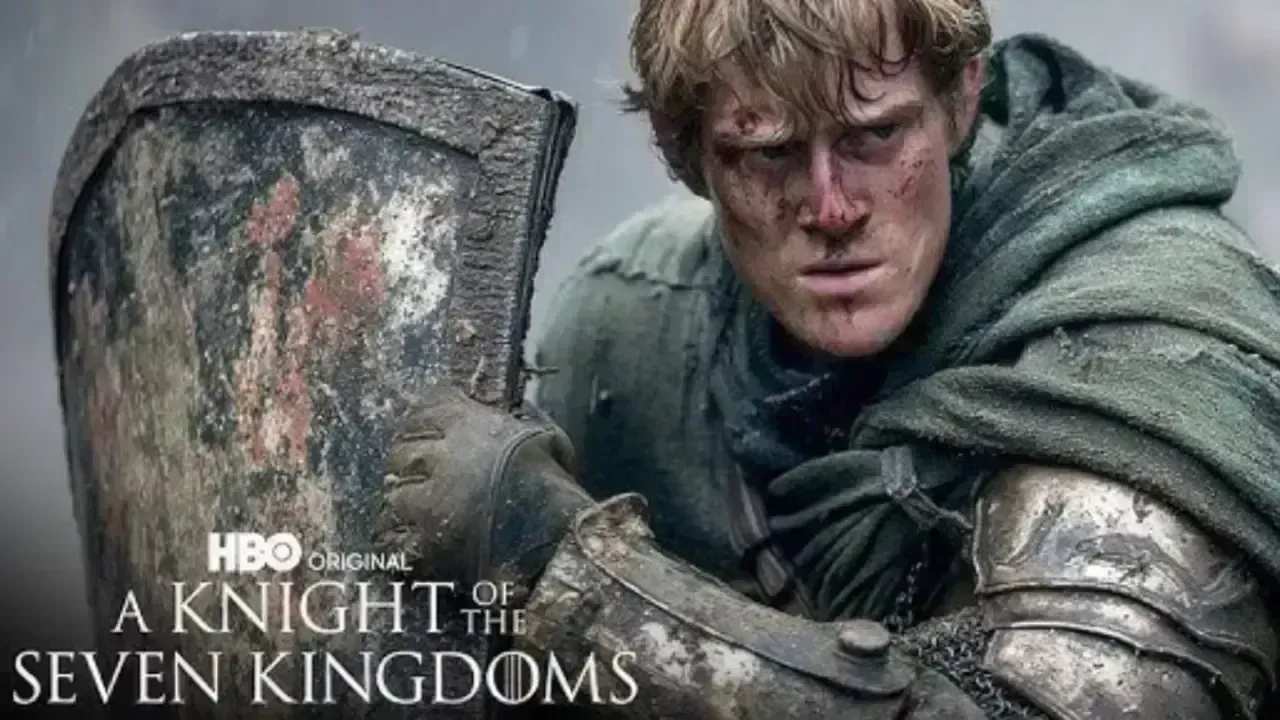
The long-anticipated A Knight of the Seven Kingdoms has finally arrived on HBO and HBO Max, premiering on January 18, 2026 as the latest TV series within George R.R. Martin’s A Song of Ice and Fire universe. This six-episode adaptation of Martin’s Tales of Dunk and Egg novellas represents a distinct shift in tone and scope for the franchise — one that departs from the sweeping political intrigue of Game of Thrones and House of the Dragon to tell a more grounded, human, and often playful story of two unlikely heroes navigating life in a vast, brutal world.
In contrast to its predecessors, which focused on royal conflict and large-scale power struggles, A Knight of the Seven Kingdoms explores the personal journey of Ser Duncan the Tall (Dunk) and his young squire Egg, whose bond becomes the emotional core of the series. The result is a prequel that feels both familiar and refreshingly new — offering charm, humor, moments of poignancy, and a simpler yet compelling adventure rooted in character rather than spectacle.
Set approximately 90 years before the events of Game of Thrones and following the aftermath of the Targaryen civil war depicted in House of the Dragon, A Knight of the Seven Kingdoms takes place in a Westeros where dragons are no longer part of daily life and the grand political games of kings and queens have cooled. Instead, the story centers on the lives of common folk and wandering knights, presenting a Westeros that is still rich in lore but grounded in personal quests rather than dynastic ambition.
This setting allows the series to explore moral themes through smaller, character-driven narratives without the heavy burden of heroic destinies or sprawling armies. As a result, audiences are invited into a world that feels lived-in and familiar, yet refreshingly intimate.
At its heart, the series follows Ser Duncan the Tall, commonly known as Dunk, a humble and well-meaning hedge knight. Unlike the noble knights of legend, hedge knights wander the land without formal service, earning their keep through odd jobs, tournaments, and the honor that comes with simply surviving in a world full of peril. When Dunk meets a curious young boy named Egg — later revealed to be Prince Aegon V Targaryen — they form an unlikely bond that shapes the narrative’s emotional foundation.
Dunk’s motivations are simple yet profound: to prove himself as a worthy knight and uphold his own sense of honor, even when the world around him seems indifferent to such ideals. Meanwhile, Egg’s sharp mind and genuine admiration for his new mentor add humor, wisdom, and emotional depth to their shared journey. Together, they navigate tournaments, dubious nobles, and the unpredictable dangers of Westeros.
Most striking about A Knight of the Seven Kingdoms is how starkly it diverges from the towering epic tone of previous Game of Thronesrelated series. Rather than focusing on sprawling court politics or the terrifying threat of supernatural forces, the show emphasizes character, morality, and personal relationships.
Critics have described the series as lighter and more character-focused than its predecessors — even incorporating bouts of humor amidst its drama. The chemistry between Dunk and Egg, in particular, has been noted as a standout aspect that gives the show its heart and emotional resonance.
This approach has drawn comparisons to finely crafted story-driven dramas with levity rather than only spectacle, and even to the unconventional charm reminiscent of classic tales like Don Quixote — where noble intention and earnest adventure take precedence over political scheming.
Rather than exploring the ruthless games of power that defined Game of Thrones, A Knight of the Seven Kingdoms dwells on the everyday virtues and shortcomings of its central characters. Dunk embodies an idealistic vision of knighthood — one rooted in personal integrity, loyalty, and kindness. His decisions often reflect moral dilemmas faced by individuals living in a world where such values are constantly tested.
Egg, with his youthful curiosity and hidden royal identity, serves as emotional contrast and narrative foil. His presence nudges Dunk toward moments of self-reflection, humor, and unguarded tenderness, creating a dynamic that is equal parts comedic and sincere.
Together, their relationship underscores one of the series’ principal messages: that heroism does not always demand epic battles — sometimes it is found in simple acts of bravery, loyalty, and friendship.
The series boasts a compelling ensemble led by Peter Claffey as Dunk and Dexter Sol Ansell as Egg — their performances frequently highlighted as central strengths of the show. Critics and commentators alike have praised the duo for creating a potent emotional core that elevates even the quieter moments of the narrative.
Supporting cast members also contribute depth and texture to this adaptation of Martin’s world. Characters such as Ser Lyonel Baratheon and various members of the Targaryen family add richness to the series’ social tapestry, while unique figures like puppeteer Tanselle provide unexpected charm and flair to episodes.
While A Knight of the Seven Kingdoms has garnered generally positive reviews from critics, it has also sparked discussion about how it fits within the larger Game of Thrones franchise.
According to early critical metrics, the show holds a strong approval rating — roughly 83% on review aggregator sites — indicating favorable responses overall. However, this score is currently lower than those of earlier franchise entries like House of the Dragon or the original Game of Thrones, marking it as the lowest rated debut season in the franchise to date.
Despite this, reviewers often emphasize the series’ heart, humor, and refreshing narrative style as highlights. Many have appreciated its grounded approach and lighter tone, even while acknowledging that its modest stakes and episodic structure may not resonate with all viewers accustomed to grand fantasy spectacles.
One notable choice of A Knight of the Seven Kingdoms is its compact storytelling — six episodes of roughly 30–45 minutes each, focused tightly on a singular arc. This structure allows the series to avoid the sprawling ensemble and convoluted plotting that sometimes weighed down previous entries.
Instead, it offers a more intimate narrative experience, in which storytelling is driven by character development, interpersonal dynamics, and thematic exploration rather than sprawling conflict and cliffhanger politics. The pacing, though lighter and less intense, rewards viewers who value emotional depth and subtlety over spectacle.
Critics have observed that the series doesn’t shy away from the darker, grittier aspects of Westeros — including violence and the harsh realities faced by characters in a premodern world. Yet these moments are often balanced with humor and warmth, creating a tonal blend that distinguishes A Knight of the Seven Kingdoms from its predecessors.
In many instances, the lighter moments are used to underscore the humanity of the characters, highlighting how laughter, kindness, and simple pleasures can coexist with danger and tragedy in the same world.
As a spinoff within the Game of Thrones franchise, A Knight of the Seven Kingdoms doesn’t attempt to replicate the epic drama and complex political intrigue that made earlier seasons cultural phenomena. Rather, it embraces a different kind of story, one that thrives on modest scope, character introspection, and moral nuance.
For long-time fans, this departure may be a welcome expansion of the universe — showing that Westeros has room for stories beyond the Iron Throne, dragons, and war. For newer audiences or those less invested in sprawling fantasy, the series offers accessibility and charm that feels refreshing and, at times, unexpectedly heartwarming.
A Knight of the Seven Kingdoms stands out as a refreshing narrative pivot within the sprawling mythology of Westeros. By focusing on the humble journeys of Dunk and Egg, the series celebrates values often overshadowed by political machinations in fantasy dramas — values like honor, loyalty, friendship, and personal courage.
Though it diverges from the epic scale and high drama of its predecessors, it succeeds in offering viewers a warm, engaging, and emotionally honest story that proves the world of Westeros can be just as compelling when viewed through a smaller lens. Whether embraced as a delightful detour or critiqued as a lighter chapter in a legendary universe, A Knight of the Seven Kingdoms clearly makes its own imprint on the Game of Thrones legacy.
This article synthesizes publicly available reviews, critical reactions, and contextual information about A Knight of the Seven Kingdoms as of January 2026. Details about future seasons, casting, and narrative developments may evolve following official releases and announcements.










Danaher to Launch AI-Powered Autonomous Research Lab in 2027
Danaher plans an AI research lab for 2027, combining robotics and automation to speed up drug discov

Musk Welcomes German Support for Tesla Driver Assistance Tech as EU Approval Push Continues
Elon Musk welcomes Germany's backing for Tesla FSD as the company seeks EU approval amid speed, safe

Microsoft and Nvidia CEOs to Unveil AI Laptop at San Francisco Event
Microsoft and Nvidia showcase a new AI laptop with RTX Spark chips as they push powerful local AI co

Man to face charges over perfume thefts at Changi Airport
A 47-year-old man faces charges over perfume theft at Changi Airport after six items worth nearly S$

Google Signs 3.6-GW Power Deal With Constellation Energy in US
Google signs a 3.6-GW power deal with Constellation Energy, including nuclear power upgrades to supp

Harmanpreet Kaur Steps Down as India Captain Across All Formats
Harmanpreet Kaur steps down as India captain across all formats after a remarkable leadership journe