You have not yet added any article to your bookmarks!
Join 10k+ people to get notified about new posts, news and tips.
Do not worry we don't spam!
Post by : Anis Farhan
For years, Apple’s voice assistant Siri lagged behind competitors — particularly ChatGPT-powered assistants and Google’s own conversational AI systems — in natural language understanding and proactive intelligence. Apple’s internal development of AI models faced delays and changes in leadership, leaving the company struggling to catch up in what has become one of the most competitive arenas in technology.
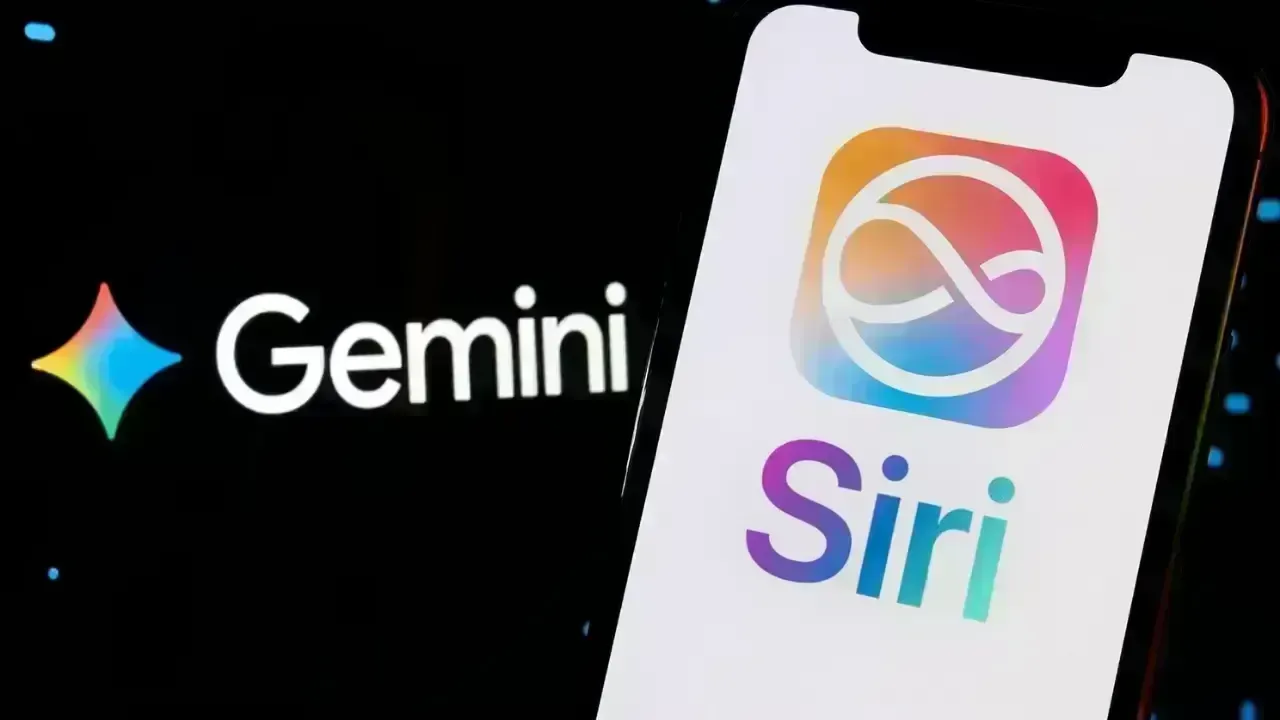
In January 2026 Apple confirmed a multi-year collaboration with Google that designates Gemini models as the foundation for future Apple Intelligence and a major overhaul of Siri planned for later this year. Rather than relying solely on its own AI research, Apple will license Google’s advanced models and cloud infrastructure as a base layer for its next-generation smart assistant and contextual AI features.
This move is significant not only because it brings Google’s AI deeper into Apple’s ecosystem but also because it effectively chooses Gemini over building a rival to ChatGPT in-house — at least for the near term.
Apple’s selection of Gemini reflects several overlapping priorities:
Gemini’s multilingual capabilities, broad knowledge base, and large-scale model architecture have positioned it as one of the most capable AI systems publicly available. Google’s deep investments in search-based reasoning and integration with a huge ecosystem of services give Gemini a performance edge in many generative and conversational tasks.
Apple’s own AI ambitions — including Siri’s long-teased upgrade — were repeatedly delayed. Partnering with Google lets Apple accelerate delivery of advanced AI features without waiting for in-house models to catch up.
Running large AI models efficiently requires massive infrastructure. Rather than building its own extensive AI cloud from scratch, Apple will use Google’s cloud technology and Gemini models as the backbone, scaling to support billions of devices with lower upfront costs.
The alliance extends a longstanding relationship; Apple has relied on Google for services like default search in Safari for years. Deepening this connection with AI follows a pattern where Apple uses outside technology selectively rather than owning every layer of innovation.
The most visible impact of the partnership will be in Siri, Apple’s flagship voice assistant. Users can expect improvements in:
Natural Language Understanding: More accurate comprehension of queries, including context and nuance.
Conversational Memory: Ability to follow extended interactions and refer back to earlier parts of a conversation.
Multimodal Inputs: Integration of text, images, and possibly voice as part of queries.
Contextual Awareness: Smart responses based on device state, user history, and preferences while still respecting privacy.
Because the underlying AI is cloud-assisted but Apple will run inference on Apple devices and its own Private Cloud Compute, the company says it will maintain privacy safeguards even as Gemini powers intelligence features.
Before the Gemini deal, Apple had already integrated ChatGPT into Siri in a limited, opt-in manner for complex queries—allowing users to access OpenAI’s generative AI capabilities temporarily. However, with the long-term partnership with Google, ChatGPT’s role on Apple devices appears to be shifting toward a supplementary or specialized function rather than the core intelligence engine for Siri.
OpenAI, the developer of ChatGPT, has responded behind the scenes by accelerating its own models and hybrid solutions to stay competitive. While Apple has not indicated that the ChatGPT integration will be removed entirely, industry analysts believe that ChatGPT will serve niche or opt-in tasks while Gemini models handle broader, default interactions.
Apple has long marketed its ecosystem as privacy-centric, emphasizing on-device processing and minimal data exposure. The Google partnership raises questions about how that promise aligns with using an external AI provider:
Apple asserts that Gemini models will run on Apple’s Private Cloud Compute, keeping computations and personal data separate from Google’s core infrastructure.
However, some observers note that integrating third-party AI introduces new vectors for privacy concerns, even when Apple serves as the broker.
The balance between advanced AI intelligence and user privacy will be key to user trust as the next Siri rollout unfolds.
The Apple-Google Gemini partnership has broader implications for the ongoing competition among AI platforms:
With Android devices, Search, YouTube, and now Apple devices tapping Gemini for core AI functionality, Google’s influence in the consumer AI landscape has grown substantially. Alphabet’s market valuation recently surpassed $4 trillion — a milestone partly attributed to investor confidence in its AI prospects.
OpenAI’s ChatGPT was once positioned as a likely default AI partner for major platforms. Apple’s pivot to Gemini shifts OpenAI toward more specialized roles or integration avenues where high-level cognition or creative tasks are prioritized.
Figures like Elon Musk have voiced concerns that the deal might give Google disproportionate power in AI, potentially affecting competition and privacy norms in the industry.
This realignment suggests that future innovation may hinge on strategic partnerships rather than pure head-to-head competition alone, especially as hardware, services, and cloud computing intertwine with AI capabilities.
For everyday users, the impact of this collaboration could be profound:
A smarter Siri that handles context, multiturn conversations, and complex tasks with greater nuance.
More AI-driven features in iOS and macOS — such as personalized recommendations, predictive assistance, and adaptive workflows.
Continued integration of generative AI across Apple apps like Notes, Messages, and Mail.
However, some users and privacy advocates remain cautious about extending external AI technologies into core device experiences, even with strict privacy protections in place.
Not all reactions to the partnership have been positive. Some analysts argue:
Apple effectively conceded that it could not build a world-class AI assistant alone;
Relying on a competitor’s core models could dilute Apple’s differentiation;
Long-term dependencies may make it harder for Apple to innovate independently in AI.
Nevertheless, many industry observers acknowledge that leveraging the best available AI technology — even from a competitor — could be the fastest route to delivering value to users.
As Apple rolls out Gemini-powered Siri and AI features later in 2026, the industry will be watching closely. Key questions include:
Will the new Siri match or exceed experiences offered by ChatGPT-powered assistants?
How will Apple navigate privacy, data governance, and user expectations?
What competitive moves will OpenAI, Microsoft, and others make in response?
This multi-year collaboration sets the stage for new forms of AI cooperation and competition that could shape the next decade of consumer technology.
This article synthesizes publicly available reports and industry analysis regarding Apple’s partnership with Google to use Gemini AI models for Siri and related AI features as of January 2026. Details are subject to change with official product releases and future announcements.








Danaher to Launch AI-Powered Autonomous Research Lab in 2027
Danaher plans an AI research lab for 2027, combining robotics and automation to speed up drug discov

Musk Welcomes German Support for Tesla Driver Assistance Tech as EU Approval Push Continues
Elon Musk welcomes Germany's backing for Tesla FSD as the company seeks EU approval amid speed, safe

Microsoft and Nvidia CEOs to Unveil AI Laptop at San Francisco Event
Microsoft and Nvidia showcase a new AI laptop with RTX Spark chips as they push powerful local AI co

Man to face charges over perfume thefts at Changi Airport
A 47-year-old man faces charges over perfume theft at Changi Airport after six items worth nearly S$

Google Signs 3.6-GW Power Deal With Constellation Energy in US
Google signs a 3.6-GW power deal with Constellation Energy, including nuclear power upgrades to supp

Harmanpreet Kaur Steps Down as India Captain Across All Formats
Harmanpreet Kaur steps down as India captain across all formats after a remarkable leadership journe