You have not yet added any article to your bookmarks!
Join 10k+ people to get notified about new posts, news and tips.
Do not worry we don't spam!
Post by : Anis Farhan
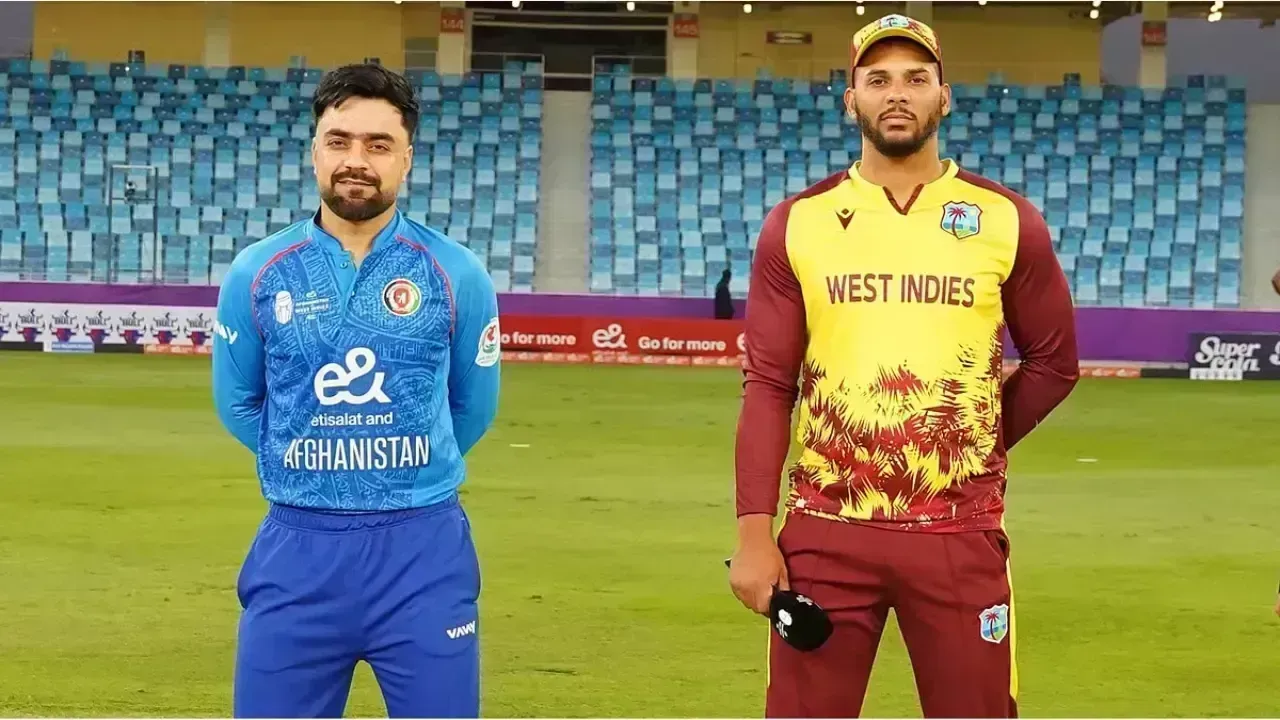
On January 19, 2026, at the Dubai International Cricket Stadium in the United Arab Emirates, Afghanistan and West Indies began their three-match Twenty20 International (T20I) series with a highly anticipated opener. Afghanistan’s national side, displaying confidence and strategic acumen, posted a competitive total and backed it up with incisive bowling to secure a 38-run victory over the West Indies. This result set the tone for the series and offered insights into each team’s form and preparation ahead of the upcoming ICC T20 World Cup.
The match not only highlighted significant individual performances but also revealed broader tactical narratives that could shape the remainder of the series. For fans, analysts, and players alike, the encounter provided a wealth of talking points—from partnerships that swung momentum to bowling discipline that suppressed a challenging chase.
The 1st T20I carried considerable weight as both teams sought momentum and confidence ahead of the global stage of the T20 World Cup. Afghanistan entered on the back of a strong T20I run in recent series, while the West Indies looked to refine combinations and assess bench strength, particularly with several senior players unavailable due to other commitments.
Environmental conditions in Dubai offered a typical subcontinental pitch—responsive to spin and requiring tactical batting rotations to build a competitive total. Winning the toss and choosing to bat first was expected to place scoreboard pressure on the West Indies chase, a strategy Afghanistan exploited effectively.
Afghanistan’s innings began with a surprising early challenge. Rahmanullah Gurbaz was dismissed via run-out on the first delivery of the match, stemming momentum before it could build. Shortly after, Sediqullah Atal also fell cheaply, compounding early pressure. At 19 for 2, the situation appeared precarious, but Afghanistan’s innings found a foundation in the partnership that followed.
The turning point of the innings was the remarkable partnership between Ibrahim Zadran and Darwish Rasooli. Together they amassed a commanding 162 runs, resisting early slump and progressively accelerating the scoring rate to take Afghanistan from recovery to dominance. Zadran’s elegant touch and controlled aggression complemented Rasooli’s assertive shot-making, bringing about a balance of stability and momentum rarely seen in T20 innings.
Ibrahim Zadran: Unbeaten on 87 runs, Zadran demonstrated both patience and timing, crafting boundaries with precision and rotating the strike intelligently throughout his innings.
Darwish Rasooli: Rasooli’s 84 provided both flair and presence, with a blend of classic power hitting and wedge placement that unsettled the West Indies bowling unit.
This partnership laid a platform that saw Afghanistan finish strongly with 181 for 3 in 20 overs, a total that would ultimately prove decisive.
The West Indies bowling attack entered with intentions to restrain Afghanistan with a mix of pace and spin. However, the early breakthroughs they needed did not materialise against the Zadran-Rasooli duo. Jayden Seales managed to claim early wickets, but at times the lack of penetration and consistency allowed the partnership to flourish.
Afghanistan’s batters exploited the width and gaps intelligently, with calculated risk-taking rather than desperate hockey-stick shots. As a result, the run rate remained healthy and the scoreboard pressure shifted steadily to West Indies.
Chasing a target of 182, the West Indies innings was one defined by intermittent resistance yet overwhelming pressure from Afghanistan’s disciplined attack. The Caribbean side managed 143 for 9 in their 20 overs, ultimately falling short despite individual resistance from some batters.
Quentin Sampson emerged as the top scorer for West Indies with a notable contribution, yet the innings lacked the sustained partnerships needed to anchor the chase. This lack of cohesion made it difficult to maintain momentum against well-balanced Afghan bowling strategies.
Afghanistan’s bowlers responded to the West Indies chase with precision and controlled aggression. The bowling unit, including Rashid Khan, Mujeeb Ur Rahman, Noor Ahmad, and Ziaur Rahman, shared wickets throughout the innings. Tight lines against batters forced errors, restricting scoring opportunities and creating wicket-taking chances.
Spin proved particularly effective, with Rashid Khan’s variations frustrating attempts to up the tempo. By mixing flight with subtle turn, Afghanistan’s spinners stifled the West Indies from building a significant platform.
Ibrahim Zadran: Anchored the innings with a composed and dominant batting display.
Darwish Rasooli: Compiled an impactful score that underpinned the team’s impressive total.
Rashid Khan: Pivotal with both ball trajectory and strategic field placements.
Quentin Sampson: Top-scored in the West Indies innings with a significant individual effort.
Jayden Seales: Claimed some early breakthroughs with the ball, showcasing potential as a core attack option.
This opening match set a decisive tone for the three-match T20I series. Afghanistan not only claimed the first victory but did so with authority, leveraging tactical discipline, timely partnerships, and depth across batting and bowling. For West Indies, the result highlighted areas needing attention—particularly consistency in batting and strategic execution under pressure.
With the T20 World Cup approaching, both sides will assess this performance for lessons and adjustments. Afghanistan’s confidence in handling high-pressure chases has increased, while West Indies must recalibrate to foster stability and sharper execution in subsequent encounters.
Date: January 19, 2026
Venue: Dubai International Cricket Stadium, UAE
Result: Afghanistan won by 38 runs
Afghanistan Innings: 181 for 3 (20 overs)
West Indies Innings: 143 for 9 (20 overs)
Player of the Match: Darwish Rasooli
Afghanistan’s commanding performance in the first T20I against West Indies manifested both strategic acumen and individual brilliance. With a formidable total on the board and a smart bowling approach, they set a challenging benchmark that West Indies found difficult to meet. The match served as a reminder of Afghanistan’s evolving status in international T20 cricket and offered the West Indies a clear indication of the areas to hone as they progress through the series and prepare for major global competition.
Disclaimer:
The content above is a comprehensive article based on available match reports and statistical summaries. It is crafted from credible sources and presented for informative purposes without links embedded in the body text.










Danaher to Launch AI-Powered Autonomous Research Lab in 2027
Danaher plans an AI research lab for 2027, combining robotics and automation to speed up drug discov

Musk Welcomes German Support for Tesla Driver Assistance Tech as EU Approval Push Continues
Elon Musk welcomes Germany's backing for Tesla FSD as the company seeks EU approval amid speed, safe

Microsoft and Nvidia CEOs to Unveil AI Laptop at San Francisco Event
Microsoft and Nvidia showcase a new AI laptop with RTX Spark chips as they push powerful local AI co

Man to face charges over perfume thefts at Changi Airport
A 47-year-old man faces charges over perfume theft at Changi Airport after six items worth nearly S$

Google Signs 3.6-GW Power Deal With Constellation Energy in US
Google signs a 3.6-GW power deal with Constellation Energy, including nuclear power upgrades to supp

Harmanpreet Kaur Steps Down as India Captain Across All Formats
Harmanpreet Kaur steps down as India captain across all formats after a remarkable leadership journe