
You have not yet added any article to your bookmarks!
Join 10k+ people to get notified about new posts, news and tips.
Do not worry we don't spam!
Post by : Anis Farhan
Every time you watch a movie online, scroll through social media, order food, send emails, or ask an AI tool a question, something invisible comes alive far from your home. Thousands of machines wake up inside massive windowless buildings known as data centres. Lights flick on. Fans roar quietly. Processors heat up. Electricity flows in huge volumes.
The digital world feels weightless. But it is anything but.
The truth is uncomfortable: the apps and services that make modern life smooth are turning into one of the biggest electricity users in the world. And with artificial intelligence expanding fast, the heat problem is growing faster than energy systems can keep up.
Electricity grids are straining. Power demand is climbing in places that never planned for such load. Cooling systems are sucking water from regions that already struggle with shortages. And utility companies are quietly adjusting electricity prices.
So the question is no longer futuristic. It is immediate.
Will your favourite streaming shows, video calls, and chatbots make electricity more expensive?
Is the digital world becoming too hot to handle?
This article explains how data centres and AI are driving a silent energy crisis — and why it matters to every household.
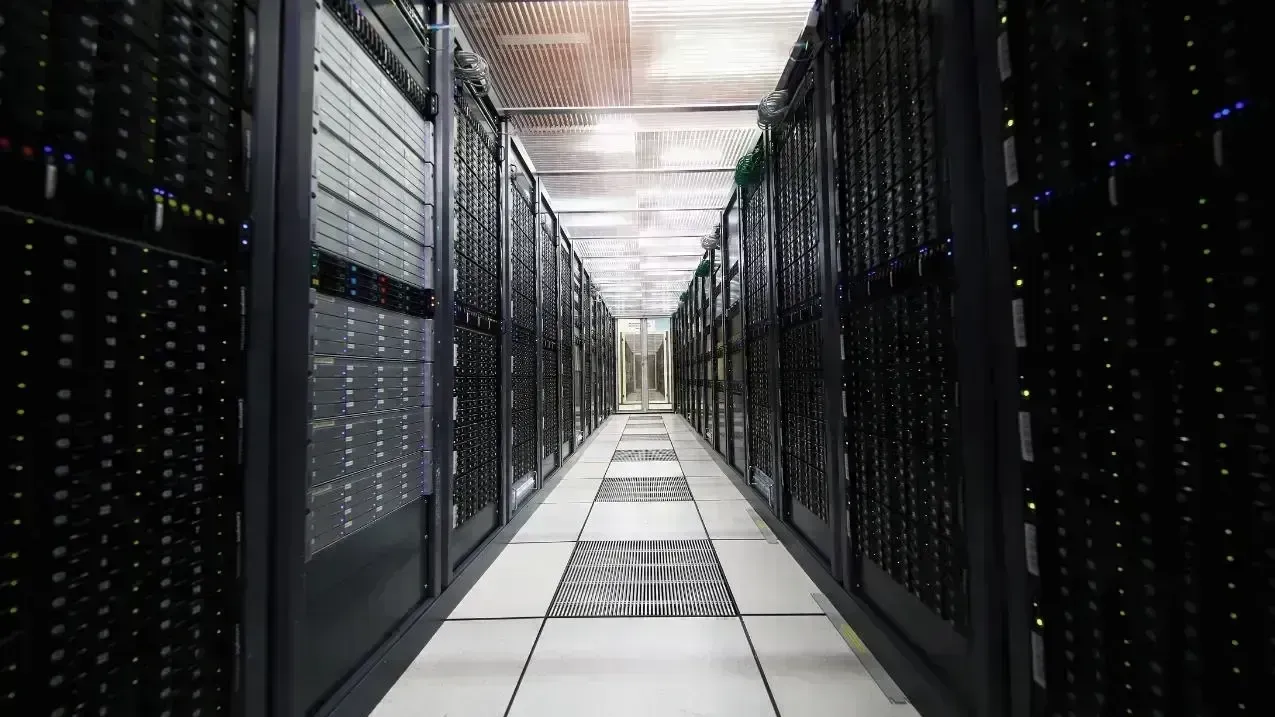
A data centre is a warehouse filled with servers. Each server is a machine that stores information, performs calculations, and delivers content to your screen. When millions of users connect at the same time, these machines run nonstop.
Servers generate heat. Lots of it.
To prevent damage, they must remain at carefully controlled temperatures. This means massive systems are always at work:
Air conditioning
Cooling towers
Liquid cooling pipes
Power backup systems
Fire suppression units
Battery halls
Electrical substations
A single large data centre can consume as much electricity as a small city.
Running a website uses energy.
Running an AI system multiplies it.
Artificial intelligence requires:
Heavy computation
Constant data analysis
High-speed processors
Continuous training updates
Every time you interact with an AI system, your query is not answered by one machine. It is processed through multiple layers of hardware, often located in different geographical regions. Each request heats servers. Each response consumes electricity.
Unlike simple web searches, AI conversations trigger far more calculations. And as businesses integrate AI into daily operations, the number of machines required multiplies rapidly.
More machines mean more heat.
More heat means more cooling.
More cooling means more energy.
The cycle does not slow down. It accelerates.
When you charge your phone, you see the energy consumption.
What you don’t see:
The electricity used to fetch emails
The power drawn to load social media
The server running your music playlist
The machines rendering your movie stream
The data processing before you get directions
The chatbot thinking in milliseconds
Modern life’s convenience comes with a back-end energy cost that never rests.
You pay your phone bill.
You also pay indirectly through:
Electricity price inflation
Infrastructure taxes
Utility adjustments
Supply shortages
Government subsidy strain
The digital economy is writing energy bills from behind the screen.
Servers cannot work in high temperatures. Even slight rises can reduce performance and increase failure risk.
Cooling takes:
Electricity
Water
Land
Infrastructure investment
Traditional air cooling is becoming insufficient.
As more machines pack into smaller spaces, heat density rises. Cooling systems must work harder, longer, and deeper.
Many data centres run cooling systems 24 hours a day — even in winter.
Modern data centres use vast amounts of water for cooling towers. That water evaporates to carry heat away.
In water-stressed areas, this creates conflict between:
Human consumption
Agriculture
Industry
Digital infrastructure
When electricity demand rises, water demand often rises with it.
And once digitial water usage becomes routine, shortages become invisible until crisis hits.
Traditional industries grow gradually.
Data centres appear suddenly.
A new facility can demand more electricity than an entire residential district almost overnight. Grids built for predictable domestic growth suddenly face industrial-scale consumption that never turns off.
Power companies must:
Expand generation
Reinforce transmission lines
Build substations
Upgrade transformers
Add backup systems
All of this costs money.
And in most systems, that cost travels downstream to consumers.
When electricity demand outpaces supply:
Prices rise
Subsidies shrink
Taxes increase
Infrastructure spending grows
Data centres negotiate special power tariffs. But as utilities struggle to balance demand, pricing pressure spreads through the system.
Households eventually feel it in:
Higher rates
Revised slabs
Reduced subsidies
Increased minimum charges
The digital economy might seem invisible — but its cost is physical, financial, and unavoidable.
Solar and wind are increasing. But data centre demand is increasing faster.
Also:
Solar depends on sunlight
Wind depends on weather
AI works nonstop
Servers don’t rest when sunshine ends.
To balance peaks, utilities still rely on conventional power plants during heavy usage periods.
This makes AI energy usage a burden even for the cleanest systems.
Companies are experimenting with:
Liquid immersion cooling
Underwater data centres
AI-controlled airflow
Energy recycling systems
Location-based cooling design
Some data centres are moving closer to colder climates to reduce cooling costs.
But these solutions are slower than AI growth.
Technology is racing tech itself.
Data centres support:
Banking
Healthcare
Education
Communication
Public safety
Research
Governance
They are not optional.
But they must improve efficiency fast.
An unmanaged digital future would cost more to fix than to prevent.
Governments now consider:
Zoning rules for servers
Water usage restrictions
Energy consumption caps
Carbon reporting
Mandatory efficiency codes
Data infrastructure planning has joined roads, bridges, and power plants as national infrastructure priorities.
The digital economy is no longer virtual.
It is physical.
AI brings:
Medical discovery
Automation
Education access
Business efficiency
Public service improvement
But uncontrolled expansion is dangerous.
Energy waste in AI systems must be reduced through:
Efficient programming
Smarter chips
Adaptive loads
Batch processing
User demand management
Convenience without responsibility will destroy affordability.
Reduce waste by:
Limiting auto-play streaming
Avoiding unnecessary background apps
Reducing cloud backups
Unsubscribing unused accounts
Minimising repeated AI queries
Lowering screen resolution when possible
Individually small changes become collective savings.
Electricity prices will rise gradually, not overnight.
But the direction is clear:
Digital life increases energy use.
Energy stress increases long-term costs.
The discomfort won’t come as shock.
It will come as a slow monthly creep.
Solutions include:
Special data centre power corridors
Dedicated energy parks
Water recycling systems
Efficient cooling mandates
Public reporting of energy usage
Smarter power allocation rules
Digital growth must respect physical limits.
Clouds are real buildings.
AI lives in metal.
Apps run on coal, solar, wind, and gas.
Streaming sits on power stations.
The digital world is not separate from the natural world.
It depends on it.
Every video played.
Every question queried.
Every image uploaded.
Every message sent.
All of it adds warmth to massive machines far away.
AI is changing civilisation.
But energy is the price of progress.
The real challenge is not stopping technology.
It is stopping waste.
If the world solves the data centre heat crisis, technology becomes clean.
If it fails, technology becomes expensive.
And that cost will show up in exactly one place.
Your electricity bill.
This article is for general informational purposes only and does not constitute professional, technical, environmental, or financial advice. Readers should consult relevant authorities or specialists for guidance related to energy usage, sustainability decisions, or policy implications.










Jacob Bethell Returns as England Name Squads for Australia Tour
England name ODI and T20 squads for the Australia tour, with Jacob Bethell returning from injury and

Beauden Barrett Opens Up About Mental Struggles During All Blacks Exile
Beauden Barrett discusses his confidence struggles after missing six tests, his return against Austr

IMF Says AI Investment Supports Global Growth Despite Energy Shock
IMF says AI investment is supporting global growth near 3%, with Asian economies benefiting from ris

Will O'Rourke Ruled Out of New Zealand's India Series
New Zealand fast bowler Will O'Rourke will miss the India series with hamstring and calf injuries as

AI Companies Expected to Drive Most US Earnings Growth in Q3
AI companies are expected to drive US third-quarter earnings growth as investors assess tech profits

Money Market Funds See Record Inflows as Global Bond Selloff Intensifies
Global money market funds attract $153.81 billion as bond yields rise, inflation fears persist and i

