You have not yet added any article to your bookmarks!
Join 10k+ people to get notified about new posts, news and tips.
Do not worry we don't spam!
Post by : Anis Farhan
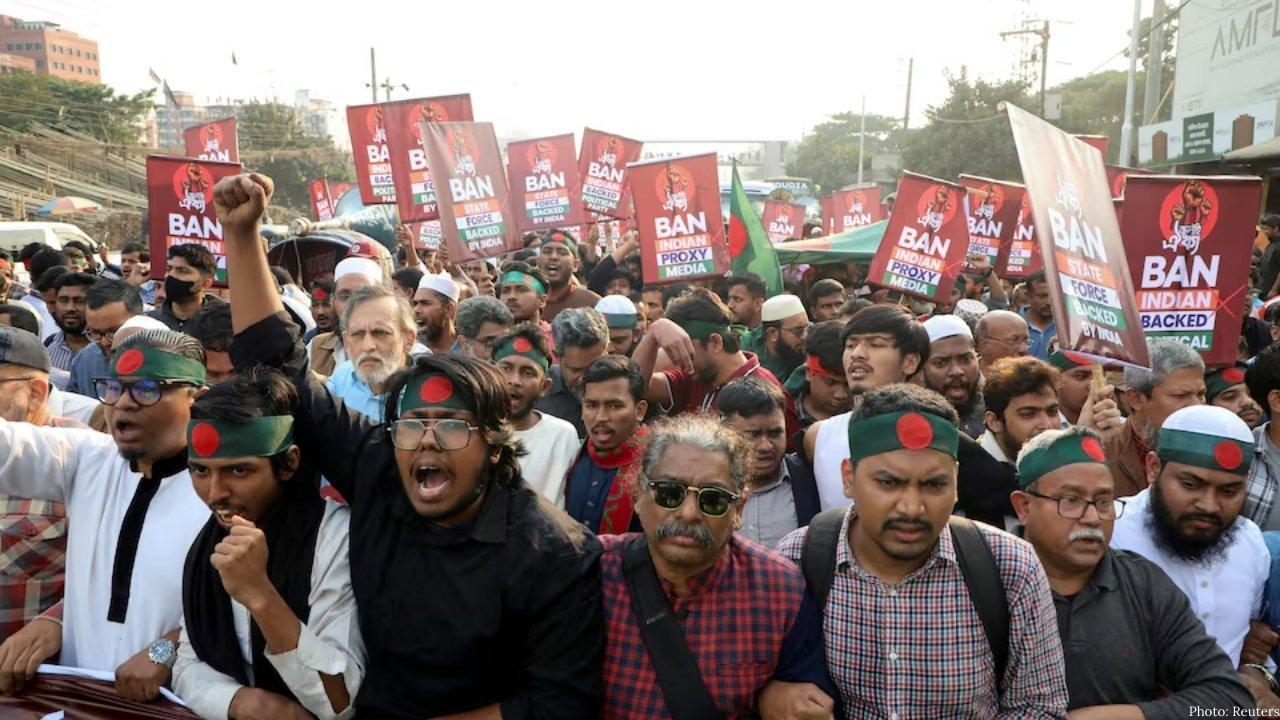
China is set to widen its political, economic and strategic footprint in Bangladesh as the South Asian country heads into a key election, taking advantage of a period of strained ties between Dhaka and New Delhi, according to a Reuters report.
The report said Beijing’s outreach has intensified in recent months through a mix of investment interest, infrastructure engagement and expanding diplomatic contact, at a time when Bangladesh’s political landscape has shifted sharply and India’s influence appears to have weakened compared to previous years.
Bangladesh votes this week in an election being closely watched in the region, with analysts warning that the outcome could influence Dhaka’s foreign policy direction and reshape South Asian power dynamics, particularly in the context of long-running India-China competition.
China has been strengthening its relationship with Bangladesh across multiple fronts, including trade, infrastructure and defence cooperation, the Reuters report said. Analysts cited in the report said China sees Bangladesh as strategically important due to its location on the Bay of Bengal and its proximity to India’s eastern borders.
Bangladesh has already been one of China’s key partners in South Asia through trade and investment, but observers say the pace and tone of engagement has shifted as Dhaka’s domestic politics enter a new phase.
China’s outreach is also being seen as part of its broader regional strategy of deepening influence through economic partnerships, long-term infrastructure projects and security cooperation.
The Reuters report said the change in Bangladesh’s political environment has opened up space for Beijing’s influence to grow.
Bangladesh’s previous political leadership had maintained close ties with India, and New Delhi had long considered Dhaka a key neighbour in its regional strategy. However, recent developments have led to a visible cooling of the relationship.
Analysts said some sections of Bangladesh’s political class have become more cautious about appearing too aligned with India, which has created room for China to position itself as an alternative partner.
India and Bangladesh have historically maintained deep links in trade, security cooperation, border management and regional connectivity.
However, Reuters noted that ties have become strained, with reduced high-level engagement and a growing perception in Bangladesh that India had become too closely associated with the previous political order.
Experts said India’s influence remains significant due to geography and economic ties, but the relationship has entered a more complicated phase as Bangladesh reassesses its foreign policy priorities.
Bangladesh’s strategic value extends beyond bilateral relations.
For China, Bangladesh offers a foothold in the Bay of Bengal region and access to a major South Asian economy with large infrastructure needs. For India, Bangladesh is central to its security and connectivity plans, especially for the northeast, and remains a critical partner in border stability and counter-terror coordination.
Analysts said Bangladesh is likely to continue balancing relationships with both India and China, but the scale of Chinese engagement could complicate that balancing act over time.
The upcoming election is seen as a key moment in Bangladesh’s political trajectory, and observers believe the result could shape how the next government handles major foreign relationships.
The Reuters report said Bangladesh’s shifting domestic politics have made foreign policy a more sensitive issue, with political groups seeking to project independence while also pursuing economic partnerships.
Regional diplomats and strategists are watching closely for signals on whether Dhaka will lean more toward Beijing in the coming year, or attempt to stabilise and rebuild its relationship with India.
Analysts said China’s expanding role in Bangladesh could have long-term consequences for South Asia’s balance of power.
If Beijing deepens defence and infrastructure cooperation in Bangladesh, it could raise concerns in New Delhi over strategic encirclement and influence along India’s borders.
At the same time, experts cautioned that Bangladesh’s economic and geographic realities make it unlikely that it will fully pivot away from India, even if China’s footprint grows.
Key developments expected in the coming days include:
The outcome of Bangladesh’s election
Early diplomatic moves by the incoming leadership
Signals on whether Dhaka will prioritise closer engagement with China
India’s response, including potential efforts to rebuild ties and accelerate stalled cooperation
Observers say the next few months will be crucial in determining whether the current drift in Dhaka-New Delhi relations becomes a long-term shift or remains a temporary phase driven by domestic political transition.
Disclaimer:
This article is based on publicly available reporting, including Reuters coverage, and is intended for informational purposes only. Diplomatic developments may evolve rapidly based on political decisions and regional events.






George Russell Wins Dutch GP Sprint, Boosts Mercedes Morale
George Russell wins the Dutch GP Sprint from pole as Mercedes teammate Kimi Antonelli extends his F1

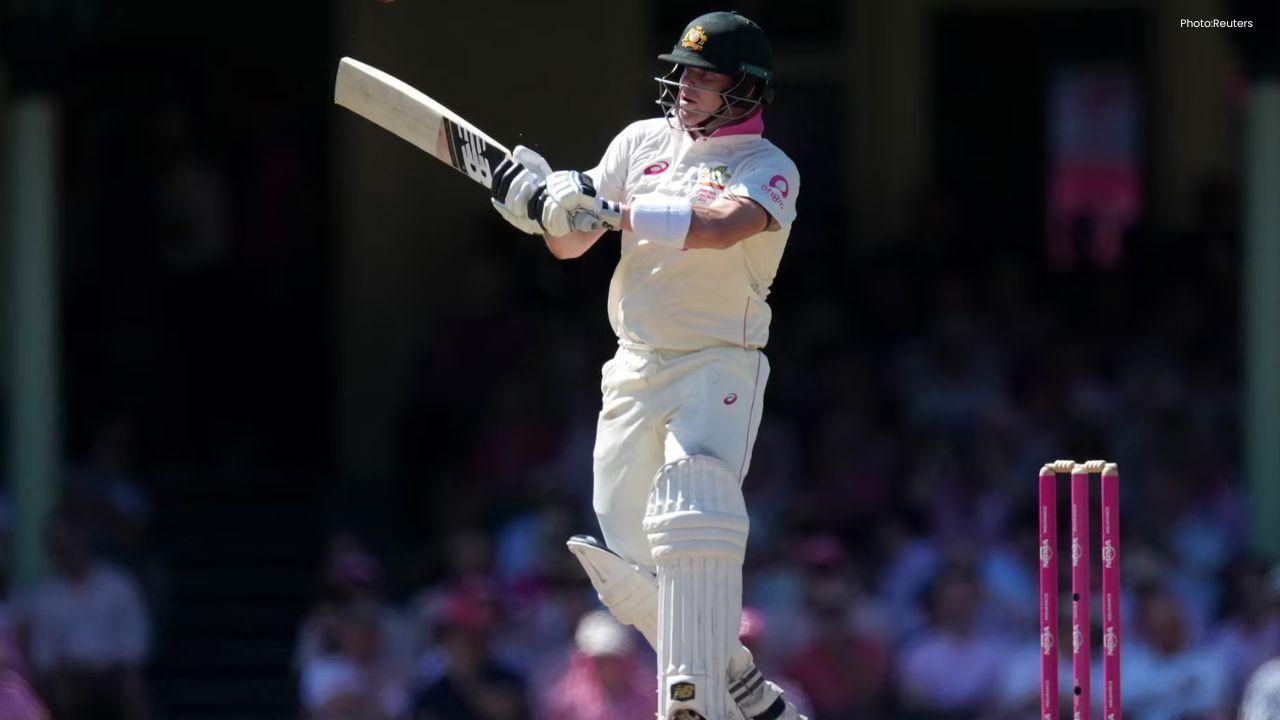
Australia 50/3 After Bangladesh Bowled Out for 64 in Second Test
Australia reached 50/3 after Bangladesh were bowled out for 64 in the second Test, with Mitchell Sta

Jordan Burroughs Returns to Wrestling with 2028 Olympic Dream
Jordan Burroughs returns to wrestling with Real American Freestyle as the Olympic champion eyes a po

Lamborghini Catches Fire on Singapore's ECP, Causing Heavy Traffic
A Lamborghini caught fire on Singapore's ECP, causing heavy traffic and bus delays. No injuries were

Bangkok Airport Duty-Free Area Flooded by Pipe Burst
A burst water pipe flooded the duty-free shopping area at Bangkok's Suvarnabhumi Airport on July 16,
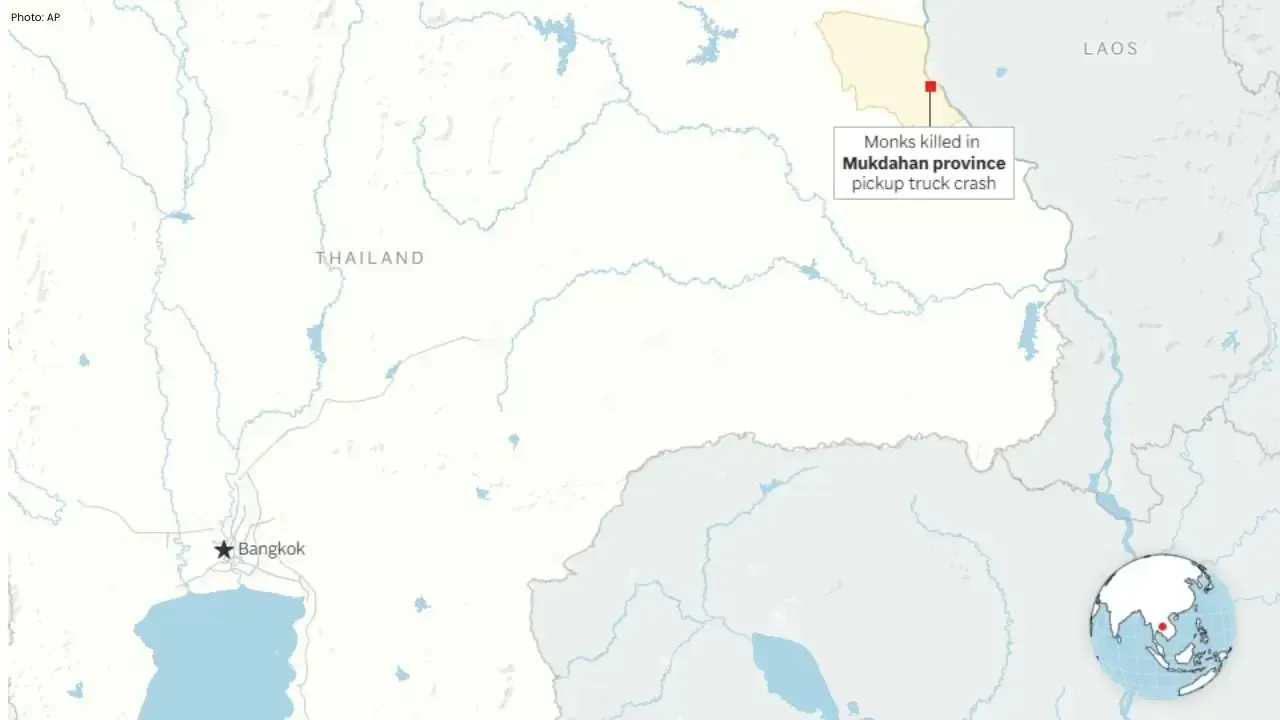
Nine Monks Killed in Thailand Pickup Truck Tragedy
An 11-year-old boy driving a pickup truck crashed into monks during a pilgrimage in northeastern Tha