
You have not yet added any article to your bookmarks!
Join 10k+ people to get notified about new posts, news and tips.
Do not worry we don't spam!
Post by : Saif Rahman
In response to worsening protests besieging the nation, the Bolivian government has implemented humanitarian corridors designed to facilitate the movement of essential supplies like food, medicine, and oxygen. This initiative unfolds during a notably challenging political and economic landscape for the country.
Authorities have announced that police and military forces will commence operations in the La Paz region, enabling trucks and emergency vehicles to navigate through areas engulfed in protest. Emphasizing a peaceful approach, officials highlighted that the primary focus will be the vital highway connecting Oruro to La Paz. Notably, support from the Red Cross and the Catholic Church is also anticipated to aid this initiative.
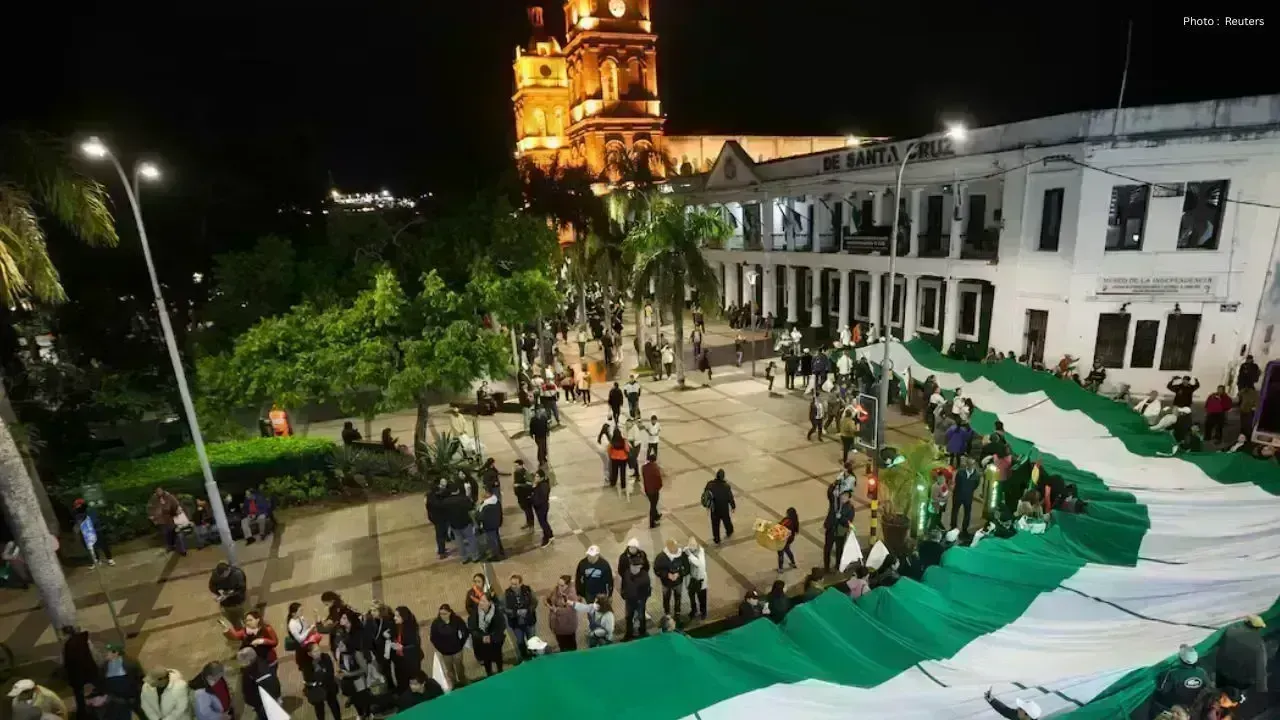
Initial demonstrations began in May as labor strikes but rapidly evolved into a national movement. Workers’ unions, miners, and various community groups united to voice discontent over soaring living costs and government expenditure cuts. Many citizens report that daily life has become increasingly burdensome as prices for essential goods continue to rise.
President Rodrigo Paz has stood by his economic strategies, asserting that they are essential for stabilizing the country’s faltering economy. His administration has enforced austerity measures, including cuts to fuel subsidies, intending to streamline public spending. However, many citizens claim these measures exacerbate hardships for families already under financial strain.
Blockades are one of the most pressing challenges during the unrest. Demonstrators have shut down major transport routes, hindering the flow of fuel, medical supplies, and food. Shortages of basic goods have been reported in several cities, and hospitals have issued warnings regarding dwindling oxygen supplies. Some banks have curtailed operations due to security worries and logistical issues.
The unfolding situation has sparked concern at an international level. Observers and diplomats from abroad are urging calm dialogues between the government and protesting factions. U.S. and European representatives have called for peaceful discussions to stave off further violence and economic deterioration. Washington is closely monitoring the escalating tensions, given its potential implications for the broader region.
Security measures taken earlier this month highlighted the severity of the crisis, with thousands of police and soldiers dispatched to dismantle blockades in La Paz. Altercations between demonstrators and law enforcement led to several arrests and injuries. Human rights organizations caution that excessive use of force could deepen resentment among citizens if lasting solutions are not achieved.
Economic factors are crucial to understanding the protests. Experts identify Bolivia as being on the brink of one of its most severe economic crises in decades. A sharp decline in foreign currency reserves, sluggish exports, and mounting fuel shortages have heightened public dissatisfaction. Many businesses struggle to maintain operations amid protracted transport disruptions.
Former President Evo Morales remains a significant figure amid the crisis, with his supporters continuing to impact political discussions and demonstrations. Analysts suggest the ongoing turbulence showcases profound societal divisions in Bolivia, marked by varying political affiliations and economic interests.
While the establishment of humanitarian corridors may offer some immediate relief for families awaiting vital supplies, it is improbable to resolve the underlying conflict. Bolivian leadership faces the daunting task of mending trust with protesters while ensuring economic stability. Citizens demand urgent alleviation from soaring prices and shortages, while the government contends that stringent reforms are essential for sustainable recovery.
At present, the humanitarian initiative signifies an attempt to alleviate suffering and avert even greater shortages. The forthcoming days will reveal whether peaceful negotiations can overshadow confrontations engulfing the streets. Without significant dialogue, Bolivia’s economic conditions, public services, and political cohesion might continue unraveling in the months to come.










PM Modi Pays Tribute to Mahatma Gandhi, Urges People to Support Khadi
PM Modi pays tribute to Mahatma Gandhi on Gandhi Jayanti and urges citizens to support Khadi and the

Amazon Seeks to Offload $8 Billion in Nvidia Chips to Investors
Amazon plans to move $8 billion in Nvidia chips to investors, using a new financing model to strengt

Samsung Raises Galaxy S26 Prices as Memory Chip Costs Rise
Samsung raises Galaxy S26 prices in South Korea as rising memory chip costs put pressure on smartpho

Lewis Hamilton Calls Singapore Grand Prix One of F1's Toughest Races
Lewis Hamilton discusses the demanding Singapore Grand Prix and brings Plus44 and Almave to Singapor

Denmark's Pandora Opens World's Largest Jewellery Factory in Vietnam
Pandora opens its largest jewellery factory in Vietnam, expanding global production, strengthening s

Gautam Gambhir Questions Batting-Friendly Pitches After India's Record ODI Chase
Gautam Gambhir questions batting-friendly ODI pitches after India’s record chase, calling for a bett

