You have not yet added any article to your bookmarks!
Join 10k+ people to get notified about new posts, news and tips.
Do not worry we don't spam!
Post by : Anis Farhan
Photo: X
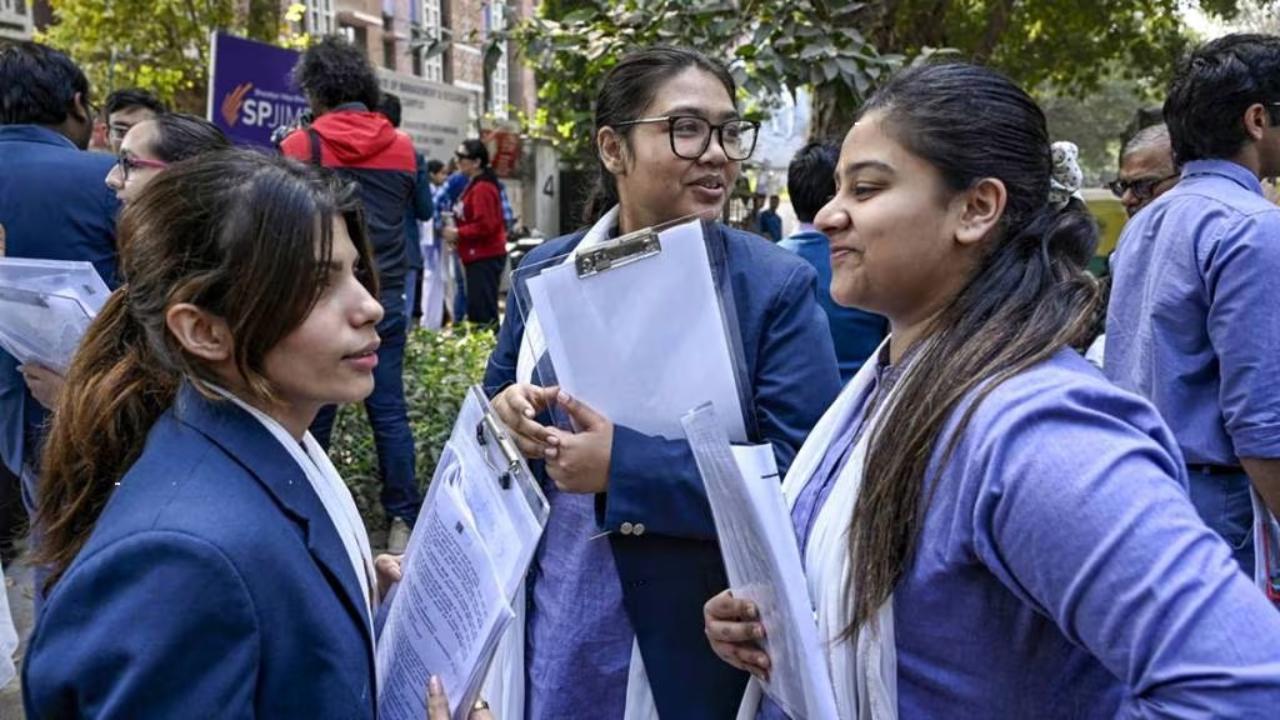
In a major education reform aligned with the National Education Policy (NEP) 2020, the CBSE has approved a twice-a-year exam schedule for Class 10 board students, effective from the 2025–26 academic year. The first exam in February will be compulsory for all enrolled students, with results due in April. Students eager to improve their performance may then opt for a second exam in May, with final results released in June using their best scores from both attempts .
Under this framework, students can retake up to three subjects—science, mathematics, social science, or languages—during the optional May session. The move ends the traditional single annual high-stakes exam model and replaces it with a more flexible, student-friendly system aimed at reducing anxiety and encouraging consistent year-round effort.
Internal assessments, the board clarified, will continue once per year and contribute to final grades, maintaining continuity in evaluation processes. Students from winter-bound schools and those competing in national-level sports will be permitted to choose whichever exam session aligns with their circumstances.
Eligibility rules stipulate that only students who appeared in the February exam will qualify for the May session. Those missing more than two subjects initially will be required to repeat the full term in the following year instead of taking the second window. Additionally, compulsory subjects must remain the same between sessions, ensuring consistency in preparation .
Educators have broadly welcomed the change as a significant step toward humane policy in academics. The NEP’s vision of enabling multiple exam attempts to foster holistic learning is now being translated into tangible practice. Some experts, however, point to the potential downside: preparing for two major exams in a single year could increase cumulative workload and logistical complexity .
CBSE officials emphasize that the new policy maintains academic rigour, as seniors will still need to complete the full syllabus and assessments through both phases . Result norms will remain unchanged: only the higher of the two scores will be reflected on certificates, and improvement options will be recorded transparently.
As India rolls out this progressive model, stakeholders—including parents, students, and teachers—are awaiting further guidance on exam schedules, subject combinations, and administrative protocols set to be announced soon by the CBSE. The success of this two-exam system could redefine board exams across the country and pave the way for similar reforms in Class 12.






Rabada Misses First Australia Test as South Africa Pick Two Spinners
Kagiso Rabada misses the opener as South Africa vs Australia begins, with Anrich Nortje returning an

Starc Compares Australia's Tough Year to McIlroy's Major Sweep
Mitchell Starc says Australia winning three away Test series and the World Cup would match Rory McIl

France’s Sesterce Plans $11 Billion AI Data Centre in Finland
Sesterce plans a $11 billion AI data centre in Finland, with major expansion, green energy plans and

Danaher to Launch AI-Powered Autonomous Research Lab in 2027
Danaher plans an AI research lab for 2027, combining robotics and automation to speed up drug discov

Musk Welcomes German Support for Tesla Driver Assistance Tech as EU Approval Push Continues
Elon Musk welcomes Germany's backing for Tesla FSD as the company seeks EU approval amid speed, safe

Microsoft and Nvidia CEOs to Unveil AI Laptop at San Francisco Event
Microsoft and Nvidia showcase a new AI laptop with RTX Spark chips as they push powerful local AI co