You have not yet added any article to your bookmarks!
Join 10k+ people to get notified about new posts, news and tips.
Do not worry we don't spam!
Post by : Saif Rahman
China has called on the United States to assume more significant leadership in nuclear disarmament after a recent Pentagon draft report indicated that Beijing has bolstered its nuclear missile capabilities and is reluctant to engage in arms control negotiations.
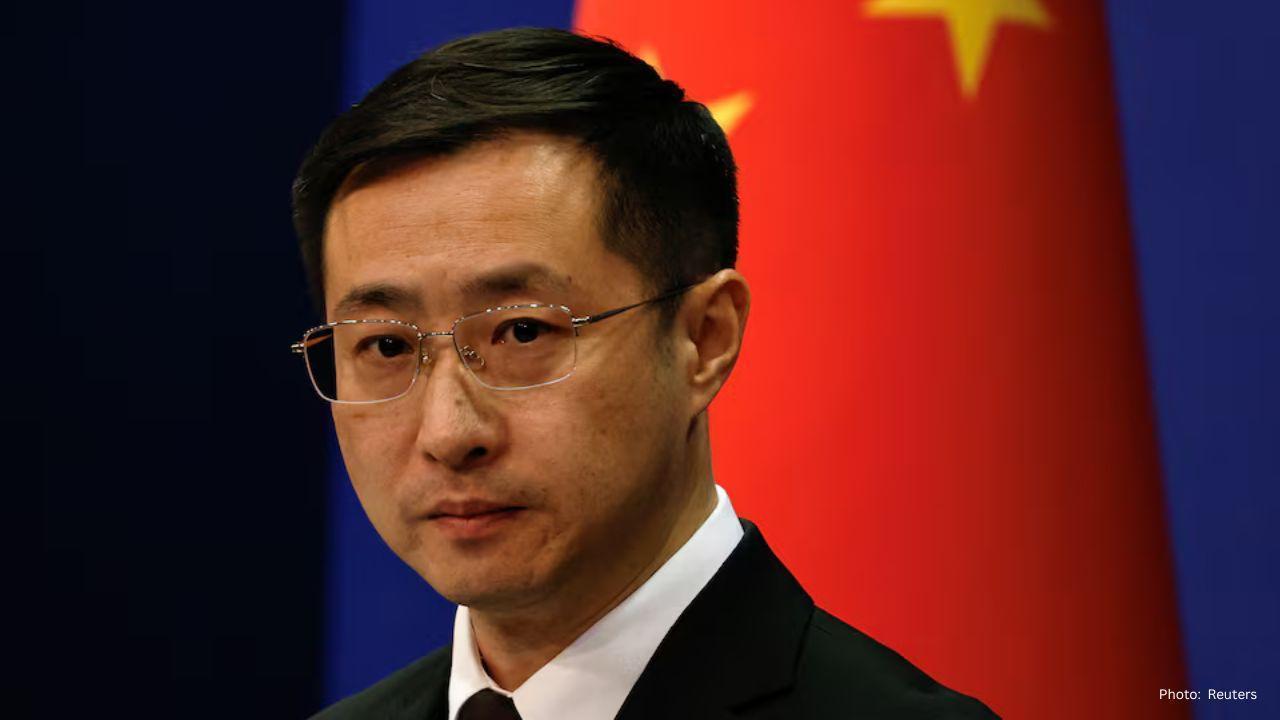
During a regular press briefing in Beijing, Chinese Foreign Ministry spokesperson Lin Jian emphasized that, as a country with one of the largest nuclear arsenals globally, the U.S. should pave the way for reducing nuclear weapons. He urged the U.S. to foster an environment that encourages other nuclear-armed states to pursue disarmament.
The Pentagon’s report indicated that China may have equipped over 100 intercontinental ballistic missiles with nuclear warheads, suggesting a limited interest in nuclear arms control discussions with the U.S. These assertions have heightened tensions between the two nations concerning military and security matters.
China has dismissed the report, claiming it does not accurately reflect the situation. Lin reiterated Beijing’s established stance, asserting that China maintains its nuclear forces at the least level necessary for national defense. He stated that China does not seek nuclear competition and adheres to a defensive strategy.
Chinese officials have also underscored the nation’s no-first-use policy, promising not to deploy nuclear weapons unless provoked. Beijing believes that this policy reaffirms its dedication to stability and peace, even amidst military modernization.
China insists that disarmament discussions should start with nations that have the largest nuclear stockpiles. From its perspective, the U.S. and Russia—holding the bulk of the world’s nuclear arsenal—must undertake substantial reductions before other countries are expected to engage in formal arms control agreements.
Conversely, the United States has voiced concerns over China’s rapid military enhancements and lack of transparency. U.S. officials argue that open communication and arms control talks are crucial to preventing misunderstandings and mitigating the risk of conflict.
This ongoing dialogue underscores the escalating mistrust between these two global powers. Alongside trade, technology, and regional security disputes, nuclear policy has emerged as a sensitive issue in U.S.-China relations.
Experts warn that increasing tensions, coupled with limited communication, elevate global risks. They argue that genuine disarmament necessitates trust, dialogue, and leadership from dominant nuclear nations.
Currently, both nations stand resolute in their perspectives. China urges the U.S. to demonstrate leadership, while the U.S. presses for greater transparency from China. How these contrasting positions are navigated will significantly influence global nuclear stability in the upcoming years.






PSG Coach Luis Enrique Urges Players to Step Outside Comfort Zone
PSG coach Luis Enrique says players must leave their comfort zone and keep improving as the club tar

China’s Tiangong Sets New 400m Record at Robot Olympics
China’s Tiangong robot sets a new 400m record at the Robot Olympics, beating a South African robot i

George Russell Wins Dutch GP Sprint, Boosts Mercedes Morale
George Russell wins the Dutch GP Sprint from pole as Mercedes teammate Kimi Antonelli extends his F1

Australia 50/3 After Bangladesh Bowled Out for 64 in Second Test
Australia reached 50/3 after Bangladesh were bowled out for 64 in the second Test, with Mitchell Sta

Jordan Burroughs Returns to Wrestling with 2028 Olympic Dream
Jordan Burroughs returns to wrestling with Real American Freestyle as the Olympic champion eyes a po

Lamborghini Catches Fire on Singapore's ECP, Causing Heavy Traffic
A Lamborghini caught fire on Singapore's ECP, causing heavy traffic and bus delays. No injuries were