You have not yet added any article to your bookmarks!
Join 10k+ people to get notified about new posts, news and tips.
Do not worry we don't spam!
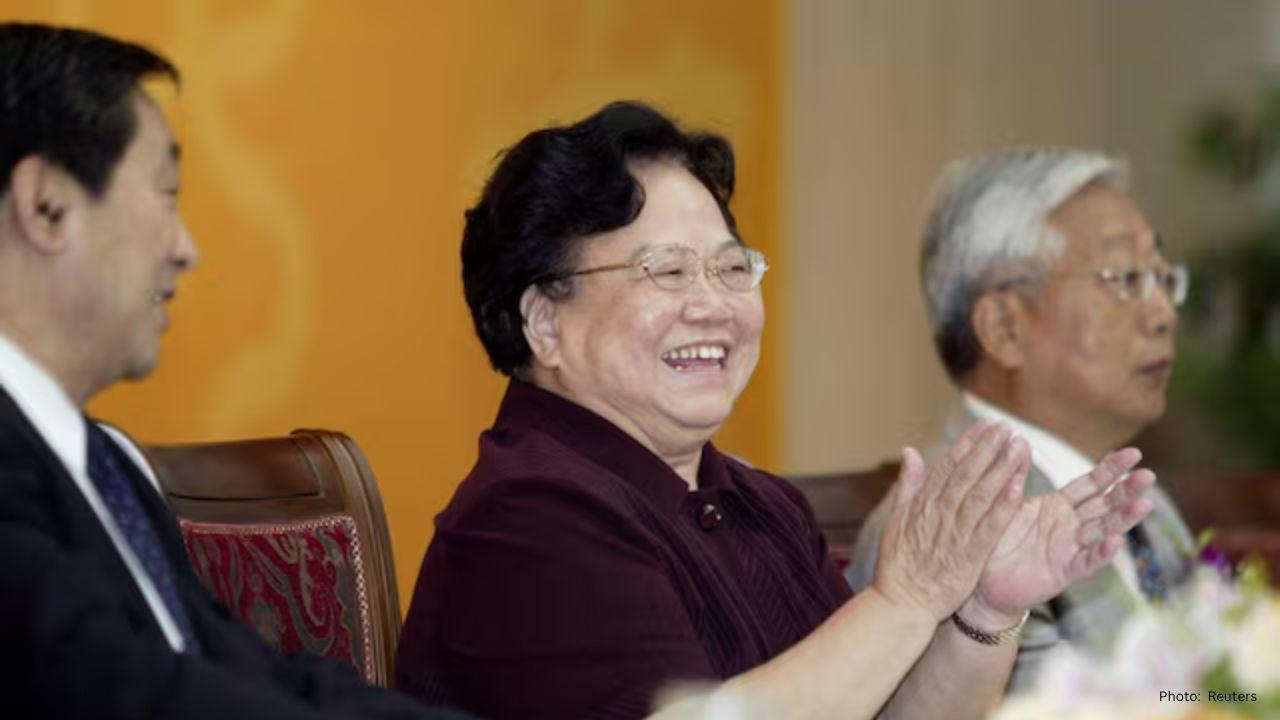
Post by : Saif Rahman
The passing of Peng Peiyun, a prominent figure behind China's one-child policy, has sparked intense backlash on Chinese social media. Rather than expressions of respect, users have taken to platforms to voice their grievances regarding the policy and its enduring effects on families and society.
Pengel served at the helm of China’s Family Planning Commission from 1988 to 1998. During her tenure, the one-child policy was rigorously enforced nationwide. Government sources hailed her as an “exemplary leader” dedicated to women's and children's welfare. Nevertheless, the online sentiment depicted a starkly contrasting view.
On Weibo, China’s widely-used social media platform, users recounted harrowing experiences tied to the policy. Numerous posts highlighted instances of forced abortions, sterilizations, and the emotional toll of families being separated. Several users articulated their sorrow over lost children, attributing their grief to the policy's stringent measures.
The one-child policy was implemented in 1980 as a response to concerns that rapid population growth would overwhelm food supply, employment, and resources. For over three decades, the majority of couples were limited to a single child, often facing severe enforcement by local officials, especially in rural areas.
Historically, larger families were the norm in rural landscapes, where parents relied on offspring for assistance in their later years. The preference for sons led to the neglect of daughters and, in extreme cases, gender-selective abortions. These actions have contributed to a significant gender imbalance that persists in society today.
Many voices on social media reflect a consensus that the policy's duration was excessive. Some users suggest that an earlier repeal could have averted China’s current drastic population decline. In 2023, China’s population dipped below India’s and fell again to roughly 1.39 billion last year. Experts are raising alarms about the potential for this decline to accelerate in the near future.
In her later years, Peng herself acknowledged the need for a policy adjustment. The one-child rule was officially revoked in 2015, paving the way for couples to have two, and subsequently three, children. Currently, the government is attempting to incentivize childbirth through childcare support, extended maternity leave, and tax relief.
Despite these initiatives, many young couples are opting against parenthood, citing rising living expenses, job stress, and unaffordable housing. Concurrently, China's aging populace poses challenges for economic growth, pension systems, and healthcare funding.
The public's response to Peng Peiyun’s death underscores the lingering influence of the one-child policy in Chinese society. For countless families, it remains a significant and painful episode that continues to mold the country’s trajectory.










PSG Coach Luis Enrique Urges Players to Step Outside Comfort Zone
PSG coach Luis Enrique says players must leave their comfort zone and keep improving as the club tar

China’s Tiangong Sets New 400m Record at Robot Olympics
China’s Tiangong robot sets a new 400m record at the Robot Olympics, beating a South African robot i

George Russell Wins Dutch GP Sprint, Boosts Mercedes Morale
George Russell wins the Dutch GP Sprint from pole as Mercedes teammate Kimi Antonelli extends his F1

Australia 50/3 After Bangladesh Bowled Out for 64 in Second Test
Australia reached 50/3 after Bangladesh were bowled out for 64 in the second Test, with Mitchell Sta

Jordan Burroughs Returns to Wrestling with 2028 Olympic Dream
Jordan Burroughs returns to wrestling with Real American Freestyle as the Olympic champion eyes a po

Lamborghini Catches Fire on Singapore's ECP, Causing Heavy Traffic
A Lamborghini caught fire on Singapore's ECP, causing heavy traffic and bus delays. No injuries were