
You have not yet added any article to your bookmarks!
Join 10k+ people to get notified about new posts, news and tips.
Do not worry we don't spam!
Post by : Rameen Ariff
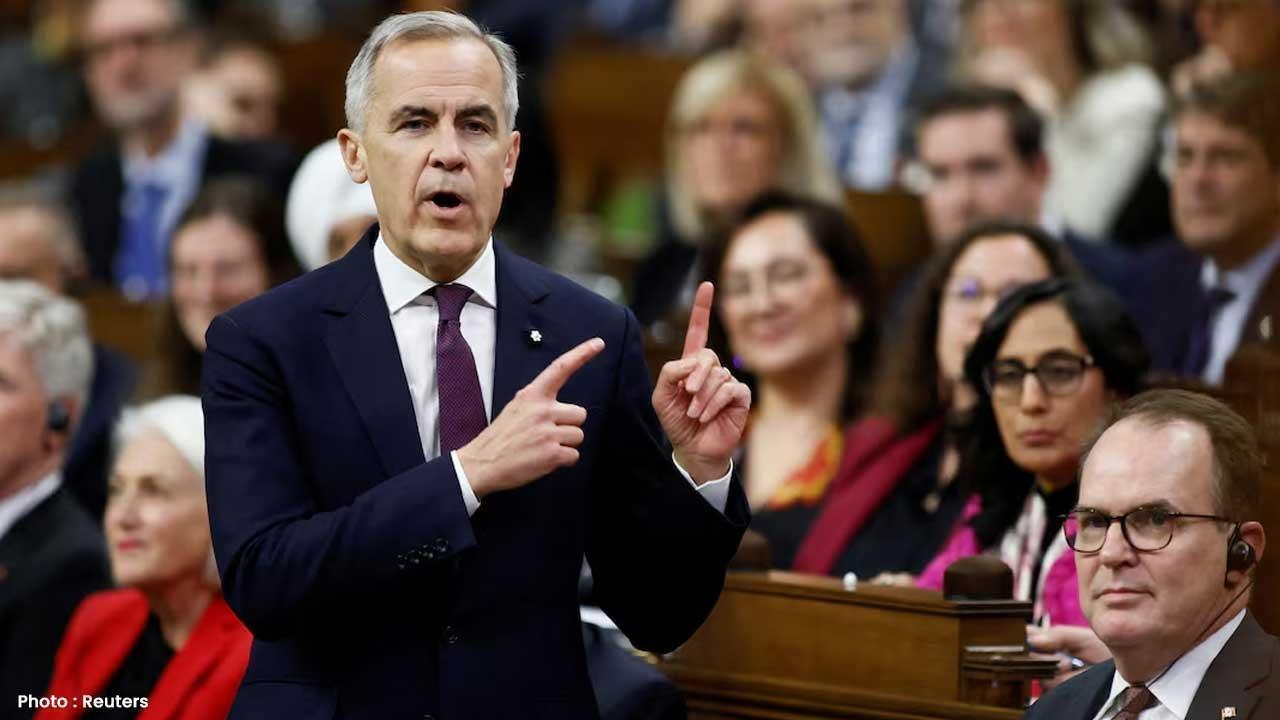
In a tense showdown, Prime Minister Mark Carney has managed to keep his minority Liberal government afloat as Canada’s Parliament narrowly approved his inaugural federal budget. The vote, which ended at 170 to 168, averted an imminent national election and initiates one of the largest deficit expansions in Canadian history.
This budget forecasts an alarming national deficit increase to C$78 billion, making it the second-highest in Canada’s fiscal history. Carney, a former central banker for Canada and the UK, champions this budget as a “generational investment” aimed at stimulating the economy during uncertain global times.
A Minority Government on Edge
With the Liberals controlling only 169 seats—just shy of a majority—the budget’s passage relied on rare collaboration from opposition members. Each Liberal MP's support was insufficient; Carney required extra backing or abstentions to fend off a detrimental defeat.
Support materialized through a mix of abstentions and one pivotal vote. Two NDP MPs chose to abstain, along with House Speaker Francis Scarpaleggia, who votes solely to break ties. Conservative MPs Shannon Stubbs and Matt Jeneroux also refrained from voting, with Jeneroux announcing his resignation recently.
Crucially, Green Party leader Elizabeth May provided the essential vote after securing personal commitments from the Prime Minister regarding Canada’s climate goals. She stated, “Without what I heard from the Prime Minister today, I would have voted no,” post-vote.
Opposition Criticism Over Expenditure Growth
The Conservative Party, led by Pierre Poilievre, staunchly opposed the budget, criticizing it as a “credit card budget,” insisting the Liberals risked Canada’s future amid growing affordability challenges.
Poilievre asserted during debates, “The Prime Minister’s hefty deficit gambles our future on the national credit card.” Additionally, the Bloc Québécois voted against the proposal, contending the Liberals have failed to address the rising housing costs and persistent economic issues across provinces.
Even within the Liberal ranks, dissent emerged. MP Nathaniel Erskine-Smith, while supporting the budget, cautioned that it inadequately addressed housing crises and stalled climate initiatives.
Detailed Budget Provisions
The fiscal blueprint outlines C$140 billion in new expenditures over the next half-decade with goals of enhancing productivity, innovation, and global competitiveness. Key features comprise:
Significant improvements to ports and national trade infrastructure
Plans aimed at doubling exports to non-US markets within a decade
Support for businesses affected by US tariffs on Canadian goods
Expectations of C$1 trillion in private investments generated in the next five years
To offset this significant spending, Carney proposes a 10% reduction in the federal workforce—a move criticized by public sector unions claiming it would hamper efficiency and slow government services.
A Controversial Context for Fiscal Policy
This budget discussion unfolded amidst considerable political strife. Following the release of the fiscal plan, a Conservative MP defected to the Liberals due to dissatisfaction with Poilievre’s negative political approach. Shortly thereafter, another Conservative MP resigned to prioritize family matters, further destabilizing the opposition.
These events intensified scrutiny around Poilievre’s leadership. Despite the discord, he reaffirmed his commitment to leading, stating, “My plan is to continue to lead and be the only leader fighting for an affordable Canada where people who work hard can afford a home and food.”
A Crucial Success for Carney
For Carney, this narrow budget approval is a vital political win. It preserves his government’s stability—at least temporarily—and allows him to advance his ambitious economic agenda. Yet, the ramifications are far from concluded. With a persistent deficit, stark political division, and escalating frustrations among Canadians regarding rising costs, the challenges to Carney’s leadership will only amplify. While Parliament may have sanctioned the budget, the real test—governing through economic hardship and political fragmentation—has only just begun.










PM Modi Pays Tribute to Mahatma Gandhi, Urges People to Support Khadi
PM Modi pays tribute to Mahatma Gandhi on Gandhi Jayanti and urges citizens to support Khadi and the

Amazon Seeks to Offload $8 Billion in Nvidia Chips to Investors
Amazon plans to move $8 billion in Nvidia chips to investors, using a new financing model to strengt

Samsung Raises Galaxy S26 Prices as Memory Chip Costs Rise
Samsung raises Galaxy S26 prices in South Korea as rising memory chip costs put pressure on smartpho

Lewis Hamilton Calls Singapore Grand Prix One of F1's Toughest Races
Lewis Hamilton discusses the demanding Singapore Grand Prix and brings Plus44 and Almave to Singapor

Denmark's Pandora Opens World's Largest Jewellery Factory in Vietnam
Pandora opens its largest jewellery factory in Vietnam, expanding global production, strengthening s

Gautam Gambhir Questions Batting-Friendly Pitches After India's Record ODI Chase
Gautam Gambhir questions batting-friendly ODI pitches after India’s record chase, calling for a bett

