You have not yet added any article to your bookmarks!
Join 10k+ people to get notified about new posts, news and tips.
Do not worry we don't spam!
Post by : Meena Ariff
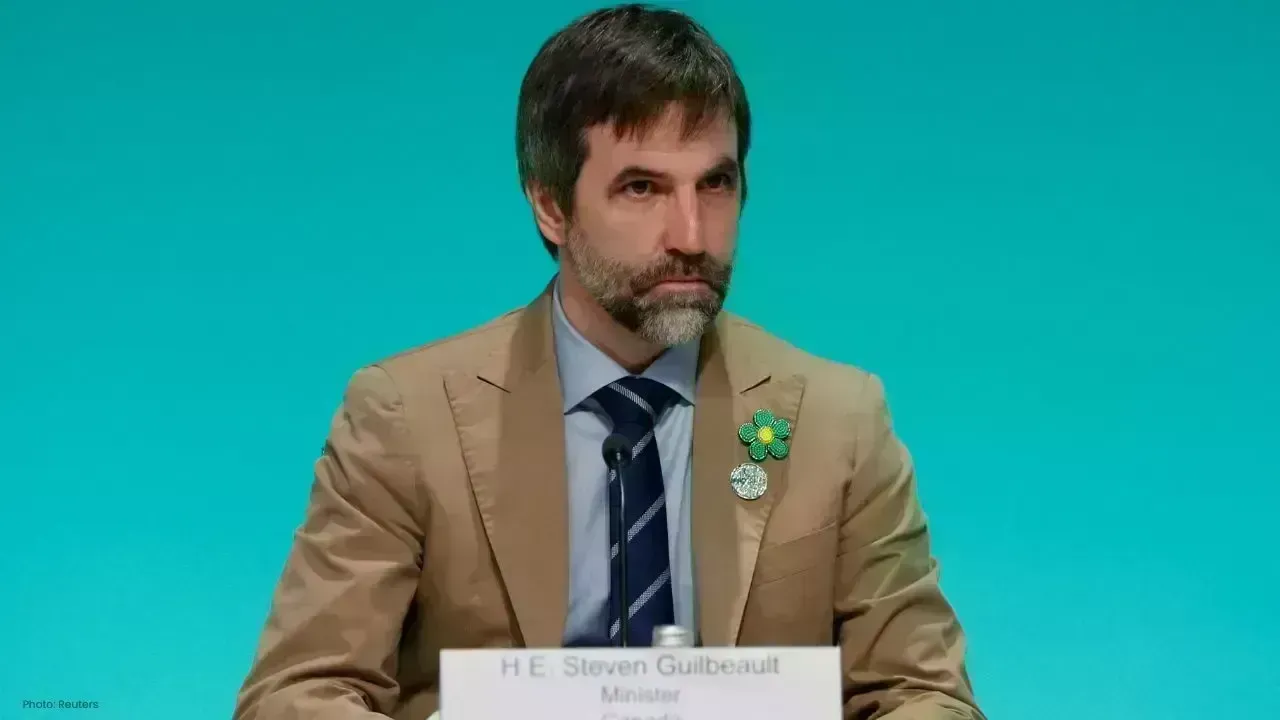
Environment and Climate Change Minister Julie Dabrusin is standing firm against Steven Guilbeault’s assertion that the federal government’s recent partnership with Alberta undermines Canada’s climate strategy.
Guilbeault stepped down from his cabinet position following the signing of a memorandum of understanding (MOU) between the federal government and Alberta, which might pave the way for a new oil and gas pipeline headed towards British Columbia’s coast. In his exit statement, he voiced concerns that halting the oil and gas emissions cap and postponing clean electricity regulations could negatively impact Canada’s climate commitments.
Dabrusin refuted his claims, clarifying that the MOU does not eliminate or diminish any existing programs. She indicated that the agreement offers provinces the adaptability to demonstrate their methods for achieving federal climate targets.
The MOU involves the federal government pausing clean electricity regulations in Alberta and delaying the emissions cap while both parties collaborate on a new carbon-pricing equivalency arrangement. The deadline for finalizing agreements on carbon pricing and methane regulations is set for April 1, 2026.
Furthermore, the MOU stipulates that Canada and Alberta will consult with Indigenous communities in both provinces, with British Columbia’s government also participating in discussions with First Nations regarding these issues.
Maureen Nyce, elected chief councillor of the Haisla Nation in northern B.C., expressed her skepticism regarding the pipeline, pointing out potential challenges. She believes that weakening environmental safeguards—like the emissions cap, Fisheries Act, and the Species at Risk Act—will encounter considerable pushback from communities. Additionally, Nyce questioned the financial feasibility of the project by the time construction could begin.
Adrian Dix, B.C.’s Minister of Energy and Climate Solutions, remarked that the potential pipeline project remains uncertain, highlighting the absence of a formal proposal and his province’s focus on alternative economic priorities.
The MOU aims for a privately funded pipeline that includes Indigenous co-ownership to enhance access to Asian markets. Paul Colborne, CEO of Surge Energy, anticipates interest from various companies in the project, indicating that the agreement fosters a more favorable investment climate.
Alberta’s Energy Minister Brian Jean emphasized the necessity of securing a private-sector partner and described the agreement as a positive instance of cooperation within Canada.
#Climate #CNI News #Canada News #Environment news #Canada Politics










Study Warns Using AI for Medical Advice Is ‘Dangerous’ as Users Get Inaccurate Health Guidance
A major new study reveals that artificial intelligence (AI) chatbots and tools may give misleading o

Top Sci-Fi Movies Streaming on Netflix This February: Must-Watch Picks for Genre Fans
A curated news-style guide to the best science fiction films currently available on Netflix in Febru

BCCI Central Contracts Shake-Up: Kohli, Rohit Moved to Grade B as Board Reshapes 2025–26 List
Virat Kohli and Rohit Sharma have been placed in Grade B in the BCCI’s 2025–26 central contract list

Dalal Street Spotlight: Top 10 Stocks Investors Are Watching as Markets Open on a High
Indian stock markets begin the week with strong momentum, and several blue-chip and mid-cap stocks a

Market Movers Today: Key Stocks Set To Watch In Indian Markets
Indian equity markets are poised for active trading as several major companies, including Bharti Air

Milan Welcomes the World: Inside the Grand Opening Ceremony of the 2026 Winter Olympics
The 2026 Winter Olympics opening ceremony in Milan marked a defining moment for global sport, blendi