
You have not yet added any article to your bookmarks!
Join 10k+ people to get notified about new posts, news and tips.
Do not worry we don't spam!
Post by : Shweta
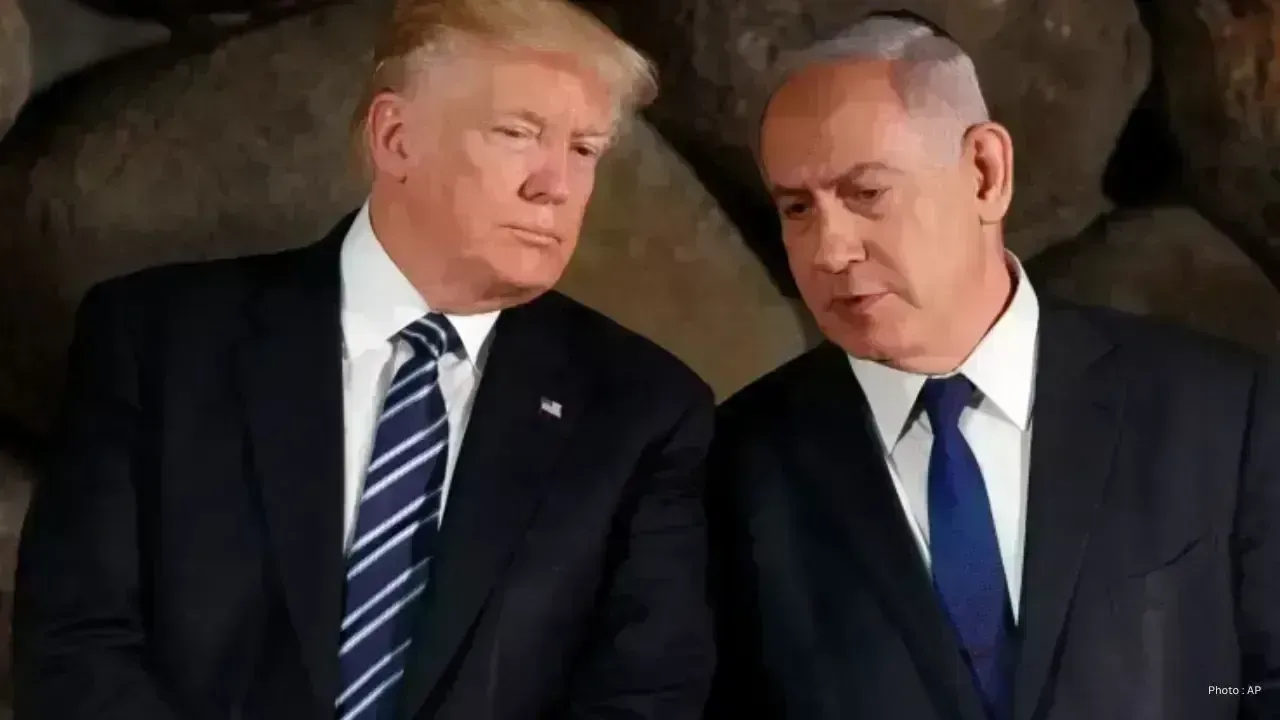
Analysts are increasingly concerned about the “normalization of scandal” within the political landscape of the United States and Israel. Repeated allegations of corruption, legal disputes, and wartime decisions are becoming a staple of public discourse. This continuous cycle has begun to dull the public's sense of shock, raising alarms about accountability in both nations.
In the United States, political polarization has intensified in recent years, particularly during and after Donald Trump’s term. Numerous legal inquiries, impeachment discussions, election challenges, and highly charged political rhetoric have dominated the scene. Experts suggest that scandals that once sparked significant national crises now tend to evaporate quickly, leaving the public's attention to drift.
Meanwhile, Israel grapples with its long-standing political controversies tied to corruption investigations, judicial matters, military operations, and internal strife. Prime Minister Benjamin Netanyahu continues to contend with corruption charges while maintaining considerable influence. Critics argue that the legal and political turmoil surrounding leadership has increasingly been normalized within Israeli culture.
The ongoing conflict in Gaza has further inflamed discussions on political accountability, drawing scrutiny from human rights organizations and international legal authorities regarding civilian impacts and military actions. Analysts note that persistent exposure to related controversies might lessen the political repercussions faced by leaders when making contentious wartime choices.
Experts point to the role of modern media—both traditional and social—in perpetuating this normalization. The 24/7 news cycle, along with viral content, fosters an environment where controversies are quickly absorbed into a broader cycle of outrage and distraction. Even significant allegations can feel fleeting or ordinary in such a climate.
Some scholars express concern that the normalization of scandal undermines democratic institutions over time. They argue that when controversies fail to provoke deep public accountability, confidence in political systems, judicial bodies, media, and government may gradually erode.
In both the US and Israel, political leaders' supporters often view dissenting opinions as mere politically charged criticisms rather than substantive accountability. This has led to a fragmented political atmosphere where perceptions of scandals tend to hinge more on political affiliations than on factual accuracy.
The issue prominently emerges during times of war and national security. In Israel, proponents of the government maintain that threats necessitate a united front and determined leadership during conflicts, while opponents argue that wartime conditions should not inhibit scrutiny of political judgments or humanitarian issues. Similar dialogues are prevalent in the US, covering areas like foreign policy and military intervention.
Analysts note that the convergence of politics, media, and public relations is shifting the landscape. Current political figures often react to scandals not only through official channels but also via direct engagement with their supporters on various platforms. This enables them to craft narratives swiftly and retain support amid critical controversies.
The relationship between the United States and Israel amplifies international interest in these matters. The US remains Israel's key ally, providing military and diplomatic backing during escalating regional conflicts. Critics contend that this close relationship can dampen external pressures regarding contentious choices, while advocates insist that it is essential for maintaining regional security.
Public sentiment continues to be polarized in both countries. Some citizens argue that intense media coverage disproportionately highlights controversies for political gain, whereas others worry that the continual unraveling of scandals may erode democratic values and public confidence.
The overarching issue transcends individual scandals to encompass societal reactions over time. When scandals evolve into expected occurrences rather than anomalies, experts caution that enforcing political accountability may become increasingly difficult, leading to rising skepticism towards public institutions.
As divisions in the US and Israel deepen, the discourse on leadership, accountability, media engagement, and democratic integrity is anticipated to remain pivotal within both domestic and international contexts.










PM Modi Pays Tribute to Mahatma Gandhi, Urges People to Support Khadi
PM Modi pays tribute to Mahatma Gandhi on Gandhi Jayanti and urges citizens to support Khadi and the

Amazon Seeks to Offload $8 Billion in Nvidia Chips to Investors
Amazon plans to move $8 billion in Nvidia chips to investors, using a new financing model to strengt

Samsung Raises Galaxy S26 Prices as Memory Chip Costs Rise
Samsung raises Galaxy S26 prices in South Korea as rising memory chip costs put pressure on smartpho

Lewis Hamilton Calls Singapore Grand Prix One of F1's Toughest Races
Lewis Hamilton discusses the demanding Singapore Grand Prix and brings Plus44 and Almave to Singapor

Denmark's Pandora Opens World's Largest Jewellery Factory in Vietnam
Pandora opens its largest jewellery factory in Vietnam, expanding global production, strengthening s

Gautam Gambhir Questions Batting-Friendly Pitches After India's Record ODI Chase
Gautam Gambhir questions batting-friendly ODI pitches after India’s record chase, calling for a bett

