
You have not yet added any article to your bookmarks!
Join 10k+ people to get notified about new posts, news and tips.
Do not worry we don't spam!
Post by : Rameen Ariff
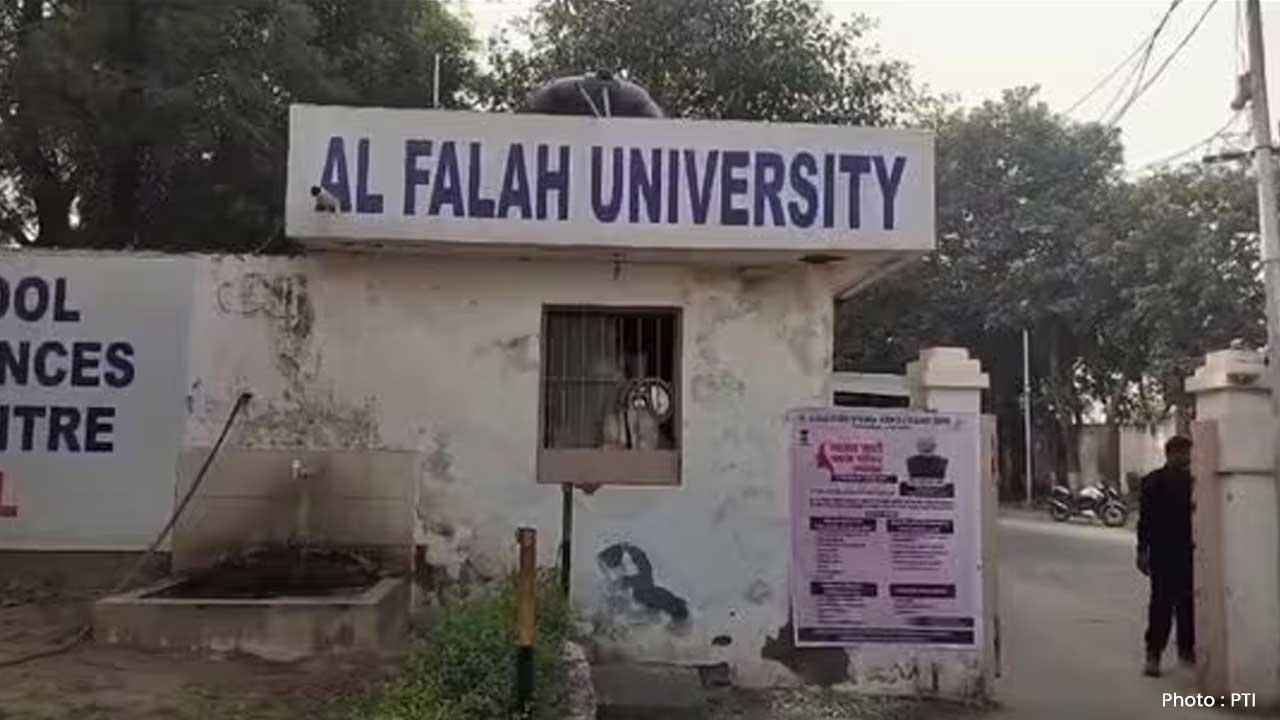
The inquiry into last Monday's tragic explosion in Delhi has shifted focus to four doctors from Al Falah University located in Faridabad, about 45 kilometers from the capital. Authorities suspect their ties to the Pakistan-based extremist group Jaish-e-Mohammad, although the university has stated it bears no responsibility for the actions of these individuals.
The blast, occurring near the Red Fort Metro Station, resulted in the deaths of at least 13 individuals. DNA tests have confirmed that Dr. Umar Mohammad was the driver of the Hyundai i20 linked to the incident. Three other doctors—Dr. Muzammil Shakeel, Dr. Adeel Rather, and Dr. Shaheed Saeed—are currently in police custody.
Sources within the investigation have revealed the four doctors were involved in raising approximately Rs 20 lakh to fund planned terror operations in Delhi. Reports indicate intentions to carry out a series of explosions across the National Capital Region on December 6, marking the anniversary of the Babri Masjid demolition in 1992. Dr. Umar was entrusted with the entire fundraiser and also procured around 26 quintals of NPK fertilizer, valued at roughly Rs 3 lakh, meant for crafting improvised explosive devices (IEDs).
Al Falah University, spread over 70 acres, has emerged as a central node in these plots. Investigators found that Dr. Umar and his associates held meetings at building 17, room 13, where Dr. Muzammil lived, which is believed to have been a site for crucial strategic discussions about attacks in Delhi and Uttar Pradesh.
Additionally, investigators uncovered a network of chemical smuggling from the university's laboratory for bomb-making purposes. It has been reported that Dr. Umar and Dr. Shaheed made arrangements for these chemicals, which were stored in rented premises in Dhauj and Taga villages. Key forensic evidence includes chemical residues, digital records, and coded diaries retrieved from the suspects' quarters and the university lab.
The Delhi explosion reportedly employed ANFO, a combination of ammonium nitrate and fuel oil. Police operations in Faridabad led to the seizure of over 2,000 kg of explosive materials, including 350 kg of ammonium nitrate.
In light of these events, Al Falah University released a statement denouncing the attack and emphasized that its association with the detained doctors was solely occupational. Vice-Chancellor Bhupinder Kaur Anan expressed concern regarding the damaging implications of these developments on the university's reputation.
As investigations continue, authorities are working to unravel the broader network, funding channels, and operational plans behind the attack, underscoring increased security measures throughout Delhi and its neighboring areas.










PM Modi Pays Tribute to Mahatma Gandhi, Urges People to Support Khadi
PM Modi pays tribute to Mahatma Gandhi on Gandhi Jayanti and urges citizens to support Khadi and the

Amazon Seeks to Offload $8 Billion in Nvidia Chips to Investors
Amazon plans to move $8 billion in Nvidia chips to investors, using a new financing model to strengt

Samsung Raises Galaxy S26 Prices as Memory Chip Costs Rise
Samsung raises Galaxy S26 prices in South Korea as rising memory chip costs put pressure on smartpho

Lewis Hamilton Calls Singapore Grand Prix One of F1's Toughest Races
Lewis Hamilton discusses the demanding Singapore Grand Prix and brings Plus44 and Almave to Singapor

Denmark's Pandora Opens World's Largest Jewellery Factory in Vietnam
Pandora opens its largest jewellery factory in Vietnam, expanding global production, strengthening s

Gautam Gambhir Questions Batting-Friendly Pitches After India's Record ODI Chase
Gautam Gambhir questions batting-friendly ODI pitches after India’s record chase, calling for a bett

