
You have not yet added any article to your bookmarks!
Join 10k+ people to get notified about new posts, news and tips.
Do not worry we don't spam!
Post by : Saif Rahman
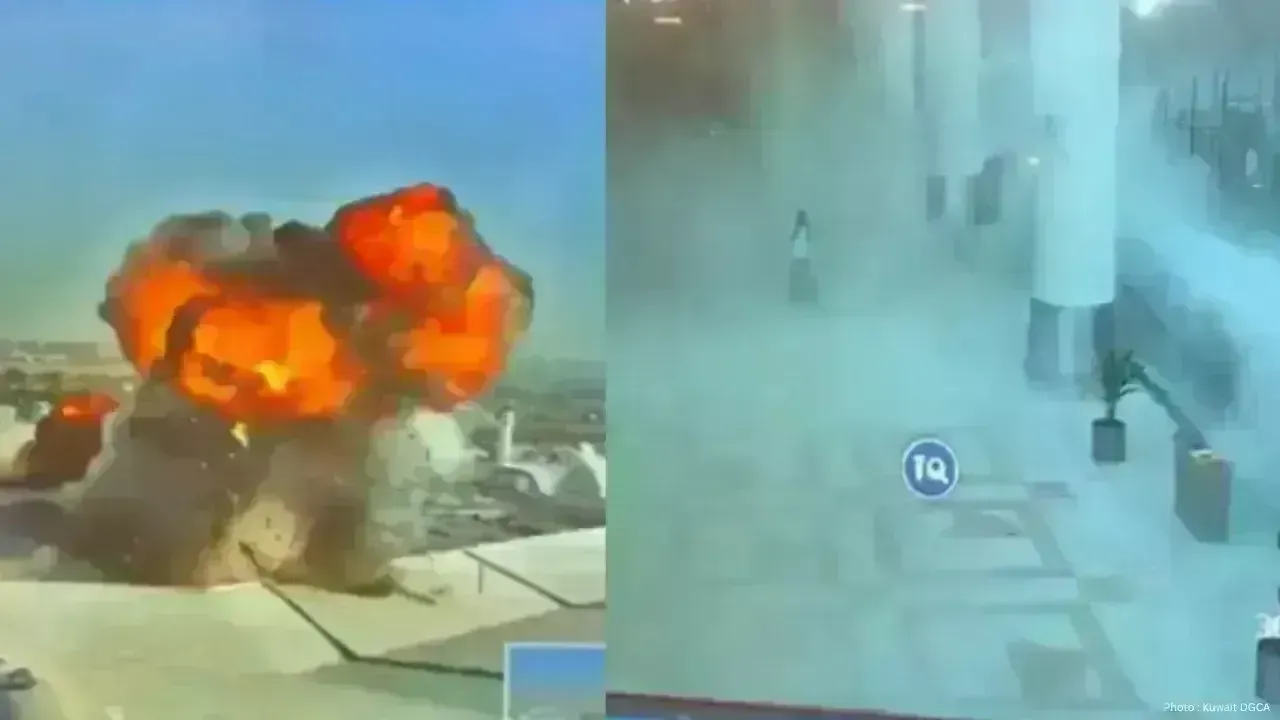
The security of Kuwait’s airports has come into sharp focus following a drone strike that hit the vicinity of Kuwait Airport, causing damage and raising alarms about regional stability. Disturbing images and videos shared on social media depicted destruction, garnering significant attention throughout the Middle East and beyond.
This incident has unfolded amidst escalating military tensions in the region, igniting fears over the safety of vital infrastructure. Airports serve as critical centers for travel, trade, and economic activity, thus any disruption is bound to attract substantial public and international scrutiny.
Kuwaiti officials quickly initiated an assessment of the situation while first responders arrived at the affected site to safeguard travelers, airport staff, and local residents. Investigations were launched to piece together the events surrounding the drone strike.
The attack has reignited conversations regarding the increasing use of drone technology in modern warfare, as these unmanned systems can reach distant targets without exposing personnel to direct risks. Governments globally are ramping up investments in detection and defense systems to counter potential threats driven by technological advancements.
Aviation experts categorize airports as critical national assets, vital for ensuring connectivity both domestically and globally. Disruptions to airport operations can ripple through passenger transport, cargo logistics, and tourism, prompting rigorous security reviews to address even minor damages.
In light of the drone strike, Gulf nations are closely observing developments, having already made substantial investments to fortify their security measures. Protecting transportation, energy facilities, and public infrastructures has been a leading priority for regional governments.
This incident also underscores the broader challenges nations face during times of geopolitical unrest. Security concerns extend to civilian infrastructure essential for everyday life, reinforcing the importance for governments to prioritize their protection to maintain public confidence and stability.
Economic ramifications may arise from threats to critical infrastructure, given airports' crucial role in integrating countries into the global economy through trade and tourism. Disruptions can hinder business activities, creating apprehensions among both travelers and commercial entities.
Today’s airports function as interconnected systems, requiring synergy among airlines, logistics entities, security personnel, and governmental agencies. Coordination is vital for smooth operations, showcasing the need for prompt responses to unforeseen challenges. Therefore, emergency preparedness remains paramount in global airport management.
In incidents like these, public safety remains a significant priority. Authorities focus on securing the area, assisting affected individuals, and conducting detailed inquiries, with transparent communication being vital to alleviate uncertainties and counter misinformation.
The drone strike further complicates the discussions surrounding regional stability. Given the interconnected nature of the Gulf countries, developments in one area can resonate across borders, prompting collaborative efforts regarding defense and public safety.
As threats evolve, the importance of advanced defensive technologies increases. Systems for radar detection, surveillance, and counter-drone capabilities are increasingly recognized as essential components of contemporary security frameworks. Many nations are committed to advancing these technologies to fortify protection for critical infrastructure.
In addition, diplomatic efforts to ease regional tensions are likely to remain high on the agenda. Political leaders acknowledge that achieving long-term stability demands not only robust security protocols but also open channels for dialogue and cooperation among nations.
This incident serves as a sobering reminder of the complexities involved in ensuring security within today’s intricate geopolitical landscape. Ensuring the safety of crucial infrastructure necessitates ongoing vigilance, cutting-edge technology, and effective coordination among multiple agencies to effectively mitigate emerging threats.
As investigations into Kuwait’s response evolve, scrutiny will be placed on how authorities evaluate the repercussions of the attack. This event highlights the essential nature of strong security frameworks, regional partnerships, and preparedness in shielding vital facilities. As the situation develops, focus will remain on initiatives aimed at safeguarding transportation systems and sustaining stability throughout the Gulf region.
#Kuwait News #Kuwait #Middle East #Middle East Crisis #Middle East Conflict










PM Modi Pays Tribute to Mahatma Gandhi, Urges People to Support Khadi
PM Modi pays tribute to Mahatma Gandhi on Gandhi Jayanti and urges citizens to support Khadi and the

Amazon Seeks to Offload $8 Billion in Nvidia Chips to Investors
Amazon plans to move $8 billion in Nvidia chips to investors, using a new financing model to strengt

Samsung Raises Galaxy S26 Prices as Memory Chip Costs Rise
Samsung raises Galaxy S26 prices in South Korea as rising memory chip costs put pressure on smartpho

Lewis Hamilton Calls Singapore Grand Prix One of F1's Toughest Races
Lewis Hamilton discusses the demanding Singapore Grand Prix and brings Plus44 and Almave to Singapor

Denmark's Pandora Opens World's Largest Jewellery Factory in Vietnam
Pandora opens its largest jewellery factory in Vietnam, expanding global production, strengthening s

Gautam Gambhir Questions Batting-Friendly Pitches After India's Record ODI Chase
Gautam Gambhir questions batting-friendly ODI pitches after India’s record chase, calling for a bett

