
You have not yet added any article to your bookmarks!
Join 10k+ people to get notified about new posts, news and tips.
Do not worry we don't spam!
Post by : Saif Rahman
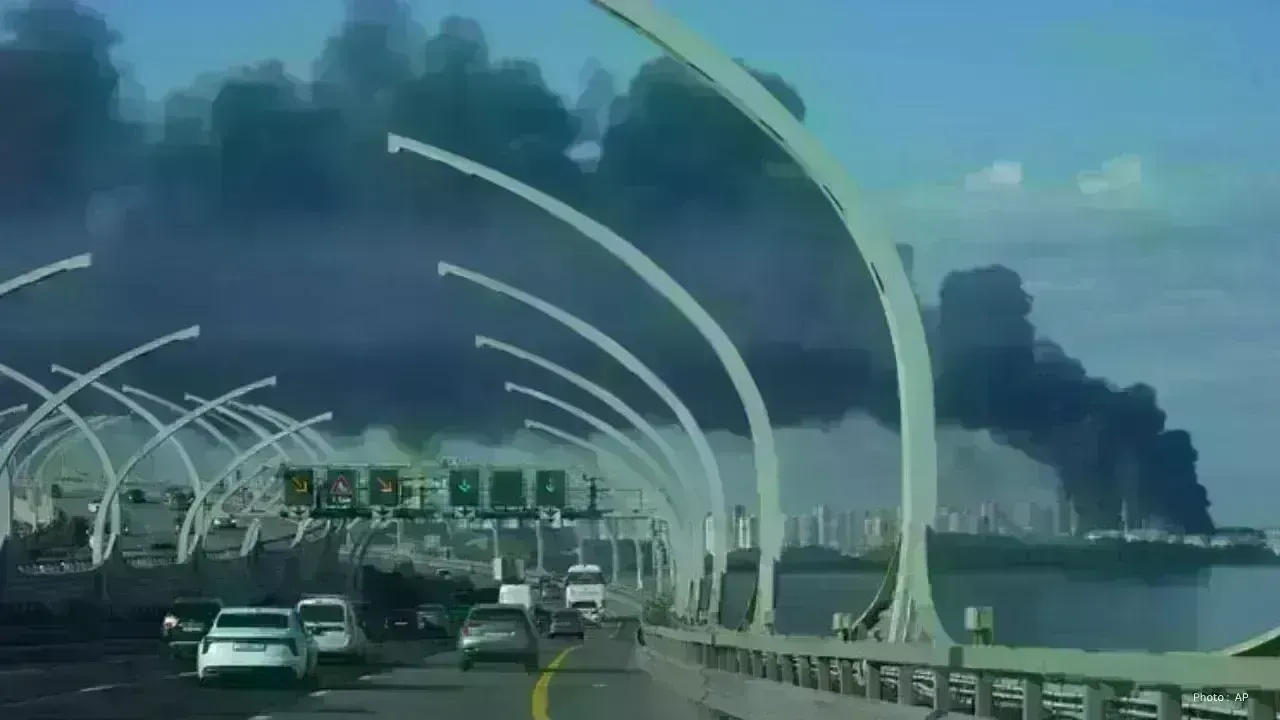
A drone strike on an oil terminal outside St. Petersburg has shed light on the expanding scope of the Russia-Ukraine war. This incident coincided with Russian President Vladimir Putin's attendance at a significant economic forum, emphasizing the war's reach beyond traditional conflict zones.
Reports state that the targeted facility is crucial to energy supply in Russia's second-largest metropolis. Authorities reacted swiftly, evaluating damage and operational impacts. This strike is indicative of a trend towards extended-range military operations becoming more prevalent in the ongoing clash.
Both parties have altered their military strategies since the conflict began, adapting to shifting battlefield realities. Long-range drone strikes have become essential, enabling attacks on distant targets crucial for military logistics and energy supplies.
The recent event exemplifies the increasing reliance on drones in warfare. Compared to conventional forces, unmanned aerial vehicles can hit vital sites at lower operational costs, making them pivotal in modern conflicts.
Energy facilities have regularly found themselves at the heart of military actions during this war. This includes oil terminals and fuel depots, integral to economic activity and transportation. Disruptions here extend impacts beyond mere physical destruction.
The timing of the drone attack has drawn particular focus, occurring amidst a significant economic event in St. Petersburg that brought together leaders from various sectors. Such forums often serve as platforms for nations to showcase economic strengths and attract international investments.
Security concerns loom large during such high-profile gatherings. This incident raises critical questions about risk management and safeguarding essential assets far removed from active conflict zones. Global governments are examining how modern technologies reshape traditional security paradigms.
The ongoing military clash between Russia and Ukraine illustrates that the dynamics of modern warfare extend past conventional battlefields. Economic and infrastructure assets are now part of the broader strategic struggle, amplifying effects on civilian populations.
For businesses and investors, these attacks create uncertainty. Disruptions at energy facilities can have a ripple effect on supply chains and economic performance, affecting market perceptions and raising stability concerns.
The geopolitical ramifications cannot be overstated. As the conflict endures, both nations are vying for tactical advantages while navigating military, economic, and diplomatic pressures. Long-range attacks are one facet of this complex contest.
The indirect consequences of such strikes often impact civilian communities. Fears about security, infrastructure resilience, and economic health can undermine public confidence, particularly in areas linked to vital facilities.
International monitors remain vigilant regarding developments. This conflict is among Europe's crucial geopolitical challenges, with implications for global energy markets and security strategies. Incidents involving strategic infrastructure attract scrutiny for their broader ramifications.
The editorial viewpoint on the St. Petersburg attack illustrates a shift in modern warfare paradigms. Technological advances have widened operational ranges while exposing critical infrastructure to vulnerabilities. Adapting security strategies to these emerging threats is essential for governments.
Moreover, it highlights the necessity of safeguarding facilities meeting public and economic needs. Energy infrastructure is vital for millions, and fostering resilience against potential threats is increasingly urgent for nations.
As the Russia-Ukraine conflict evolves, similar incidents may continue influencing the security landscape. Strengthening defenses and preparedness is likely to gain priority in the coming years.
This strike near St. Petersburg serves as a potent reminder that the ramifications of modern warfare stretch well beyond the confines of traditional battlefields. It illustrates the intricate challenges that governments and communities face amidst ongoing geopolitical rivalries.










PM Modi Pays Tribute to Mahatma Gandhi, Urges People to Support Khadi
PM Modi pays tribute to Mahatma Gandhi on Gandhi Jayanti and urges citizens to support Khadi and the

Amazon Seeks to Offload $8 Billion in Nvidia Chips to Investors
Amazon plans to move $8 billion in Nvidia chips to investors, using a new financing model to strengt

Samsung Raises Galaxy S26 Prices as Memory Chip Costs Rise
Samsung raises Galaxy S26 prices in South Korea as rising memory chip costs put pressure on smartpho

Lewis Hamilton Calls Singapore Grand Prix One of F1's Toughest Races
Lewis Hamilton discusses the demanding Singapore Grand Prix and brings Plus44 and Almave to Singapor

Denmark's Pandora Opens World's Largest Jewellery Factory in Vietnam
Pandora opens its largest jewellery factory in Vietnam, expanding global production, strengthening s

Gautam Gambhir Questions Batting-Friendly Pitches After India's Record ODI Chase
Gautam Gambhir questions batting-friendly ODI pitches after India’s record chase, calling for a bett

