
You have not yet added any article to your bookmarks!
Join 10k+ people to get notified about new posts, news and tips.
Do not worry we don't spam!
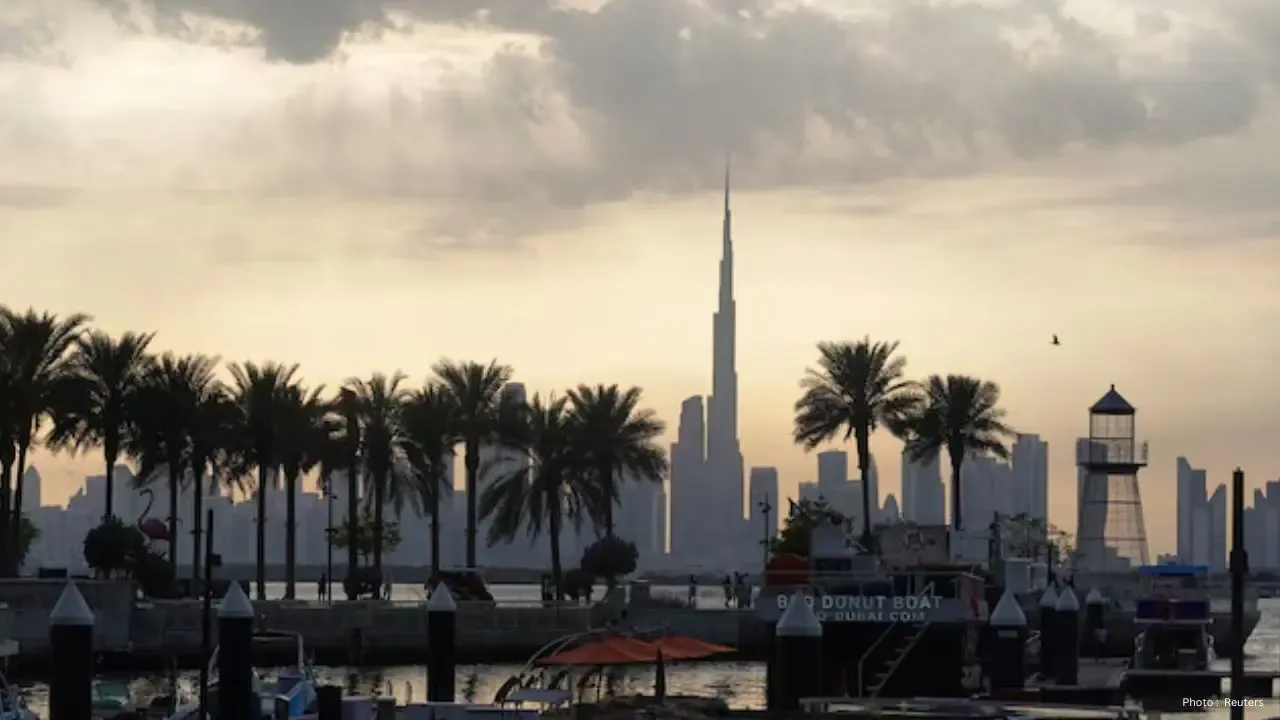
Post by : Saif Rahman
Dubai is actively addressing the recent challenges posed by the Iran war shock, a pivotal issue impacting the Gulf's economy, as the emirate seeks to uphold its reputation as a premier center for trade, tourism, finance, and global investment. The conflict disrupted travel and unsettled investor confidence, prompting the leadership in Dubai to engage swiftly with major corporations, financial entities, and industry stalwarts to devise strategies for economic recovery. Their objective is clear: to mitigate the temporary disruption and ensure the lasting appeal of one of the Middle East's most interconnected cities.
For Dubai, the focus extends beyond immediate recovery. The city’s future has been built upon its image as a secure, efficient entry point between East and West. Its economy thrives on sectors like aviation, real estate, logistics, hospitality, and financial services, with oil being a minor player. This reliance on confidence means that any regional disturbances impacting travel, trade, or investment can pose significant risks to the city’s economic landscape, prompting efforts to shield its appeal to multinational firms, discerning investors, and an inflow of tourists.
In light of these concerns, Dubai’s response has been notably swift. Shortly after the onset of the regional conflict, key officials gathered business leaders for critical discussions aimed at alleviating economic repercussions. Insights from these talks laid the groundwork for a broader response, featuring financial assistance, sector-specific support, and assurances to the global market that Dubai remains operational and competitive amid regional turmoil.
One of the significant outcomes was a support package of 2.5 billion dirhams, primarily targeting the tourism and retail sectors, which were most affected by the crisis. On a broader scale, the UAE introduced liquidity support measures to safeguard the financial ecosystem and ensure the flow of credit. These initiatives reflect how seriously the leadership is tackling the pressing challenges posed by geopolitical tensions. Disruptions, even when not physical, can trigger waves of cancellations and hesitations among tourists and investors alike.
The tourism sector is particularly sensitive to these fluctuations. Dubai has transformed into a global hub for leisure, luxury, exhibitions, and business travel over the years. Yet, conflict-related fears can have immediate repercussions, regardless of the city’s operational status. Current reports indicate a recovery in restaurant activity and flights; however, hotel occupancy continues to face challenges. This is significant as the hospitality sector is intricately linked to the city’s overall economy, with diminishing visitors directly impacting spending across various sectors.
Trade and logistics also play crucial roles in this equation. As a vital shipping and re-export hub connecting multiple continents, concerns regarding regional conflict can lead logistics companies to reconsider transit routes, causing a shift in trade flows towards neighboring countries. Such developments serve as red flags, indicating potential vulnerabilities for Dubai’s economic model that relies heavily on being recognized as the preferred route for both goods and services in the region.
Meanwhile, Dubai’s financial sector is undergoing scrutiny as well. The city has invested considerable effort over the last few years to attract global financial firms, and its development into a financial and wealth management hub is evident. Still, trust occupies a central role here. If investors perceive Dubai as increasingly vulnerable to regional skirmishes, there could be a gradual withdrawal of capital. This prompts officials to engage directly with financial institutions and major stakeholders to bolster confidence in the business landscape.
Indicators of shifting sentiment are already evident. Reports of foreign investor withdrawals from Dubai’s stock market underline the volatile nature of confidence. While such changes may not indicate permanent damage, they highlight how rapidly investor perceptions can shift in light of regional uncertainties. Analysts forecast that the Gulf's economies could experience marked slowdowns if the instability persists, raising concerns for a city driven more by services and investment than oil.
Dubai’s leadership recognizes that recovery can’t rely solely on emergency measures. Effective communication strategies emphasizing the city’s long-standing growth plans, including infrastructure and transport projects, are vital. Thus, officials are reinforcing their ongoing investments, signaling that Dubai is committed to future prosperity despite challenges ahead. This method has proven efficient as Dubai has a history of reaffirming its ambitions during uncertain times through infrastructure development.
Yet, a deeper issue remains that cannot be remedied by marketing alone. Dubai's global positioning as a safe and attractive living, working, and investing locale faces challenges from the recent Iran conflict. The turmoil has tested the underlying conviction that this emirate remains insulated from regional conflicts. Conflicts can disrupt operations, redirect shipments, and induce visitor hesitancy.
Dubai's current strategy underscores the dual nature of its challenges—economic and reputational. The city must persuade international enterprises and travelers that recent disruptions are anomalies rather than the new norm. It must illustrate that its systems are robust enough to withstand crises without long-standing repercussions. Ultimately, competing effectively with other Gulf cities for investment and attention hinges on how well Dubai navigates this narrative.
Dubai is armed with several advantages: a dynamic administration, strong state-backed enterprises, extensive global financial connections, and a proven resilience to past disruptions. These attributes provide a foundation allowing for deeper responses than many other cities could muster amidst similar dilemmas. However, resilience shouldn’t be mistaken for invulnerability, especially in light of potential economic ramifications from conflicts that extend beyond immediate disruptions.
In the upcoming months, Dubai's recovery trajectory will largely hinge on regional stability and whether businesses perceive that worse conditions have passed. If normalcy returns, the city could swiftly regain momentum. Conversely, prolonged uncertainty may necessitate further assistance targeting specific sectors. Either way, this episode highlights a critical takeaway: in a city built on trust, confidence equates to invaluable infrastructure. Safeguarding Dubai's esteemed hub status thus includes nurturing both.
Dubai is responding to the fallout from the conflict to safeguard its status as a primary Gulf business center, understanding the vital need for support and confidence restoration.
A substantial 2.5 billion dirham assistance package has been introduced, focusing predominantly on the hardest-hit sectors such as tourism and retail, while broader financial measures were also implemented nationally.
The regional unrest has led to travel disruptions, diminished hotel demand, investor anxieties, and challenges to Dubai's portrayal as a secure commercial hub in the region.
Dubai's economy heavily relies on sectors like tourism, logistics, finance, real estate, and international trade, interlinking its success with its reputation as a reliable conduit between Asia, Europe, Africa, and the Middle East.
With strong infrastructure, financial backing, and governmental support, Dubai is positioned to recover; yet, the speed will depend on regional conditions and the reestablishment of confidence among investors and tourists.









PM Modi Pays Tribute to Mahatma Gandhi, Urges People to Support Khadi
PM Modi pays tribute to Mahatma Gandhi on Gandhi Jayanti and urges citizens to support Khadi and the

Amazon Seeks to Offload $8 Billion in Nvidia Chips to Investors
Amazon plans to move $8 billion in Nvidia chips to investors, using a new financing model to strengt

Samsung Raises Galaxy S26 Prices as Memory Chip Costs Rise
Samsung raises Galaxy S26 prices in South Korea as rising memory chip costs put pressure on smartpho

Lewis Hamilton Calls Singapore Grand Prix One of F1's Toughest Races
Lewis Hamilton discusses the demanding Singapore Grand Prix and brings Plus44 and Almave to Singapor

Denmark's Pandora Opens World's Largest Jewellery Factory in Vietnam
Pandora opens its largest jewellery factory in Vietnam, expanding global production, strengthening s

Gautam Gambhir Questions Batting-Friendly Pitches After India's Record ODI Chase
Gautam Gambhir questions batting-friendly ODI pitches after India’s record chase, calling for a bett

