
You have not yet added any article to your bookmarks!
Join 10k+ people to get notified about new posts, news and tips.
Do not worry we don't spam!
Post by : Anis Farhan
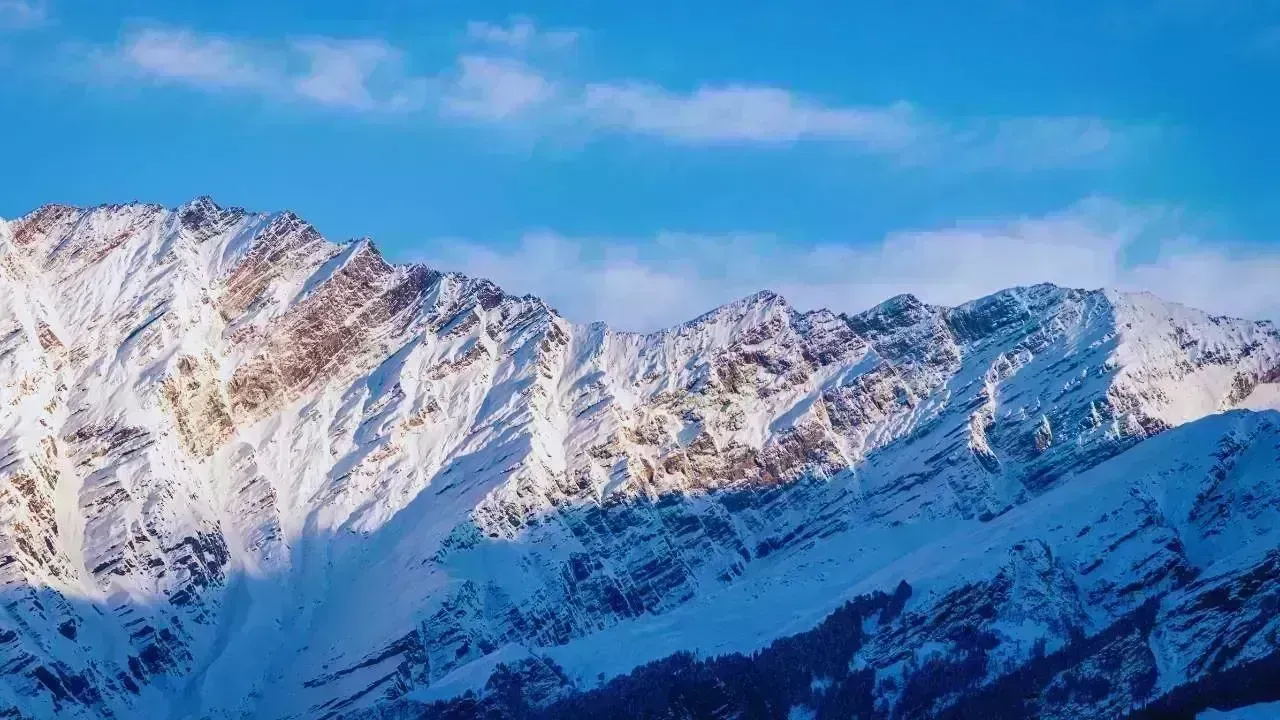
For generations, the Eastern Himalayas were considered dependable. Winters brought gentle snowfall, summers were refreshingly cool, and rivers followed rhythms that villagers learned by heart. Markets opened when travelers arrived from the plains, and forests offered steady protection against extremes.
Today, something has shifted.
The air is warmer. Rains arrive suddenly and fall harder. Springs dry without warning. Forest fires scorch slopes once permanently green. Glaciers shrink quietly, while lakes above villages swell dangerously. And hill towns, once viewed as safe refuges from heat and chaos, are beginning to look vulnerable.
From Sikkim and Arunachal Pradesh to northern West Bengal and parts of eastern Nepal and Bhutan, communities are sensing what science confirms: the Eastern Himalayas are warming at an alarming pace.
This article explains how that warming is rewriting life in hill towns, what kinds of disasters are becoming more likely, and why maps—literal ones—are now changing to reflect a future that no longer looks like the past.
The Eastern Himalayas are no ordinary mountains. They act as:
Climate regulators
Freshwater suppliers
Biodiversity corridors
Cultural sanctuaries
Geological buffers
The rivers flowing out of these mountains feed tens of millions downstream. Forests stabilize slopes, control rainfall distribution, and cool entire geographic belts. When this region shifts, half of eastern South Asia feels it.
Scientific agencies globally are tracking these changes, including the Intergovernmental Panel on Climate Change, which has repeatedly highlighted mountain regions as warming faster than lowlands.
Higher altitude areas feel temperature changes earlier and more intensely. Mountains are warming not just faster—but differently.
Over the last two decades, average temperatures in the Eastern Himalayas have climbed steadily, especially during winter months. Winters are shorter. Snowlines rise. Cold nights become rarer.
This matters because colder climates naturally regulate:
Ice formation
River consistency
Soil moisture
Forest cycles
Remove the cold, and the system destabilizes.
Rainfall is no longer seasonal; it is sudden and violent. Long dry spells are followed by intense cloudbursts. Instead of steady rain soaking land slowly, water now crashes down, rushing over surfaces and into valleys.
This creates:
Flash floods
Landslides
Soil erosion
Washed-away bridges
Sudden river surges
Communities do not adapt easily to unpredictability.
Glaciers feed rivers gradually. As they melt faster, two dangerous things happen:
Water availability changes unpredictably
Glacial lakes form and expand rapidly
The risk of a glacial lake bursting is no longer hypothetical. Every growth in lake size raises the threat of catastrophic floods.
Most hill towns were built when weather patterns were predictable. Roads hugged slopes without heavy reinforcement. Homes used timber and stone without flood-proofing. Markets formed near rivers that were calm and stable.
Now, rainfall is fierce. Soils slide. Rivers overflow.
Structures not designed for climate stress are collapsing under new realities.
Earlier maps marked low-lying plains as flood-prone and steep slopes as landslide zones. But warming has altered that equation.
Now:
New landslide zones appear where none existed
Flood boundaries expand into previously safe settlements
Forest fire risk enters areas once damp year-round
Glacier-fed rivers behave erratically
Traditional hazard boundaries mean little in a shifting world.
District administrations and town planners are increasingly relying on revised risk mapping using:
Satellite imagery
Rainfall trend studies
River flow simulations
Landslide history analysis
Scientific support for this process is often provided by agencies like the India Meteorological Department, which tracks long-term mountain weather signals.
These new maps now determine:
Where homes can be built
Which roads should be relocated
Where emergency shelters must exist
Which zones must remain undeveloped
Maps are no longer geographic tools.
They are survival manuals.
Many Himalayan towns depend not on rivers but on underground springs. These springs:
Recharge slowly
Depend on stable rainfall
Are sensitive to temperature shifts
Warmer climates disrupt natural groundwater flow. As surface heat increases, less rain is absorbed, causing springs to dry.
This leads to:
Water rationing
Tanker dependence
Conflict over supply
Migration from highlands
Water scarcity is redefining settlement patterns.
Plant species adapted to cold temperatures are struggling. New, invasive vegetation enters as climate changes.
What happens then?
Native soil binding weakens
Fire risk rises
Ecosystems fracture
Wildlife migrates unpredictably
Forests once acted like climate shields. Now some are becoming climate victims.
Landslides rarely give warnings. They follow:
Soil exhaustion
Over-saturated slopes
Tree removal
Road cutting
Vibration from construction
Climate warming multiplies all causes.
Hill towns are learning too late that landslides kill not through drama—but through inevitability.
Eastern Himalayan towns depend heavily on tourism:
Homestays
Trekking
Road travel
Winter travel
Adventure sports
But frequent landslides and unpredictable rain:
Cut off connectivity
Reduce tourist confidence
Disrupt seasonal income
Harm employment
Climate instability is hurting livelihoods.
Warming introduces:
Mosquito-borne illnesses at higher altitudes
Respiratory problems due to wildfire smoke
Mental stress from disaster exposure
Water-borne diseases after flash flooding
Communities lack healthcare infrastructure built for climate emergencies.
When:
Roads wash out
Land slides
Power disappears
Water is scarce
Children stop going to school.
Interrupted education becomes a quiet casualty of climate instability. Long travel routes in dangerous terrain make attendance impossible during bad months.
New buildings are increasingly:
Elevated
Reinforced
Weather-sealed
Drainage-equipped
Traditional designs are merging with engineering.
Villages are:
Shifting uphill
Avoiding river banks
Abandoning unstable slopes
It is one of the hardest decisions a community can make—but survival demands sacrifice.
Hill towns now rely on:
Rainfall alerts
River level tracking
Community radio
Siren systems
Mobile notifications
Preparedness reduces panic.
People are learning:
Evacuation routes
Risk signs in soil and water
Landslide warning behaviors
Emergency communication plans
Awareness now replaces ignorance as protection.
If present trends continue:
Entire villages may shift
Rivers may change course
Forest types will transform
Tourism income may collapse
Migration will increase
The Eastern Himalayas may look nothing like they once did.
Downstream cities and farmlands depend on Himalayan stability.
When mountains change:
Rivers flood cities
Sediments choke dams
Water patterns shift
Agriculture suffers
What happens in the hills does not stay in the hills.
Unregulated development worsens disaster damage.
Trees are:
Temperature regulators
Soil stabilizers
Flood fighters
Biodiversity guardians
Deforestation is reckless in warming mountains.
Visitors must:
Respect fragile terrain
Reduce waste
Support local conservation
Avoid dangerous season travel
Tourism must survive responsibly—or not survive at all.
They can:
Adapt now
Or
Suffer later
There is no neutral ground With warming slopes.
Mountains were once symbols of permanence.
Today, they change faster than plains.
The Eastern Himalayas are warming—not in theory, but in lived experience. When disaster maps change, it is not just geography shifting. It is life reorganizing itself around risk.
Hill towns are not waiting anymore.
They are moving homes.
Moving schools.
Moving roads.
Moving futures.
The map is changing.
And with it, the story of the mountains themselves.
This article is for informational purposes only and is not intended as scientific, legal, or environmental policy advice. Climate conditions vary by location, and readers should consult local authorities and official disaster management agencies for region-specific guidance.








Jacob Bethell Returns as England Name Squads for Australia Tour
England name ODI and T20 squads for the Australia tour, with Jacob Bethell returning from injury and

Beauden Barrett Opens Up About Mental Struggles During All Blacks Exile
Beauden Barrett discusses his confidence struggles after missing six tests, his return against Austr

IMF Says AI Investment Supports Global Growth Despite Energy Shock
IMF says AI investment is supporting global growth near 3%, with Asian economies benefiting from ris

Will O'Rourke Ruled Out of New Zealand's India Series
New Zealand fast bowler Will O'Rourke will miss the India series with hamstring and calf injuries as

AI Companies Expected to Drive Most US Earnings Growth in Q3
AI companies are expected to drive US third-quarter earnings growth as investors assess tech profits

Money Market Funds See Record Inflows as Global Bond Selloff Intensifies
Global money market funds attract $153.81 billion as bond yields rise, inflation fears persist and i

