You have not yet added any article to your bookmarks!
Join 10k+ people to get notified about new posts, news and tips.
Do not worry we don't spam!
Post by : Anis Farhan
Every day, countless people send messages about personal matters without a second thought. Topics ranging from health to finances flow seamlessly through various messaging apps. These platforms often assure users of their safety with technical jargon, notably the buzzword: “end-to-end encryption.”
While it sounds impressive and offers peace of mind, users often overlook the fact that encryption does not equate to full security. It isn’t an impenetrable barrier; rather, it's a tool, albeit a strong one, with its limitations.
In our current era, marked by a heightened awareness of privacy, comprehending what this term implies is crucial. While encryption secures messages during transmission, it does not necessarily ensure protection for you.
Let’s dive deeper into the essence of end-to-end encryption, examining both its capabilities and misunderstandings.
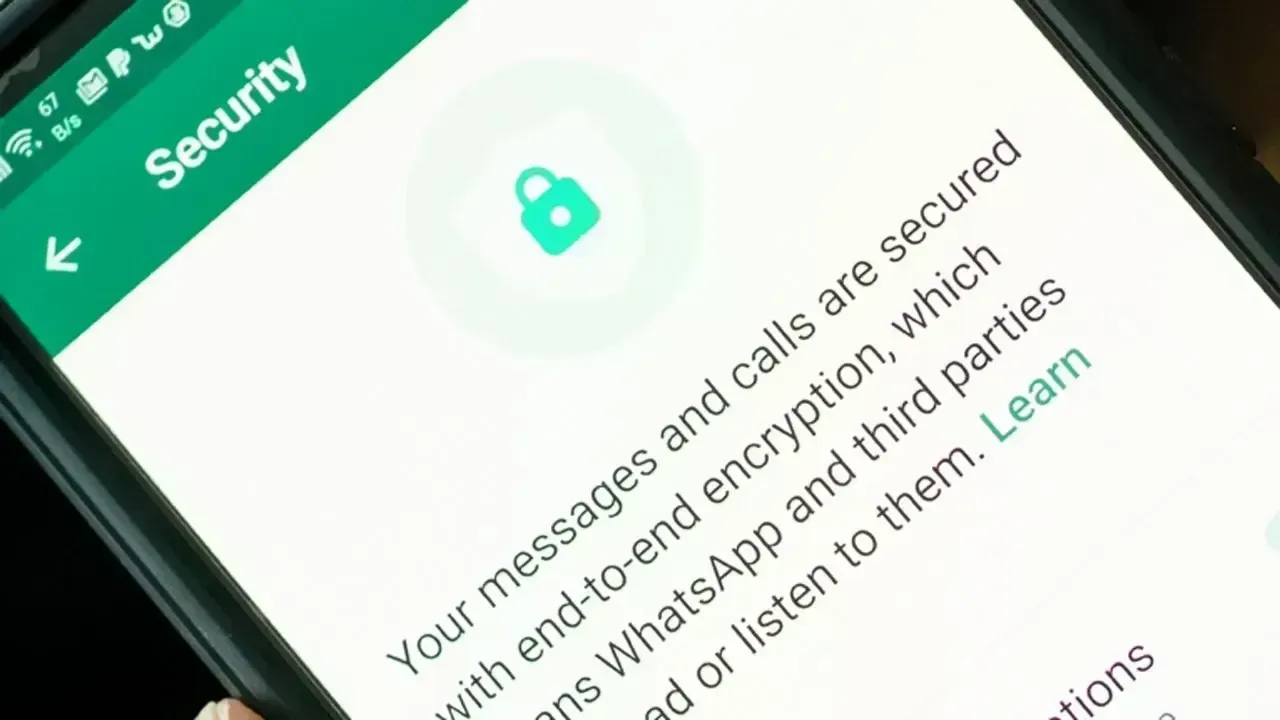
End-to-end encryption means your message transforms into a coded format before departing from your device and remains that way until it reaches the recipient's device.
Only the sender and receiver can decipher the message.
Not the app.
Not the company.
Not hackers.
Not internet service providers.
In theory.
Picture sealing a letter in a box, locking it, and sending it. The courier can transport the box but cannot open it. Only the correct key holder on the receiving end can unlock it.
This encapsulates the concept of encryption.
When you send a message, several invisible processes happen behind the scenes:
Your message gets mathematically scrambled with a key. Without it, the message appears as gibberish.
The scrambled message navigates through networks and servers, remaining unreadable.
The receiver's device applies the digital key to revert the scrambled message back to readable text.
At no stage during transit can anyone intercept and interpret it as plain text. That is the assurance.
Popular platforms like WhatsApp, Signal, and features on Apple and Google devices tout end-to-end protection. Each platform applies encryption distinctly; some default to it while others provide it as an option.
Encryption isn't just a binary on or off; it reflects a continuum.
Encryption proves effective against specific threats.
Hackers cannot decipher your messages while prying on Wi-Fi networks.
Internet providers cannot examine the content of your messages.
Messaging platforms cannot read the content of encrypted messages.
Mass data leaks do not expose the content of your messages directly.
This level of protection renders encryption vital for safeguarding your speech and privacy.
This is where misconceptions arise.
Encryption secures messages in transit.
However, it fails to protect against:
If your device is compromised, encryption loses its significance.
Messages can be viewed on your display.
Numerous users opt to back up their conversations onto cloud storage.
Here, the integrity of encryption can falter.
If unencrypted chats are stored in the cloud, they can be accessed by the authorities or hackers, even when live messages remain protected.
End-to-end encryption doesn’t automatically encompass backups unless specified.
Encryption safeguards the content but not the context.
Data such as:
These details get recorded.
In many cases, metadata can unearth your patterns without even reading your messages.
Anyone can capture a screenshot of a message.
Encryption does not provide a barrier against sharing.
If the recipient retains or disseminates the content, privacy disappears instantly.
No encryption system operates in isolation from human behavior.
A perfectly encrypted application is futile if:
Security fails at the intersection of behavior and risk.
Governments often criticize encryption.
Reasons include:
Both viewpoints coexist.
Encryption remains neutral in essence.
It’s the context of usage that isn’t.
Directly? Rarely.
Indirectly? Frequently.
They may:
While encryption appears strong in theory, the reality involves targeting people instead of algorithms.
Trust drives consumer choices.
Encryption has transitioned into:
Brands that promote stronger privacy claims attract more users.
Yet, companies cannot manage how users act afterward.
Although the terminology surrounding security can be comforting, absolute safety online is a myth.
Encryption complicates breaches but doesn't render them impossible.
It merely makes them more arduous.
No.
Certain apps:
Others:
Being “encrypted” does not necessarily mean “private.”
Always scrutinize what additional data is gathered.
Reality: Anyone who can access your device can see them.
Reality: Metadata speaks volumes.
Reality: Security cannot replace sound judgment.
Reality: They completely undermine encryption.
Reality: It has never had that capability.
Encryption provides just one layer of protection.
Utilize biometric security as a first line of defense.
Account breaches nullify encryption benefits.
Many apps have excessive tracking capabilities.
Default cloud settings often neglect security.
While encryption provides robust protection, side channels can still pose risks.
Remember, digital content can persist indefinitely.
Certain applications offer messages that self-destruct.
Nevertheless, this does not ensure complete removal.
Recipients can still:
“Disappearing” often signifies public elimination, not private erasure.
It is essential for:
In these cases, it can be a matter of life or death.
For casual conversations, it primarily aims to uphold dignity.
Many parents trust that encryption shields their children.
In reality, while it conceals activities, it doesn’t guarantee safety.
Education, supervision, communication, and digital awareness are vital.
Privacy, combined with ignorance, can be dangerous.
It safeguards data.
But not decisions.
It guarantees secure transport.
But not interpersonal connections.
It conceals content.
But not outcomes.
Encryption will continue to advance.
However, surveillance mechanisms will adapt as well.
This isn’t a competitive conflict with a singular victor.
It’s an ongoing arms race.
Privacy remains a fleeting advantage.
End-to-end encryption is a monumental advancement.
In an era of surveillance, it upholds the right to speech.
It provides liberty in restrictive environments.
It ensures dignity in the digital realm.
However, it’s not a miracle solution.
It doesn’t eliminate folly.
It doesn’t prevent screenshots.
It doesn’t shield feelings.
It doesn’t guard against poor choices.
Encryption secures your exchanges.
Wisdom secures your existence.
In today’s online landscape,
Knowledge is the most formidable key you can possess.
This article serves informational purposes only and should not be construed as legal, cybersecurity, or technical guidance. For personal data protection, consult qualified professionals.










Jacob Bethell Returns as England Name Squads for Australia Tour
England name ODI and T20 squads for the Australia tour, with Jacob Bethell returning from injury and

Beauden Barrett Opens Up About Mental Struggles During All Blacks Exile
Beauden Barrett discusses his confidence struggles after missing six tests, his return against Austr

IMF Says AI Investment Supports Global Growth Despite Energy Shock
IMF says AI investment is supporting global growth near 3%, with Asian economies benefiting from ris

Will O'Rourke Ruled Out of New Zealand's India Series
New Zealand fast bowler Will O'Rourke will miss the India series with hamstring and calf injuries as

AI Companies Expected to Drive Most US Earnings Growth in Q3
AI companies are expected to drive US third-quarter earnings growth as investors assess tech profits

Money Market Funds See Record Inflows as Global Bond Selloff Intensifies
Global money market funds attract $153.81 billion as bond yields rise, inflation fears persist and i