
You have not yet added any article to your bookmarks!
Join 10k+ people to get notified about new posts, news and tips.
Do not worry we don't spam!
Post by : Meena Ariff
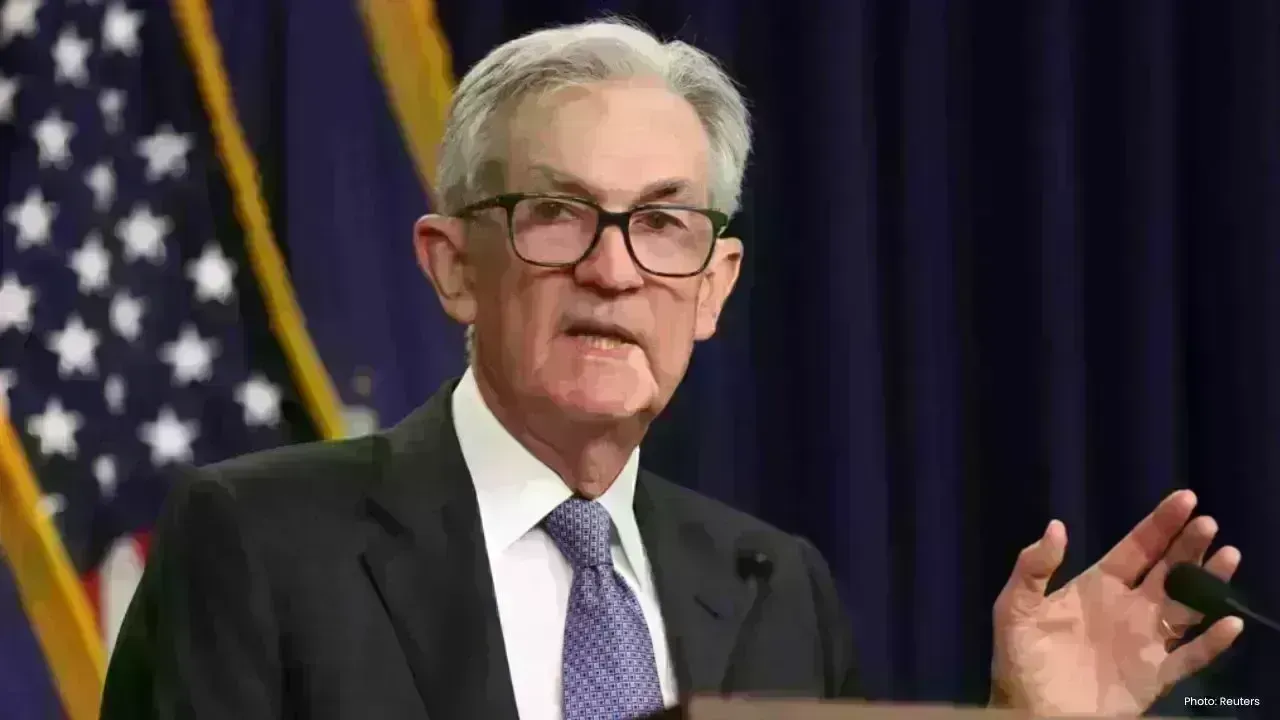
In a decisive move, the US Federal Reserve has decreased its benchmark interest rate for the third time this year, lowering it by 0.25 percentage points to a range of 3.50%–3.75%—marking its lowest level in three years. This action comes as a response to internal disputes within the central bank regarding how to navigate a sluggish job market alongside ongoing inflation concerns.
Recent economic forecasts from the Fed suggest that further cuts may be on the horizon next year, though officials stress that these decisions will rely heavily on forthcoming economic indicators.
Jerome Powell, the Fed Chair, emphasized the necessity of assessing the impacts of previous rate cuts before considering more drastic actions. He commented, “We are well-positioned to wait and see how the economy evolves,” reminding reporters that upcoming data will be crucial before their next meeting in January.
While some voices, including former President Donald Trump, advocate for more aggressive cuts, Powell underscored the complexities of managing inflation and employment simultaneously, stating, “You can’t do two things at once.”
This decision did not achieve unanimous support, reflecting increasing rifts within the Fed. Three officials dissented: Stephen Miran favored a more significant cut of 0.5 percentage points, whereas Austan Goolsbee and Jeffrey Schmid preferred maintaining the current rate.
Following the announcement, Trump criticized the Fed, arguing that the reduction could have been “at least doubled” and asserting that US rates should be “the lowest in the world.”
The prolonged US government shutdown, which ended in November, has contributed to a lack of trustworthy economic data, leaving Fed officials with limited insights. At the moment, worries about a cooling labor market are overshadowing inflation anxieties.
Recent statistics reveal that the unemployment rate rose slightly from 4.3% to 4.4% in September, highlighting increasing joblessness. Lowering rates is aimed at boosting the economy by making borrowing less expensive for both businesses and consumers.
Inflation persists above the Fed's 2% target, hitting 3% in September for the first time since January. Analysts suggest that while tariffs have elevated some prices, recent weaker-than-expected inflation data may give the Fed room to focus more on labor market support.
Colleen McHugh, a consultant for investment platform Wealthify, pointed out that ongoing high inflation presents challenges for rate reductions, yet the weak job market likely swayed the Fed’s choice. She anticipates one or two additional cuts in the upcoming year, dependent on economic trends.
Powell recognized the heightened tension within the Fed regarding its dual responsibilities—maintaining price stability and achieving maximum employment. He described the deliberation as both respectful and thorough, likely a result of conflicting pressures.
Looking forward, analysts note that forthcoming data on November’s labor market and inflation may provide clearer direction for interest rate strategies. Any indication of further job market slowdowns could intensify calls for continued easing.
Compounding the uncertainty is Trump’s quest for a successor to Powell, whose term wraps up next May. Kevin Hassett, a former Trump economic advisor, is seen as a frontrunner for the position, alongside economist Kevin Warsh, current Fed Governor Christopher Waller, and Treasury Secretary Scott Bessent.
Experts advise that the new Fed chair must maintain independence and credibility; any impression of favoritism towards the White House could unsettle the market. Thomas Hoenig, a senior fellow at the Mercatus Center, cautioned that a chair perceived as politically influenced might spark strong market reactions.
Despite inquiries about whether the ongoing selection process is affecting his decisions, Powell reiterated that it has no impact on his strategies, simply responding with a, “No.”
As the Fed deals with these competing tensions, market observers are keenly watching how its interest rate policy adapts to the evolving economic landscape in the coming months.










PM Modi Pays Tribute to Mahatma Gandhi, Urges People to Support Khadi
PM Modi pays tribute to Mahatma Gandhi on Gandhi Jayanti and urges citizens to support Khadi and the

Amazon Seeks to Offload $8 Billion in Nvidia Chips to Investors
Amazon plans to move $8 billion in Nvidia chips to investors, using a new financing model to strengt

Samsung Raises Galaxy S26 Prices as Memory Chip Costs Rise
Samsung raises Galaxy S26 prices in South Korea as rising memory chip costs put pressure on smartpho

Lewis Hamilton Calls Singapore Grand Prix One of F1's Toughest Races
Lewis Hamilton discusses the demanding Singapore Grand Prix and brings Plus44 and Almave to Singapor

Denmark's Pandora Opens World's Largest Jewellery Factory in Vietnam
Pandora opens its largest jewellery factory in Vietnam, expanding global production, strengthening s

Gautam Gambhir Questions Batting-Friendly Pitches After India's Record ODI Chase
Gautam Gambhir questions batting-friendly ODI pitches after India’s record chase, calling for a bett

